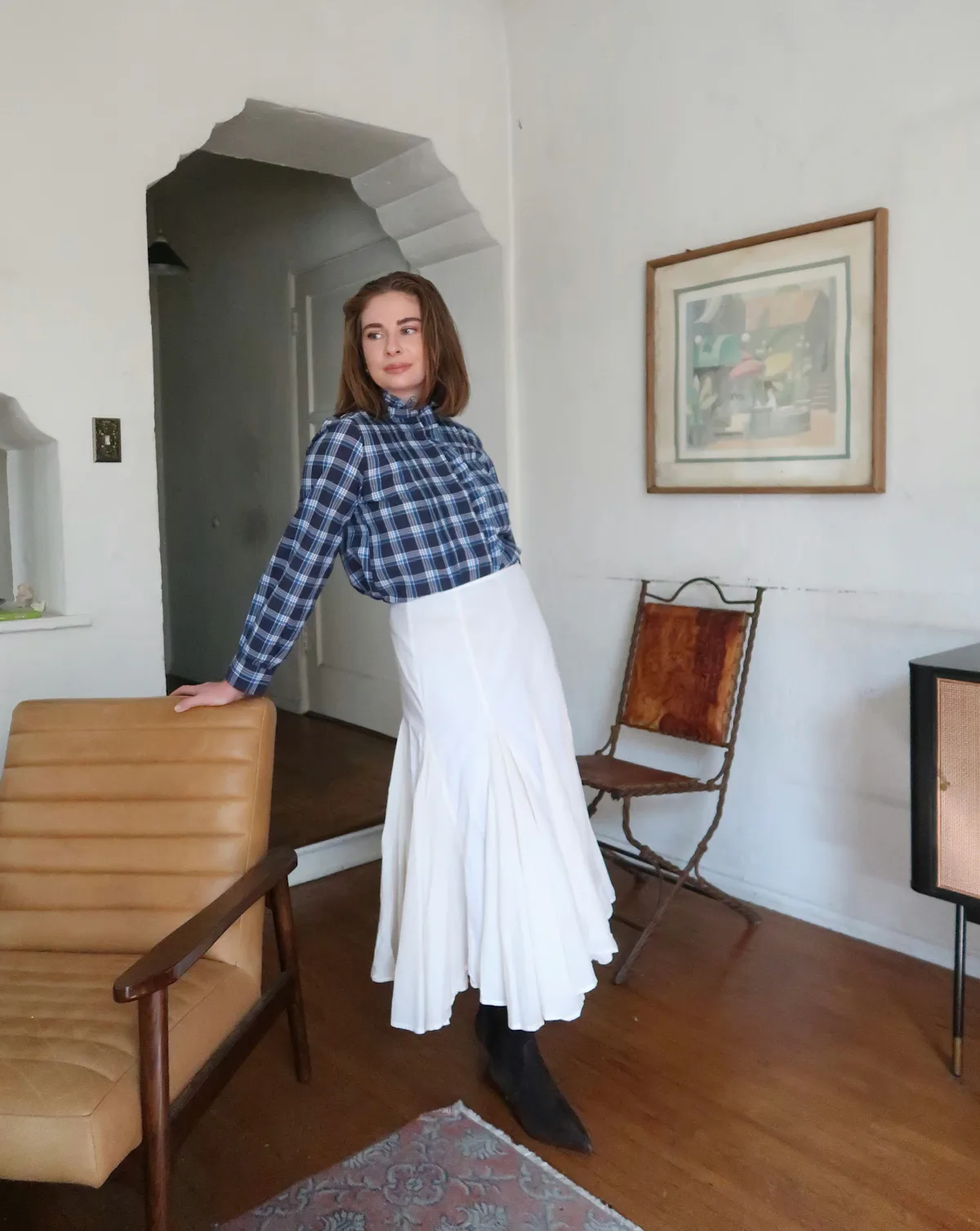
There is something quietly radical about letting a period drama recalibrate your wardrobe, and the response to Netflix's *East of Eden* suggests we are ready for exactly that kind of influence. The series has drawn 6.5 million views in its first four days, and while the story of Cathy Ames is undeniably magnetic, the real takeaway for those of us who dress with intention is the visual language costume designer Kirsty Cameron built from Edwardian photographs and street photography. She reminded us that women a century ago were modern in their own time, and that is the permission we need to borrow from them without costume. This is not about replicating a corset; it is about absorbing the mood, the high necklines, the plaid throughlines, the lace-trimmed restraint, and translating it into something that feels like us. For anyone refining their Omega writes a new chapter in horological cinema, the same principle applies: the best references honor the original spirit without mimicking it.
What makes this particular sartorial moment worth slowing down for is how it sidesteps the usual trend cycle. The pieces that surface, a Dôen blouse with a Merlette pleated skirt, a lace-trimmed cape from Sea New York over a black silk rail, a Reformation brocade jacket paired with a Free People slip skirt, are not novelties. They are quiet, considered investments that already live in our mental archives. The puff sleeves, the brocade, the nightgown-as-daywear: these are not inventions but reclamations. Cameron traced Cathy's trajectory through fabric, from the high-necked innocence of her girlhood to the revealing textures of her brothel era, and that arc is precisely what makes the dressing feel narrative rather than decorative. We are not playing dress-up; we are borrowing the emotional weight of a character's transformation. For those of us already layering through the in-between of fall, as we explored in Three layering tricks for the in-between of fall, this is the next logical step, letting a story, not a season, dictate the silhouette.
The practical takeaway is this: the most compelling wardrobe choices this season will come from a single question, what does this piece say before I say anything at all? The *East of Eden* approach asks us to treat clothing as character development. A For Love & Lemons gingham mini with puff sleeves and lace trimming does not need a complicated accessory; it needs the confidence to let it speak. A brocade jacket with oval sunglasses does not need a full costume; it needs the restraint of a slip skirt and ballet flats beneath. Cameron's research into Sambourne and Breitner's street photography reminds us that modernity is a feeling, not a date on a calendar. The women in those photographs were modern because of how they carried themselves, not because of what they wore. That is the distinction that separates a muse from a mannequin. The question left open, then, is not whether we can pull off the look, but whether we are willing to let our clothes carry the narrative we have been too afraid to write ourselves.