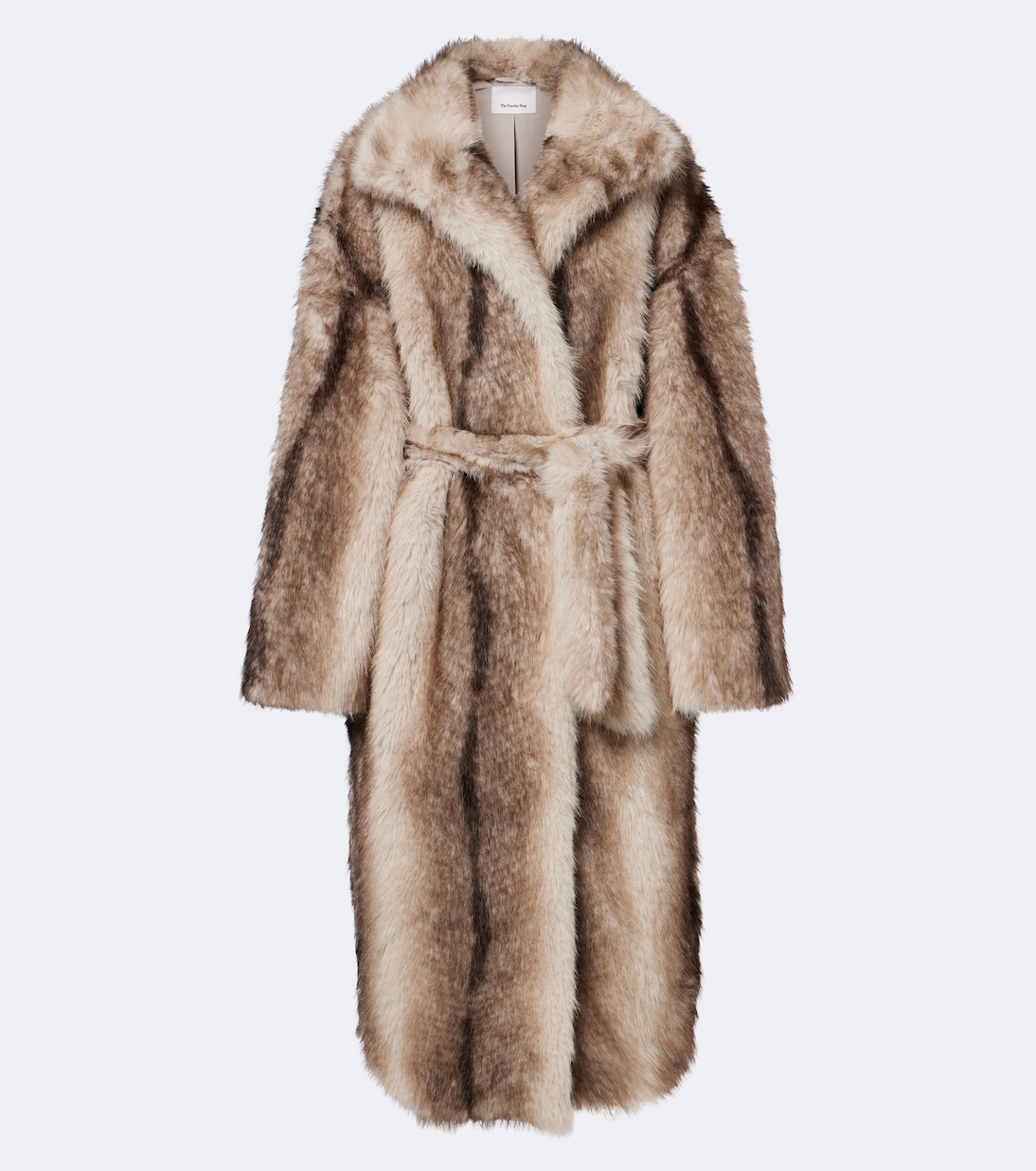
Faux fur has always told a better story than real fur, and the French have known this longer than most. What we find ourselves admiring this season is not the coat itself, but the deliberate contradiction it creates: the most theatrical, the most decadent, the most "look at me" fabric worn with jeans that have clearly seen better days, a grey sweater, and hair untouched by a brush. It is a philosophy we have explored before, in how fashion insiders wear purple with quiet authority, the same impulse to let one bold element do all the speaking while the rest of the outfit retreats into the background. The faux fur coat is not a statement of wealth; it is a statement of personality, of a life slightly more interesting than average, of a story you are not quite telling.
This quiet return is not about the TikTok trends that gave it a name like 'Mob Wife' or 'Grandpacore.' Those are useful shortcuts for search engines, but they miss the deeper point. The French woman wearing a long black faux fur coat with worn-in jeans and boots is not cosplaying a Scorsese heroine; she is channeling a mood, a wealthy witch, a Parisian you suspect has a car waiting for her, even as she heads down into the metro. She understands that the more the faux fur does, the less the rest of the outfit should look like it is in on it. This is not decoration; it is architecture. The coat becomes the anchor, and everything else, the faded denim, the flat loafers, the unbrushed hair, becomes the intentional contrast. It is the same principle at play in quiet luxury meets furry flip-flops for effortless fall style: the unexpected pairing is what makes the whole thing work.
What we find most compelling is the range of identities a single material can inhabit. There is the 'stole', technically useless, covering nothing genuinely useful, and therefore guaranteed a place of honor in a wardrobe. There is the coat stolen from your grandmother, with its faint imaginary whiff of mothballs and its ability to tell an entire lineage without a single word. There is the leopard print in muted, imperfect spots, treated like a camel coat rather than a costume. Each version demands a different approach, a different level of restraint. The takeaway is clear: do not let the coat dress you. You dress the coat. If it looks like it lived before you, let it. If it whispers of a scandal no one brings up at dinner, let it. Your job is to contradict it, to ground it in something real and unpolished, so that the entire effect feels like a choice rather than a uniform.
The question we are left with is not whether to buy faux fur, but how to wear it without being worn by it. The answer, as always, is in the details. A few centimeters at the collar or cuffs is enough to unsettle a jacket that is too well-behaved. A long, black, slightly dramatic coat worn in broad daylight rather than evening suggests a woman who knows exactly who she is. Watch for how the industry responds to this need for subtle theater rather than loud costume. The most interesting faux fur this winter will not be the one that screams; it will be the one that leaves you wondering who she is, and why she looks like she has always owned it.