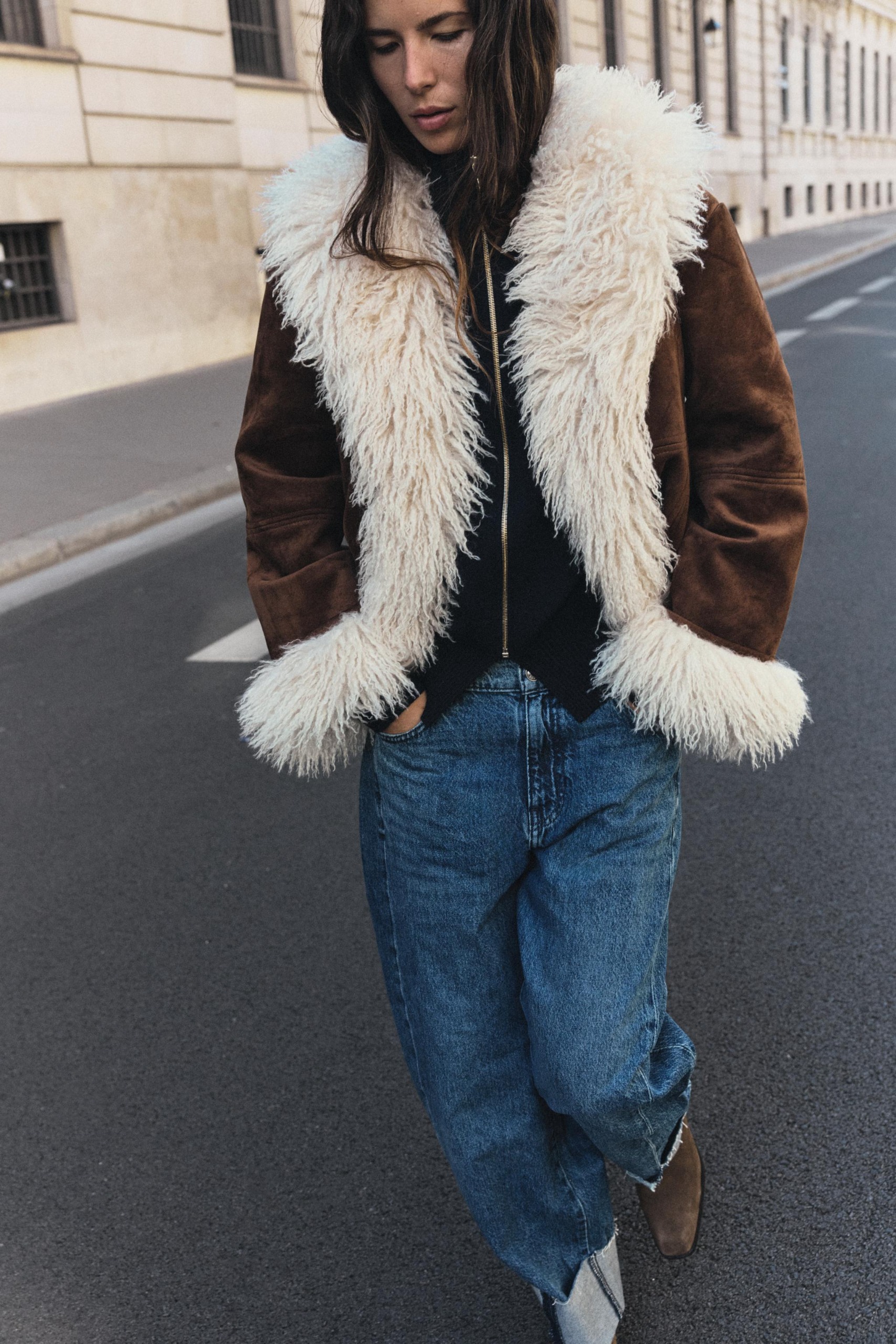
There is something quietly magnetic about a coat that refuses to stay in the past. The Penny Lane silhouette, with its shearling trim and bohemian ease, has returned not as a revival but as a reminder that certain pieces carry meaning far beyond their season. For those of us who prefer our style to feel intentional rather than loud, this is not a trend to chase but a mood to inhabit, much like the understated elegance we explored in Sienna Miller's Seven Shades of Quiet Autumn Elegance. The coat's reappearance asks us to consider what we truly want from our outerwear: not novelty, but narrative.
What makes this return different from previous cycles is the depth of its emotional pull. Charlotte Simone, whose label has become synonymous with the silhouette, traces its origin to a single coat found in her grandmother's wardrobe, worn, loved, and lived in. That ethos resonates because it mirrors a broader shift toward dressing with memory rather than momentum. The Penny Lane coat is not about looking back nostalgically; it is about carrying forward a spirit of freedom that defined its original champions, Jane Birkin, Janis Joplin, the artists who wore it as armor and ornament alike. In an era obsessed with personality-driven maximalism, this coat offers something rarer: a sense of continuity. It is the kind of piece that, as we noted in Five Flat Shoe Styles to Balance the Balloon Pant Silhouette, grounds an outfit in character rather than chaos.
The practical takeaway here is simple: invest in a coat that feels like an extension of your identity, not a costume borrowed from a decade. The versions currently on the market, from ZARA's faux-fur trimmed jacket to Rixo's suede embroidered designs, offer entry points at various price points, but the guiding principle remains the same. Look for shape that flatters without effort, texture that invites touch, and a silhouette that works as the whole outfit. Charlotte Simone put it plainly: a coat can be the entire look. That confidence is what separates a passing nod to the seventies from a wardrobe staple that will still feel right next autumn, and the one after.
One detail worth watching is how the coat evolves as it moves from the runways of Copenhagen and London into everyday life. The Saks Potts iteration that redefined the style in 2014 felt bold and almost architectural; today's iterations lean softer, more lived-in, closer to the original handmade Afghan coats that travellers carried back from the Hippie Trail. That shift suggests a collective craving for authenticity over spectacle. The question now is whether the market can resist overproducing the silhouette into ubiquity, or whether the Penny Lane will remain what it has always been: a quiet emblem of those who dress for themselves first, and let the world catch up.