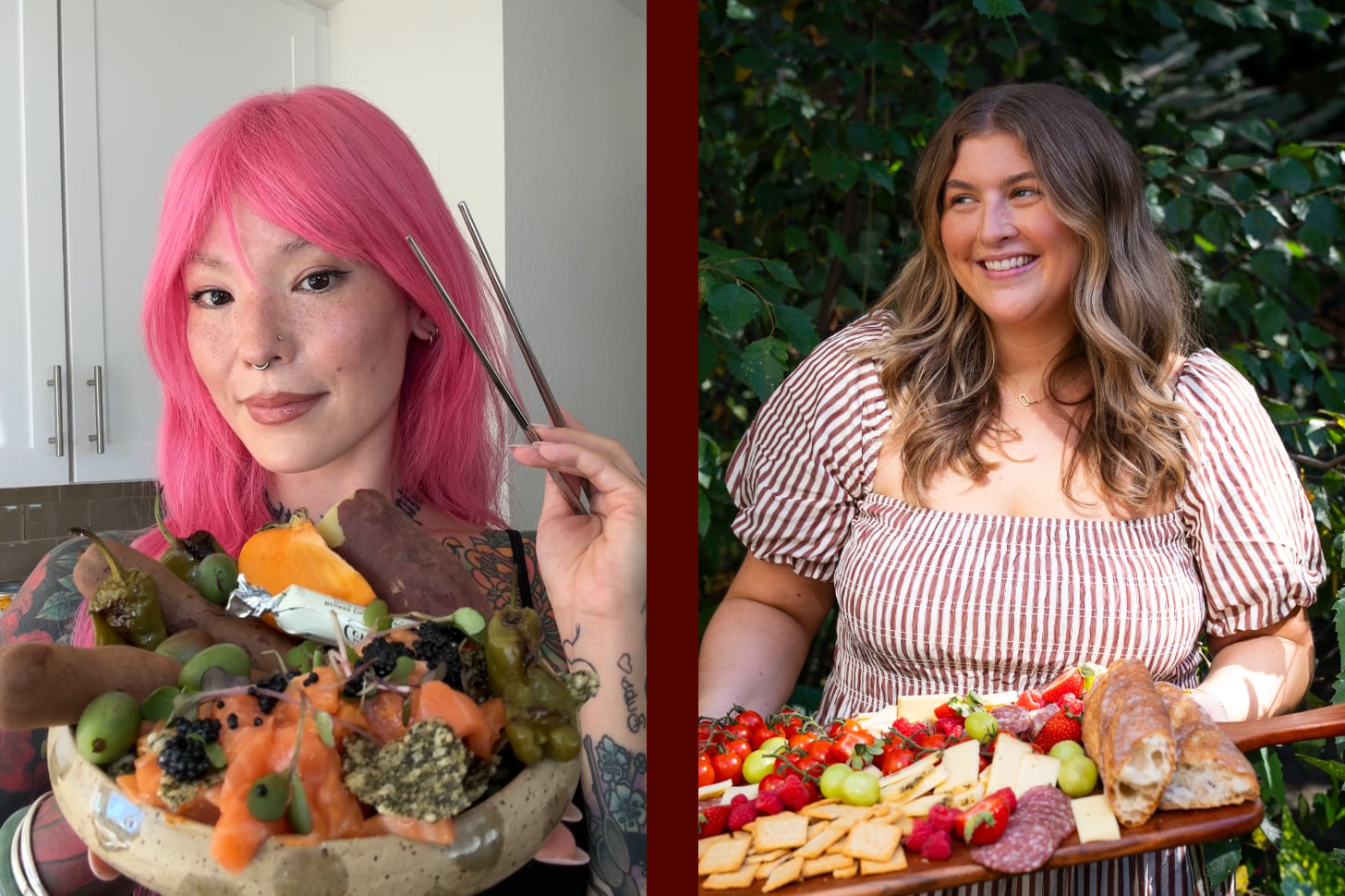
There is something quietly radical about a woman who eats with delight. At a moment when the cultural current pulls toward shrinking, restriction, and the quiet hum of the Ozempic-fueled fantasy of smaller, the women who feast without apology are not just eating, they are making a statement about freedom. We find ourselves returning to the idea that wellness, at its truest, is not about denial but about presence. It recalls something we explored in In Tuscany, Wellness Is Rooted in the Landscape Around You, where the best treatments begin with what is growing, flowing, or bubbling up nearby. Here, too, the medicine is in the experience itself.
For Karissa Dumbacher, food is culture, nostalgia, and art, not a transaction of calories. She eats cream-filled mochi in Japan and truffle mac n' cheese burgers in New York with the same genuine reverence. Cailee Fischer, diagnosed with insulin-resistant PCOS, chose to focus on what she could add to her plate rather than what she had to cut, and in doing so, transformed her relationship with food from a stressor into a sustainable practice. Jjanga Weir, whose handle "The Tofu Mom" directly counters the restrictive "almond mom" trope, reminds us that what we eat affects our mental health as much as our physical one. She asks herself, "How can I make this fun again?", a question so simple it feels almost radical in a culture that has taught us to ask, "How can I make this smaller?" These women are not ignoring health; they are redefining it as something that includes pleasure, heritage, and joy. This is not performance. It is a deliberate act of self-love.
What strikes us most is the quiet confidence in their approach. There is no apology in their descriptions, no guilt disguised as humor, no need to justify a meal by promising to work it off later. Dumbacher shares her fitness routine, weight training, HIIT, walks, runs, but frames it around balance and consistency, not punishment. Fischer says plainly, "Balance isn't about being perfect. It's about having habits that support my health while still leaving plenty of room to enjoy my life." Weir follows people who make her feel good and allows herself to indulge. This is not the loud, performative rebellion of a "cheat day" meme; it is the quiet authority of a woman who has decided that her body is not a problem to be solved. It is the same energy we admired in A Decade in Fashion, Iris Law Builds a World Entirely Her Own, where a young woman builds her world not by following the industry's rules, but by trusting her own instincts.
The consequence of this shift is not merely personal. When women feast without apology in public, on TikTok, on Instagram, in their own kitchens, they change the visual language of what a healthy, happy woman looks like. They make room for others to ask the same question Weir asked herself: How can I make this fun again? The open question we are left with is whether this quiet rebellion can outlast the noise of a culture that still profits from making women feel too big. But if these creators have proven anything, it is that joy, once chosen intentionally, is harder to unlearn than restriction.