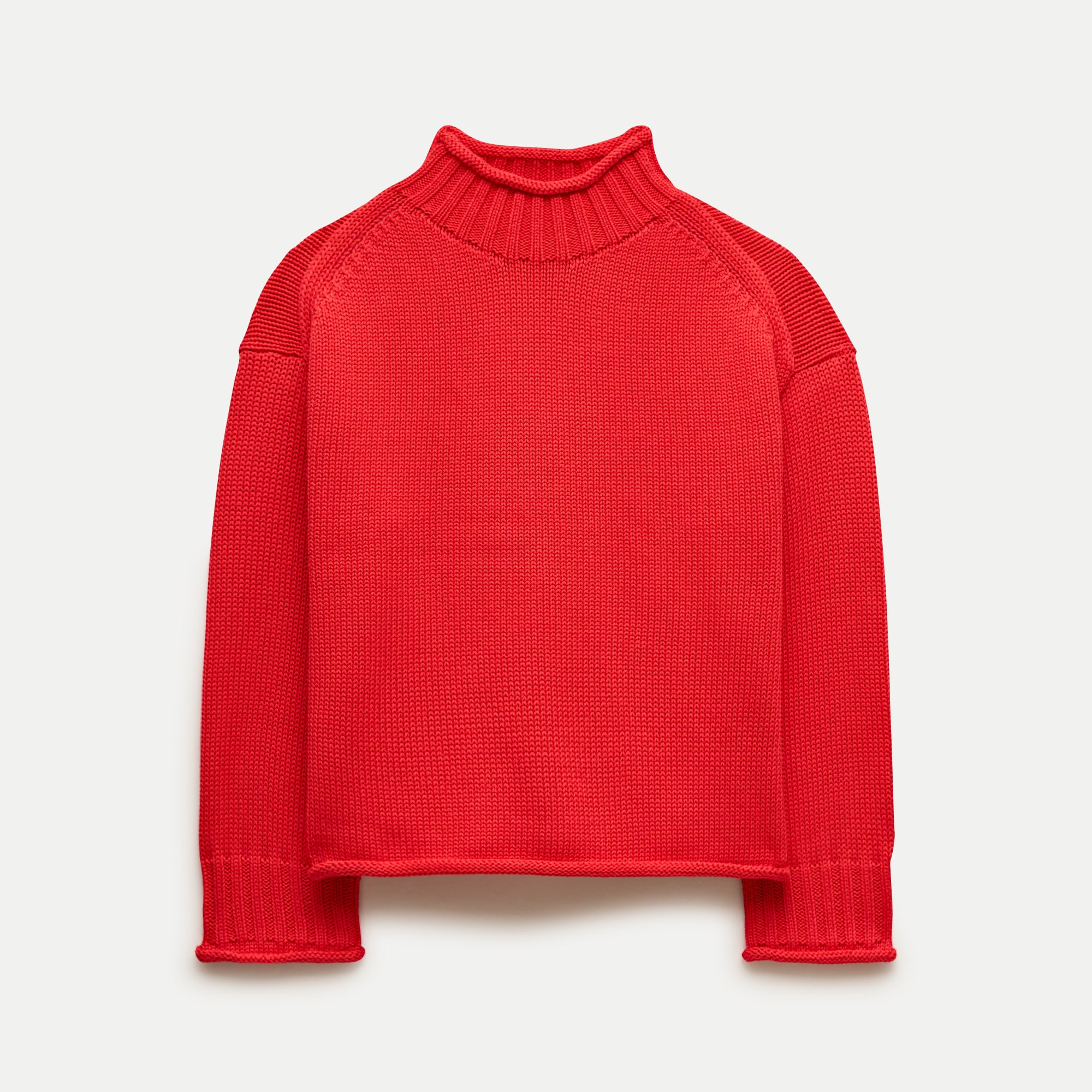
There is something quietly radical about a wardrobe built on pieces that cost less than a hundred dollars and still manage to feel intentional. This latest edit from J.Crew, a retailer our editors return to season after season, proves that refined dressing has never been about the price tag, it is about the edit. We have long admired how an An Iconic Bra Finds Its Muse in Kylie Jenner can redefine an entire silhouette, and similarly, a single under-$100 staple can redefine a wardrobe. The Rollneck sweater, now offered in a striking red, has become a quiet uniform for at least five people on our team alone, not because it shouts, but because it simply works. That is the energy we are drawn to: confidence that does not need to perform.
What makes this collection worth noting is not the volume of new arrivals, 298 products is, admittedly, a lot, but the restraint within it. The Valentina Scarf Coat, the Verona Ballet Flats, the cashmere socks: these are not trend-driven novelties. They are foundational pieces rendered in a fresh palette. The Fair Isle Crewneck Cardigan, which echoes looks from the Fall/Winter 2026 runways at Altuzarra and Khaite, proves that seasonal fashion can be absorbed without being loud. This is the same principle we explored in our guide to 65 Affordable Luxuries That Feel Far More Expensive Than They Are, the idea that value is not about cost but about how a piece makes you feel when you put it on. A 100% merino wool turtleneck at this price point is not a compromise; it is a choice.
This is where J.Crew has always understood something essential about the modern woman. She does not need a rack of disposable fast fashion. She needs a small collection of pieces that anchor her day, that she can reach for without thinking, that hold their shape and their relevance across seasons. The Eckhaus Latta collaboration, mentioned as another editor favorite, reinforces this: collaboration should feel like an evolution, not a disruption. The boatneck cardigan in chartreuse, the leather tech-touch gloves, the cinched-back button-up, each item earns its place not by being the most expensive thing in the closet, but by being the most worn. Luxury, in this context, is frequency of use.
The question this edit leaves us with is not whether to buy, but what to buy first. And that is the kind of problem we appreciate. When a retailer gives us 298 new arrivals and we can narrow our focus to a red Rollneck, a scarf coat, and a pair of ballet flats, we are practicing the same discipline we bring to the rest of our lives: choose thoughtfully, wear often, and let the pieces speak softly. The real test will be whether these staples hold their ground six months from now, when the novelty of red has faded and we are left with only the shape and the feel. We suspect they will.