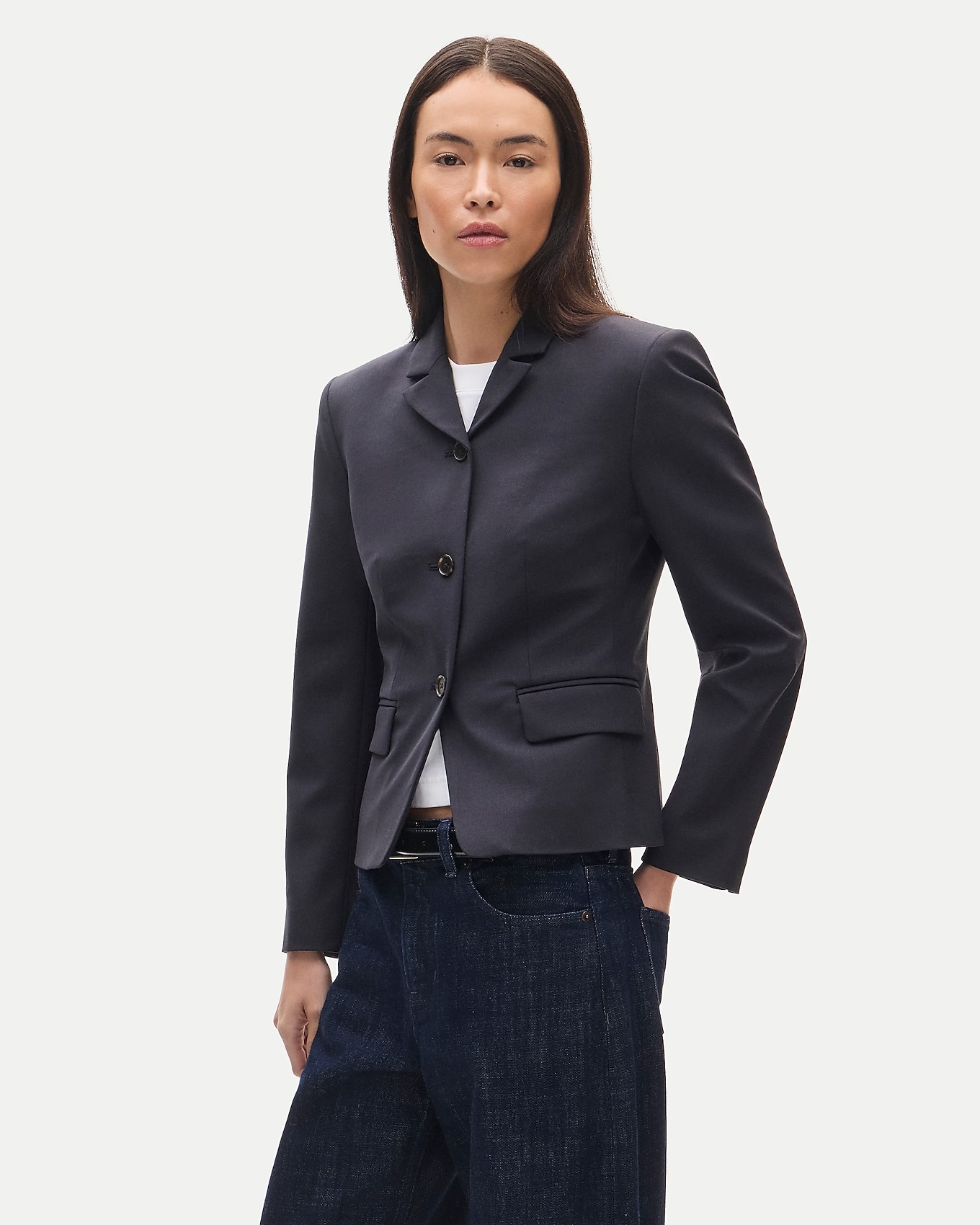
There is something quietly radical about a jacket that follows the body again. After years of drowning in borrowed-from-the-boyfriend proportions, the return of the fitted blazer feels less like a trend and more like a recalibration, a reminder that tailoring can be precise without being restrictive, and feminine without performing for anyone. This is not the same shrunken blazer we wore to dive bars in 2010. It has grown up, found its composure, and traded the indie sleaze energy for something more intentional. Think of it as the tailoring equivalent of Jennifer Lawrence channels quiet Parisian allure in animal print and red: the same confidence, just expressed with a lighter hand. And if you have been watching how Angel Reese's quiet command unfolds across two red carpets, you know that this moment, where presence speaks louder than volume, is not limited to one corner of fashion.
What makes this iteration different is the attitude behind the silhouette. The blazers listed here, from J.Crew's boxy wool crop to Thom Browne's armhole-defining sport coat to Veronica Beard's plaid Schoolboy, share a common thread: they are not asking for attention. They sit close to the body, shorten the sleeve, lift the hem, and in doing so, create a line that feels both nostalgic and entirely current. The practical takeaway is this: you do not need to overhaul your wardrobe to participate. The shrunken blazer works best when it plays against something looser, low-rise jeans, a slip dress, a pair of baggy trousers. It is a proportion game, not a uniform. And for those of us who have spent the last few seasons swimming in fabric, the relief of a jacket that actually knows where your waist is feels like coming home.
The emotional resonance here matters as much as the cut. A fitted blazer asks something of you: posture, presence, a certain self-possession. It is not a piece you sink into; it is a piece you step into. That aligns with the broader mood we have been tracking, a move toward quiet style that speaks without raising its voice. The blazer becomes a shell for the person inside it, not a costume. Whether you choose the schoolboy charm of Argent's linen version or the deadstock silk of Reformation's Florence, the message is the same: you are not wearing the blazer to be seen wearing it. You are wearing it because it reflects how you want to move through the world, composed, unbothered, and entirely yourself.
The one detail worth watching is how this translates to the office. The story notes that this revival is "less about which Brooklyn dive bar" and more about styling for work, but the office itself has changed. If the fitted blazer returns alongside a more fluid definition of professional dressing, where it can be worn over a miniskirt, with ballet flats, or buttoned over nothing but a going-out top, then it ceases to be a uniform piece and becomes a tool for self-expression. The real question is not whether the shrunken blazer will sell, but whether we will let it be both serious and sensual at the same time. That is the conversation worth having.