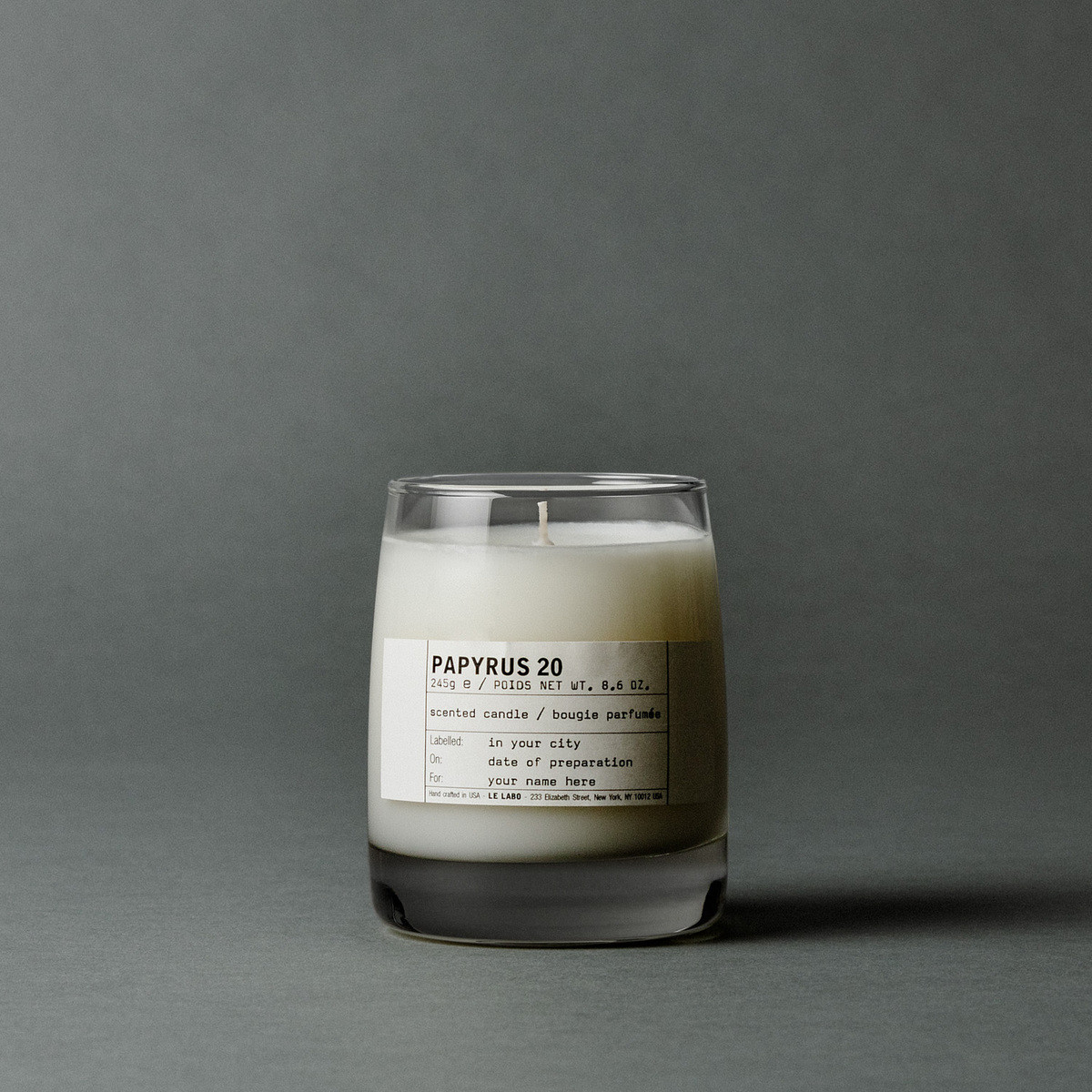
There is something quietly radical about a woman who curates her environment as carefully as she curates her inner life, and the decision to bring Le Labo's Papyrus 20 into the home is a decision to claim a specific kind of atmospheric authority. We have long believed that scent is the most intimate design choice a person can make, more personal than the sofa you select, more telling than the art on your walls, and this candle, with its refusal to perform the expected notes of vanilla or sandalwood, feels like a deliberate act of self-definition. It is a scent that does not ask to be liked; it asks to be recognized. For anyone who has spent years layering diffusers and lighting wicks in pursuit of that elusive "five-star lobby" feeling, the arrival of Papyrus 20 is not merely a product recommendation but a permission slip to trust your own olfactory instincts over the market's louder suggestions.
What makes this particular burn worth discussing is the way it resists the easy warmth we have been trained to crave. In a season that often leans toward the syrupy and the sweet, Papyrus 20 offers something more compelling: mystery grounded in texture. Cypriol and musk create a leathery, almost masculine foundation, while ylang-ylang and labdanum introduce a resinous softness that keeps the whole composition from tipping into austerity. The result is a candle that feels unisex in the truest sense, not genderless, but generous enough to hold complexity. It reminds us of the quiet seduction we explored in The quiet seduction of a scent that tastes like taste itself, where the most compelling fragrances are those that refuse to announce themselves. Here, the announcement is a whisper, and the whisper carries further than a shout ever could.
Practically speaking, this candle solves a problem that many of us have stopped naming aloud: the desire for a home that smells like intention rather than accident. The reviewer notes that Papyrus 20 fills a full studio with a single flame, and that its grounding profile has become the anchor of a nightly ritual, tea, one episode, the slow unwind before sleep. This is not incidental detail; it is the point. A candle that helps you turn off your brain is not a luxury; it is a tool for survival in a city that never stops humming. And while the price point may give pause, the 60-hour burn time and the unusually high concentration of perfume oil mean that this is an investment in atmosphere rather than an impulse purchase. We would argue that it belongs alongside the warm velvet notes we praised in A Warm Velvet Fragrance for the Quiet Luxury of Winter, not because they smell alike, but because both understand that cold weather demands a scent that wraps around you rather than shouting over the silence.
The takeaway is direct: if you have ever lit a candle and felt disappointed by how little it actually changes the room, Papyrus 20 is the correction. It does not simulate warmth; it generates it. And in a world where so much of what we buy asks us to perform a version of ourselves we do not recognize, there is real power in choosing a scent that lets you feel, for a few hours each night, like you are anywhere but here.