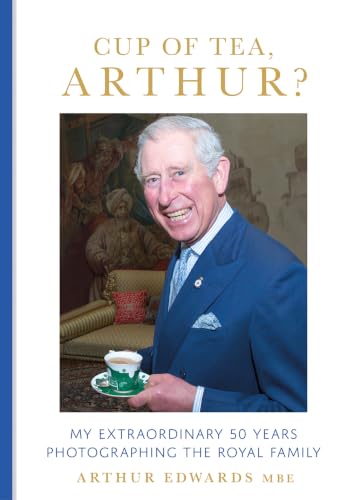
The most eloquent statement made about the Waleses' marriage in 1992 was delivered without a single word. Arthur Edwards, a photographer who spent fifty years watching the royal family through a lens, understood what the palace press office could not: that a single frame from a polo match in Jaipur would say what no briefing ever could. His assessment is correct. The image of Diana turning her head as Charles leaned in for a kiss is the rare photograph that functions as testimony. It required no caption because it offered no ambiguity. A marriage in trouble, announced quietly in pink and yellow silk.
What makes Edwards's account so compelling is the exchange that preceded it. At a cocktail party in Madrid, he asked Diana directly about the separate lives she and Charles were leading. She laughed it off, offered a tidy explanation about accepting twice as many invitations, and he believed her. That detail matters. It reminds us how skilled Diana was at managing the narrative, and how photographs can slip past even the most practiced composure. The same instinct for control shaped her quiet defiance over her signature haircut, another story Edwards chronicles from a career spent close enough to notice what others missed. And the contrast with the monarchy's present chapter is striking. Where Charles now leans on the quiet anchor keeping him grounded, in 1992 he was navigating a public fissure he could not smooth over with a gesture.
The takeaway for anyone watching public lives is this: image control is never absolute. Diana could explain away separate engagements at a cocktail party, but she could not control the moment a camera caught her turning away. Edwards knew he had page one before he had a satellite signal. That is the difference between a statement and a photograph. One can be revised. The other simply exists, and the world decides what it means.
For readers, the practical lesson sits in Edwards's method. He was not looking for scandal. He was looking for a picture that tells the story without a caption, and he found it in a fraction of a second at the Rajasthan Polo Club. Watch for that instinct the next time a royal tour produces a single image that circulates far beyond the others. The frame everyone shares is rarely the frame the palace planned. It is the one where someone forgets, or declines, to perform. Diana turned her head, and the caption wrote itself.