There is a quiet authority in knowing exactly what works before you arrive, and the three black-tie events covered here confirm something we have long suspected: the most memorable guests are not the ones wearing the loudest gowns. They are the women who understand that a coat is part of the look, that color should be chosen for candlelit ballrooms rather than hangers, and that pale shades belong at galas, not weddings. This is not a lesson in spending; it is a lesson in intention. As we noted in our recent edit on An Edit on Winter Dressing Through the French Lens of Quiet Chic, the French have long understood that refinement is about restraint, and this story proves the same principle applies to formalwear. And just as Chrome and champagne nails set the season's quiet reflective mood, the gowns that leave an impression are the ones that glow rather than shout.
What strikes us most is the first rule: the coat is part of the look. Too often, we treat outerwear as an afterthought, something to shed at the door. But as the writer observed in Colombia, a luxe fur worn all evening, inside, because the temperature dropped, became the defining element of the outfit. This is the kind of detail that separates a polished guest from a merely dressed one. The retrofete Amberley Dress and the Aritzia Chamonix Coat are not listed as separate purchases; they are listed as a single equation. The coat is the first thing seen at check-in and the last thing remembered in photos. Treating it as an accessory rather than a necessity is a missed opportunity.
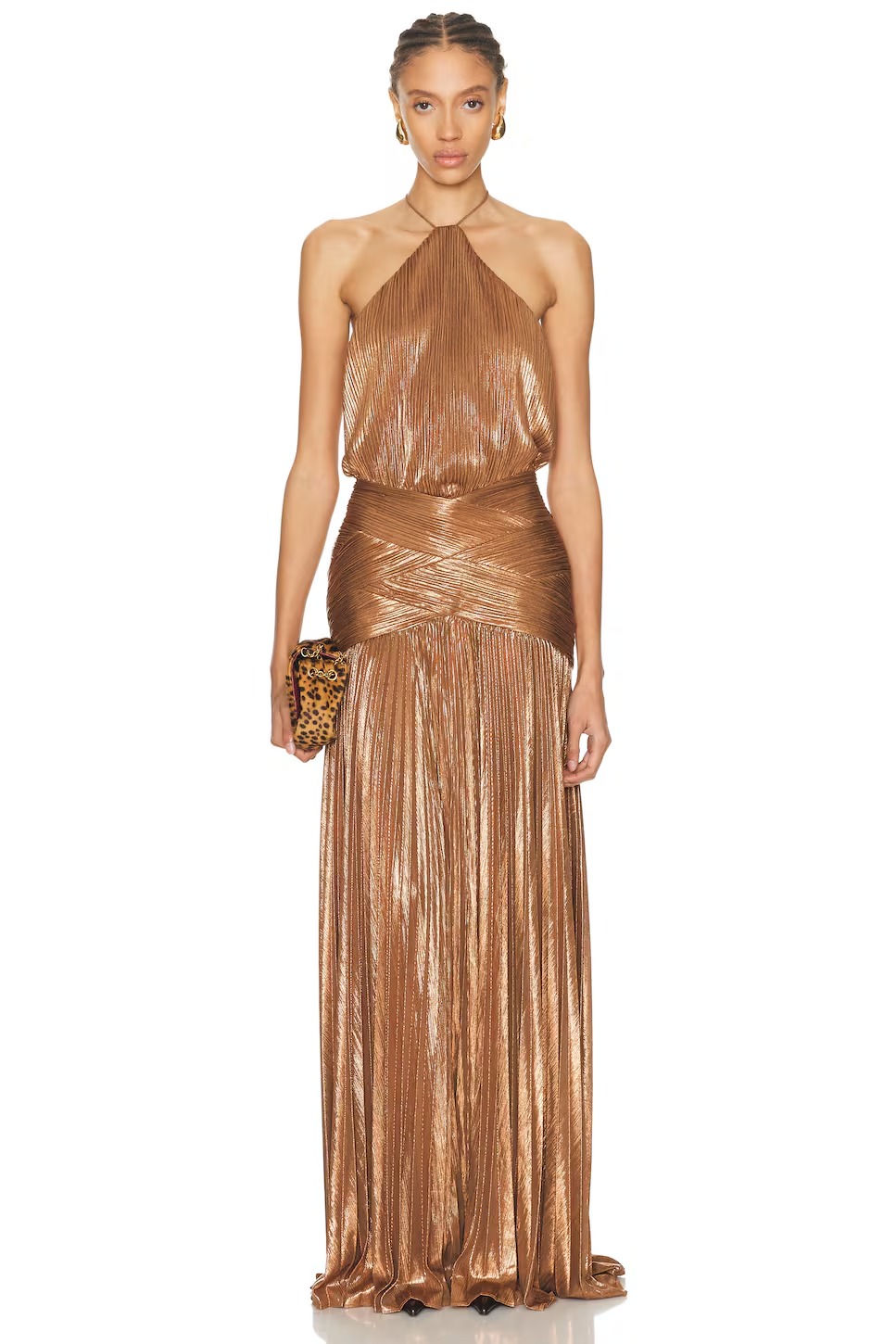
The second rule is perhaps the most practical: dress for the lighting, not the invite. Ballrooms are dim and candlelit in fall and winter, and copper, bronze, and burgundy glow in that light in a way black never does. The Bronx Banco Carmen Maxi Dress in burgundy or copper is not just a seasonal choice; it is a strategic one. This is the kind of insider knowledge that makes a woman look effortless when she has, in fact, thought carefully. The rule is simple: pick the color that looks best at 9 p.m., not the one that feels safest on the hanger. It is a small shift in thinking that changes everything.
The third rule carries the most emotional weight: if you have to ask, do not wear it. The fear of upstaging the bride or being mistaken for her is real, and the solution is elegant. Save pale pink and champagne for galas and charity balls, where they read as romantic rather than risky. The For Love & Lemons Juniper Maxi Dress in pale pink is a perfect example, it offers all the romance and none of the bridal confusion. What we take away from this is a clear, specific takeaway: the most confident guests are the ones who know which events demand which colors. Gowns like the SIMKHAI Demi Cape Gown or the Reformation Neva Silk Dress are not just beautiful; they are appropriate, and appropriateness is itself a form of quiet luxury. The question that lingers is not what to buy, but where you will wear it next.