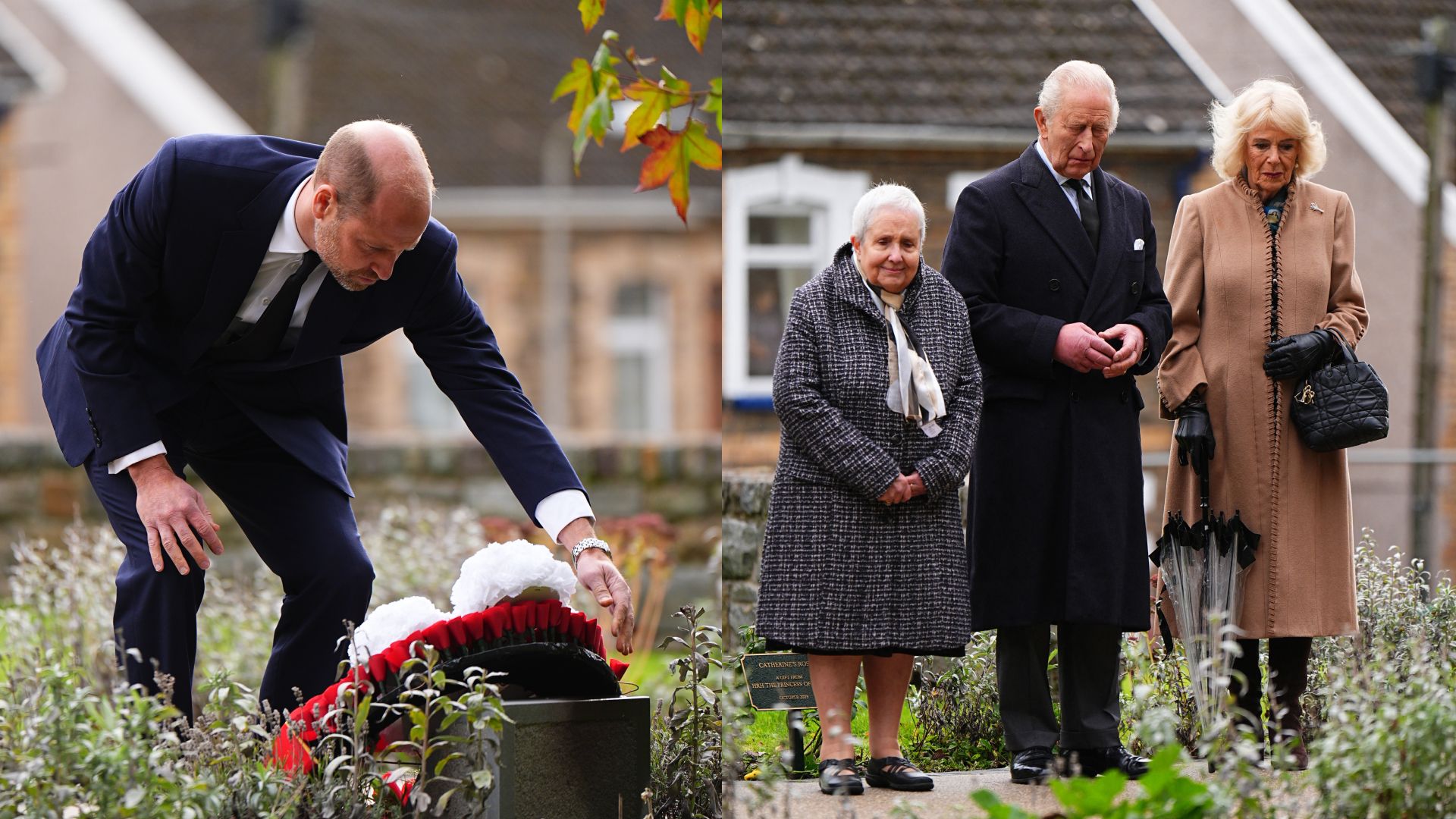
There is something profoundly moving about watching three generations of royalty stand together in a place that represents one of the most heart-wrenching moments in modern British history. When Prince William joined King Charles and Queen Camilla in Aberfan on October 21 to mark the 60th anniversary of the disaster that claimed 116 children and 28 adults, they did not arrive as distant figures of ceremony. They came as witnesses to a sorrow so deep that it reshaped how we understand grief and duty. The King's speech acknowledged that no one should ever have to bear what Aberfan endured, and he praised the community's "strength, resilience, or hope", but what resonated most was the quiet humility in his presence. This was not a display of power; it was an act of honouring. It reminds us that true grace is not performative. It shows up, listens, and stays. In a similar vein, we saw earlier this week how Princess Kate channels Diana's tiara with quiet leopard-print power, a moment where composure and subtle personal expression spoke louder than any grand statement. Here, the royal trio did the same: they let the weight of the occasion carry itself.
The Aberfan disaster has always been a story about what happens when authority fails to show up in time. Queen Elizabeth's eight-day delay in visiting the village is widely regarded as the greatest misstep of her reign, a cold moment the late Lord Charteris admitted she "got wrong and she knows it." Sixty years later, King Charles made certain that the Royal Family would not repeat that silence. His speech was not about legacy or institution; it was about the people who lived through the unimaginable. He met with survivors, with members of the Aberfan Wives Group, with a 96-year-old former police officer who had been there at the moment of the avalanche. This was immersion, not observation. It brings to mind how Prince Harry on the Energy He Still Receives From Diana spoke of connection that transcends time, that same intangible bond seemed to hang in the air in Aberfan. The community has carried this grief for six decades, and the King's presence acknowledged that carrying it alone is not something anyone should have to do.
What struck us most quietly was the detail that Princess Kate's signature appeared on the card attached to the wreath Prince William laid at the Memorial Garden. She was not physically there, but her name was included, woven into the gesture. This small act of inclusion speaks to a sensibility we admire: that a family shows up for each other even when separate, that remembrance is collective even when bodies are not. It echoes the composed restraint we saw when Kate's caped gown held its composure through Windsor's quiet chaos, a refusal to let circumstance erode dignity. In Aberfan, that composure was not about fabric but about spirit. The royal family did not arrive to solve, to promise, or to rally. They arrived to stand silently beside a community that still feels the weight of a mountain that fell. The specific consequence to watch now is whether this authentic, grounded approach becomes the model for future royal engagements. If the lesson of Aberfan is that presence heals when words cannot, then the most powerful thing a monarchy can do is simply remain, long after the cameras leave.