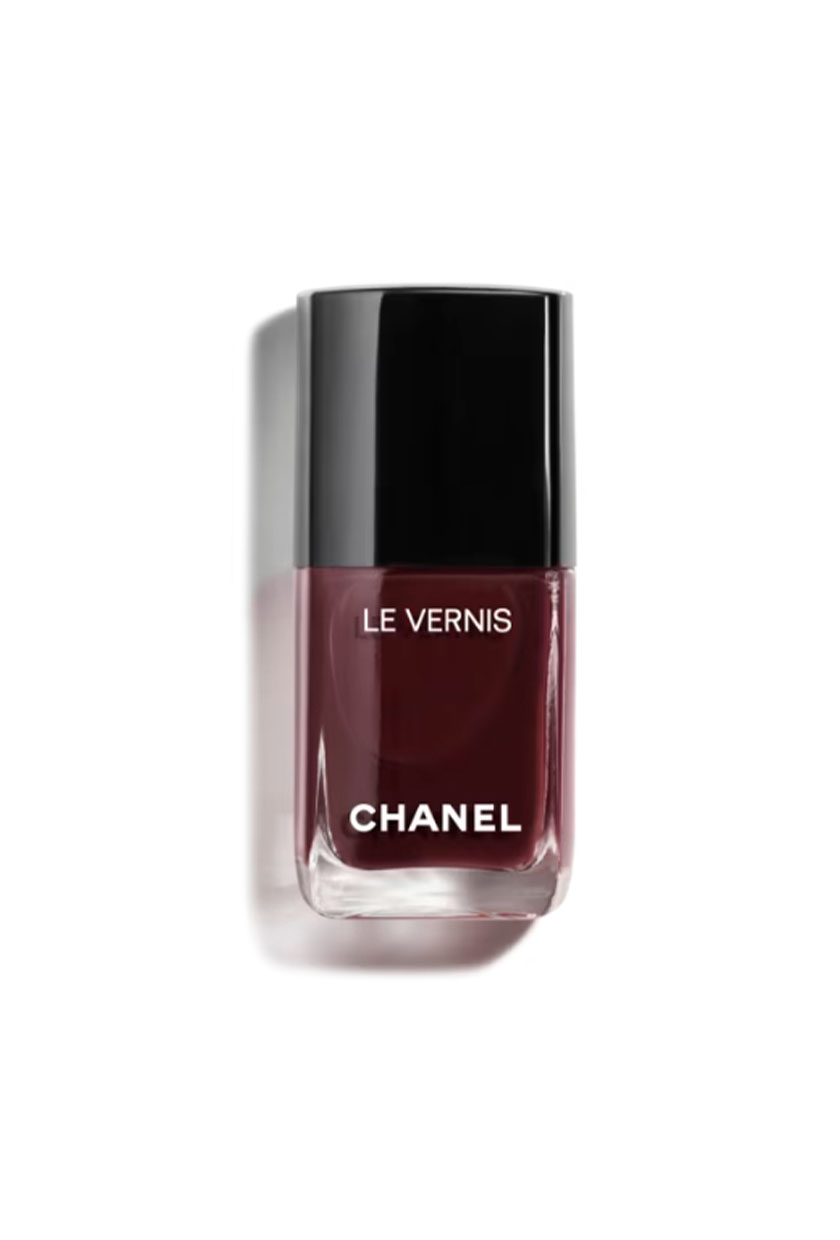
Three nail colors, each decades old, still define what it means to choose a shade with intention. This is not nostalgia for nostalgia's sake, it is proof that a single, impeccably considered hue can hold more cultural weight than an entire seasonal collection. We have written before about the quiet authority of one impeccably chosen nail shade, and these three polishes are the clearest evidence of that principle in action. They are not trends; they are markers of taste, each one a quiet rebellion against the disposable nature of modern beauty.
Chanel's Rouge Noir emerged from a backstage experiment with red and black pigments, inspired by the glossy darkness of black-and-white photographs. It debuted at a Karl Lagerfeld show in 1994 and immediately felt like a secret the fashion world wanted to keep for itself. Madonna wore it in a music video; Nicole Kidman chose it for a red carpet; Demi Moore reportedly bought a floor tester because the bottles were sold out. The shade's name was eventually unified globally as Rouge Noir, and it remains one of Chanel's best-selling nail colors three decades later. What makes it endure is not its association with any single moment, but its refusal to be anything less than itself, a deep, noir-inspired crimson that asks nothing of the wearer except confidence. Compare that to the fleeting buzz of a viral launch, and you understand why some colors become part of a woman's identity rather than her rotation. This is the same quiet alchemy we admired in Twenty years of Pat McGrath's quiet alchemy in motion, the understanding that true influence is built slowly, through conviction, not volume.
Essie's Ballet Slippers, launched in 1982, offers the opposite emotional register but the same staying power. It is a pale pink that does not announce itself; it simply belongs. One bottle sells every two minutes, and its client list includes Queen Elizabeth II, Kate Middleton, Emma Stone, and Barbra Streisand. The shade was born from a childhood memory of ballet class, and it carries that same understated grace into every application. It is the color you reach for when you want to feel put-together without effort, when the goal is presence rather than performance. That is precisely the energy we explored in The Quiet Luxury of My New Signature Scent, a reminder that the most refined choices are often the ones that say nothing loudly.
Then there is OPI's Lincoln Park After Dark, which debuted in 2005 and did something genuinely radical: it made a moody, almost-black shade feel mainstream. The blend of black and aubergine offered warmth without compromise, and it sold at four times the rate of other OPI shades at launch. A bottle is still sold every ninety seconds worldwide. It rewired what consumers considered acceptable for daily wear, proving that dark can be just as neutral as nude. The practical takeaway is this: when you find a shade that reflects your inner state rather than an external trend, you are not buying polish, you are claiming a signature. The question these three colors leave us with is not which one to wear next, but which one already feels like yours.