There is something quietly powerful about a woman who knows her uniform and trusts it enough to let three colours do the seasonal work for her. Elsa Hosk, photographed in blue jeans with mole, pink, and burgundy, has reminded us that refinement is not about acquiring more but about choosing with more intention. This is not a trend report; it is a permission slip to stop overthinking your winter wardrobe. We have already explored how Opaque tights find their perfect match in this winter shoe for the same reason: the best cold-weather dressing is built on reliable foundations, not constant reinvention. And just as Zoë Kravitz grounds a French girl palette with one deliberate red detail, Hosk proves that a single considered colour swap can elevate an everyday silhouette without shouting for attention.
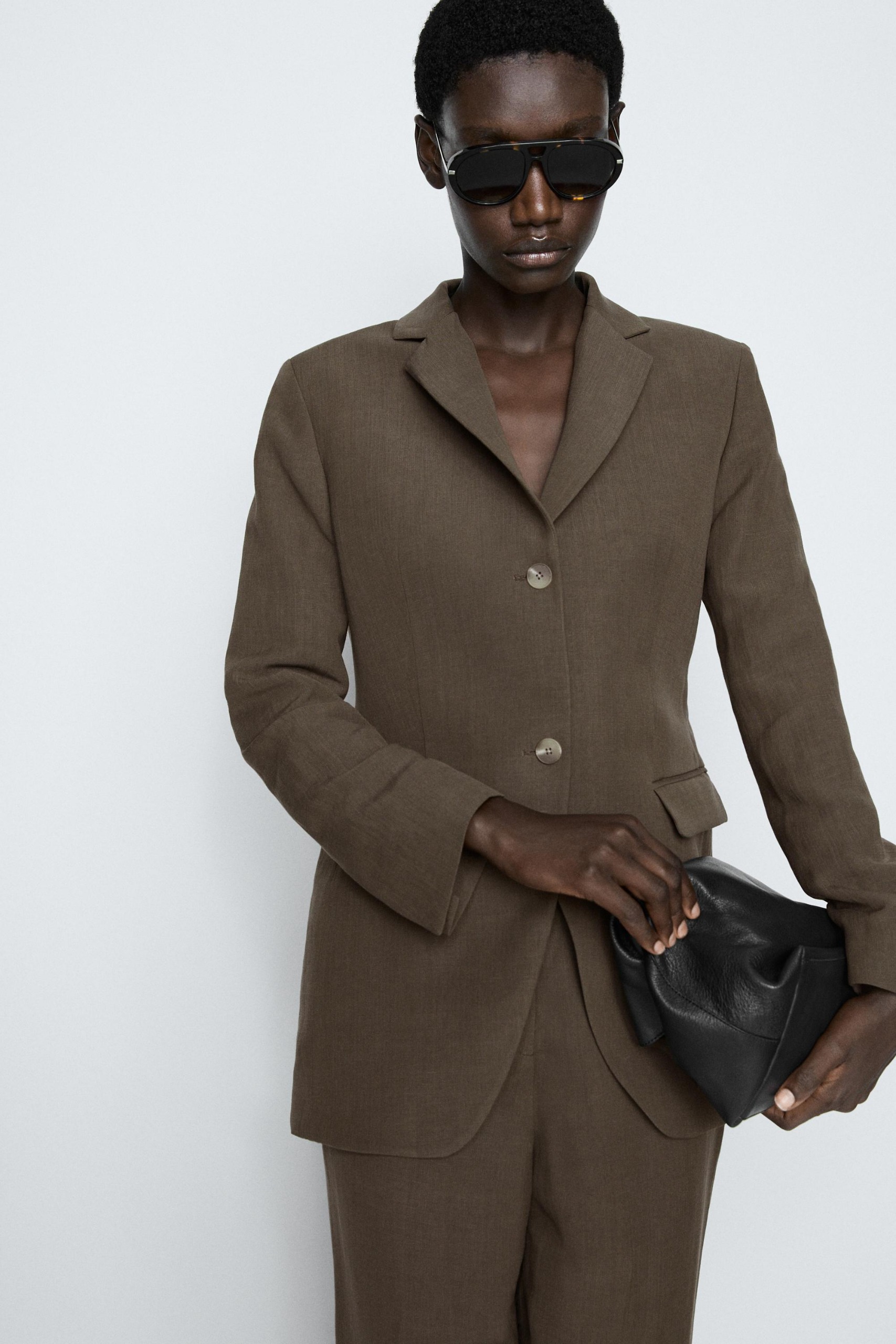
Mole, that understated neutral sitting somewhere between mushroom and warm stone, is the shade we want to live in this season. It offers the polish of black without its severity, the softness of beige without its predictability. Paired with light-blue denim, it creates a tonal harmony that feels both grounded and lifted, the kind of quiet luxury that does not announce itself but is unmistakably felt. Pink, meanwhile, is the unexpected counterpoint. Optimistic without being juvenile, it introduces a freshness that cuts through winter's heavier textures. Worn with jeans, it reads as intentional rather than saccharine, a deliberate choice to carry lightness into darker months. And then there is burgundy, a cornerstone of any cold-weather palette, yet Hosk's leather-jacket-and-matching-flats approach gives it a tonal finish that feels modern, not predictable. The takeaway is clear: you do not need a new wardrobe. You need a new lens.
What makes this approach worth adopting is its restraint. Each colour, mole, pink, burgundy, works because it is worn with something as foundational as blue jeans, not layered into complexity. The mole blazer from Massimo Dutti, the pink shaggy jacket from The Ragged Priest, the burgundy leather jacket from Zara: these are not statement pieces in the traditional sense. They are anchors. They allow the denim to breathe while the colour does the emotional work. This is the same philosophy we admired in Banana Republic and Zankov in a knitted quiet luxury collaboration, where texture and tone replaced logos and labels. The result is a wardrobe that feels personal, not performative.
The specific consequence for your own rotation is this: pick one of these three colours and commit to wearing it with your favourite jeans three times this week. Notice how the outfit changes not in structure but in feeling. That is the point. Hosk's lesson is not about copying a look but about understanding that a single, deliberate colour choice can shift your entire presence. The question is not which shade to buy, but which mood you want to walk into the room wearing.