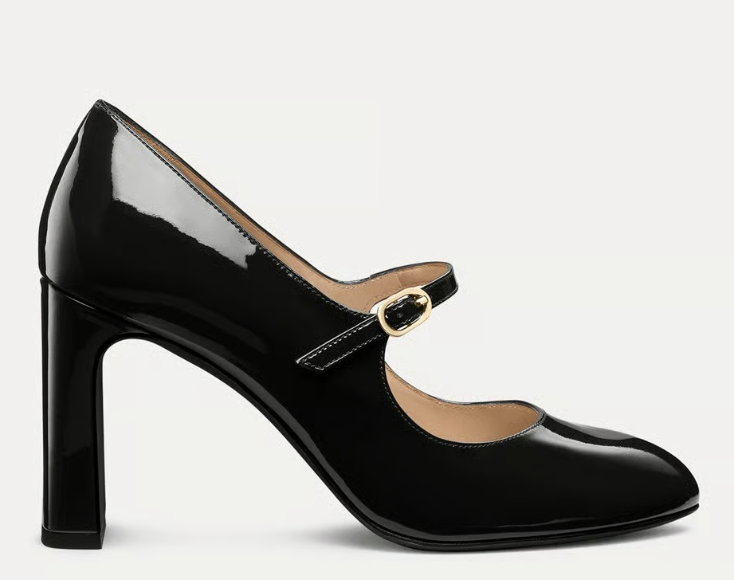
There is a particular pleasure in watching a trend that refuses to announce itself. The pairing of Mary Janes with socks, as spotted on Olivia Rodrigo, carries that exact energy. It is not a statement born of loud confrontation but of quiet assurance. The babydoll dress, with its inherent softness, meets the clunky or delicate shoe and the humble sock, and suddenly you have a tension that feels both nostalgic and entirely present. This is not about shock value; it is about the comfort of knowing exactly what you are doing. In a world that often equates volume with confidence, this look suggests that true rebellion can be as simple as choosing what feels right for yourself, regardless of the rulebook.
This styling choice sits naturally alongside a broader conversation we have been having about fashion's current mood. We recently noted how J.Lo trades her signature bodysuit for tailored ease in Milan, a shift that mirrors this same principle: the most compelling style often comes from softening the expected silhouette. Similarly, the appeal of this specific pairing echoes the sentiment behind The quiet-luxury shade replacing the classic neutrals you own. That shade is not about shouting for attention; it is about a refined awareness that true elegance is felt, not performed. When you see a look that is described as "so wrong it's right," you understand that the magic lies in the deliberate, thoughtful contrast. It is the same instinct that makes a single, perfect accessory the focus of an entire outfit, much like Katie Holmes's Milan Look Finds Quiet Perfection in a Single Bag proves that sometimes, less is the most powerful statement.
For our readers, the practical takeaway is one of permission. Permission to view a trend not as a directive but as a suggestion to be filtered through your own lens. The Mary Jane and sock combination is not about copying Olivia Rodrigo head-to-toe; it is about identifying the emotional thread. It is a grunge-adjacent softness, a nod to a 90s sensibility that feels current without being costume-like. If you are drawn to this, consider how it applies to your own wardrobe. It is not about the specific shoe or sock, but about the principle of pairing something overtly feminine with something grounded or practical. It is the confidence to wear a delicate dress with a chunky loafer, or a tailored piece with a simple cotton sock, and feel entirely composed.
The question this raises is not whether the trend will last, but what it says about our collective desire for ease within our self-expression. We are moving away from the idea that style must be a constant performance of effort. This is a return to a more personal, intuitive way of dressing, where the mood of the day dictates the outfit. As you consider this, watch how the industry responds. The real detail to observe is not the next iteration of the shoe, but how designers and tastemakers continue to blur the line between the dressed-up and the undone, and whether we, as the audience, continue to find that quiet tension so compelling.