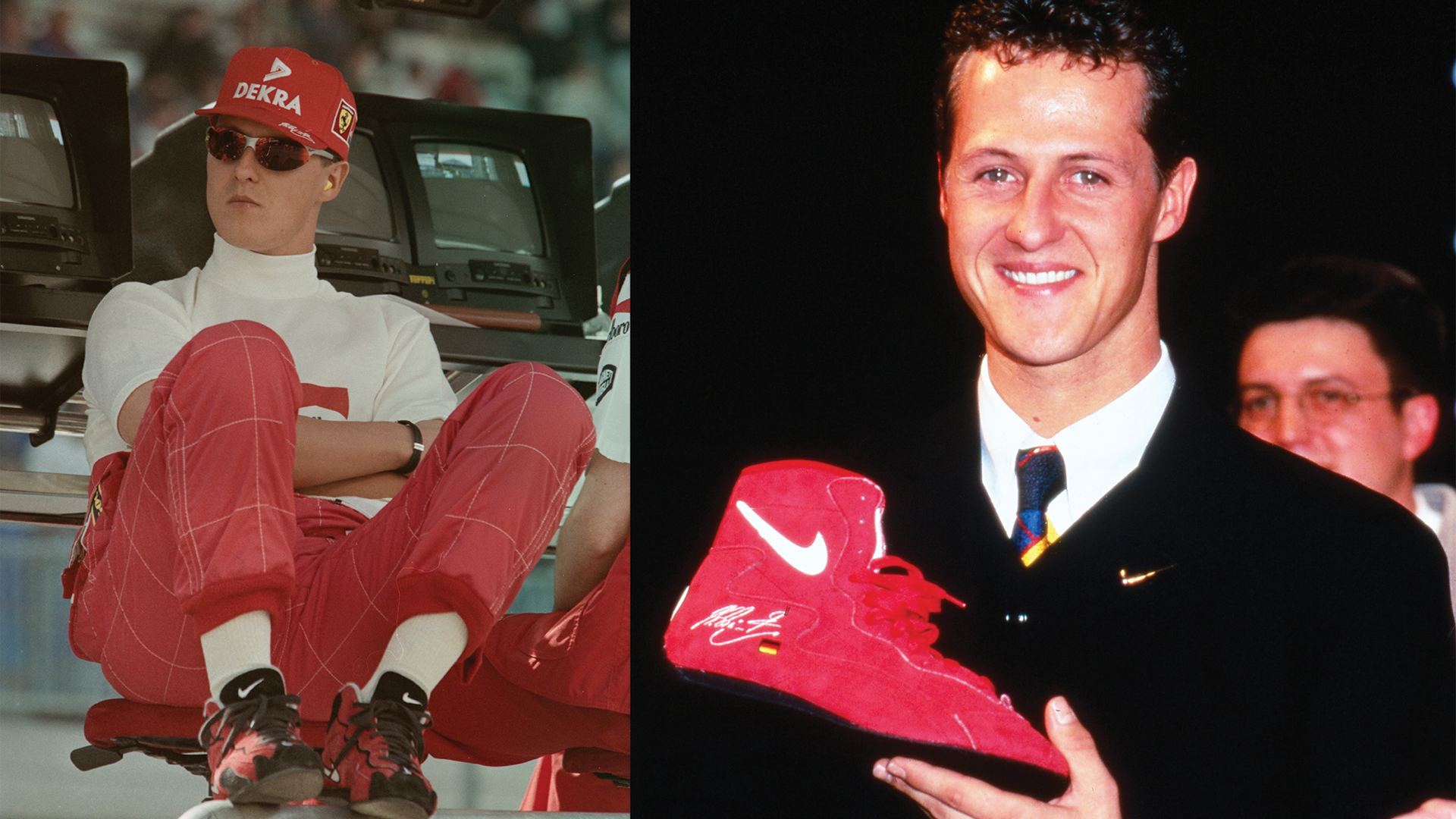
There is something quietly radical about Nike's return to Formula One, and it has nothing to do with sneaker drops. The partnership, announced at the Las Vegas Grand Prix and set to begin with the 2027 season, signals a shift in how we think about power in sport: less about noise, more about intention. Nike's GM of global energy, LeMar Anglin, described it as "unfinished business," referencing the brand's brief but legendary collaboration with Michael Schumacher from 1996 to 2002. But what makes this moment feel different is not nostalgia. It is the recognition that both entities have matured. F1 is no longer a niche pursuit for petrolheads, and Nike is no longer just a logo on a shoe. They are each, in their own way, curators of culture. This is not a sponsorship. It is a quiet alignment of ambition.
For the woman who lives at the intersection of style and self-expression, this partnership offers something far more interesting than a new uniform for paddock staff. It offers permission to imagine. What happens when a brand that understands storytelling as deeply as Nike turns its lens on a sport that has historically been defined by speed and machinery? The answer, we suspect, will be felt in texture, in mood, in the way a driver's jacket moves off the track and into daily life. Consider how Dakota Johnson's leopard bag and silk scarf quietly own the season, a lesson in how one considered accessory can reframe an entire look. Nike's approach to F1 will likely follow a similar logic: restraint over saturation, atmosphere over advertisement. And when you pair that sensibility with the possibility of a Nike x Jacquemus capsule or a NikeSkims collaboration, the line between sport and wardrobe begins to dissolve entirely.
What resonates most, however, is the emphasis on F1 Academy. Anglin spoke directly to the goal of seeing a woman reach the top of the sport, noting that Nike's mission is to "make athletes' dreams real." This is not a corporate talking point. It is a specific, measurable intention. The partnership could, in time, produce the first female F1 driver, not through tokenism, but through the same infrastructure that elevated Michael Schumacher. That is the kind of legacy that matters. It is also the kind of quiet, long-term investment that feels increasingly rare in a culture obsessed with instant results. Much like The elegantly versatile coat celebrities are choosing over grey, this is about choosing substance over trend.
The most telling detail in Anglin's comments was his description of F1 as a partner that "isn't going to put any limits on us." That freedom, he implied, is where Nike does its best work. For the rest of us, the question becomes: what will they create when no constraints exist? The answer will not arrive on day one. It will reveal itself over the course of a season, in the way a driver's glove fits, in the silhouette of a jacket worn on the podium, in the quiet image of a young woman from F1 Academy stepping into a car she was told she could not drive. That is the detail to watch.