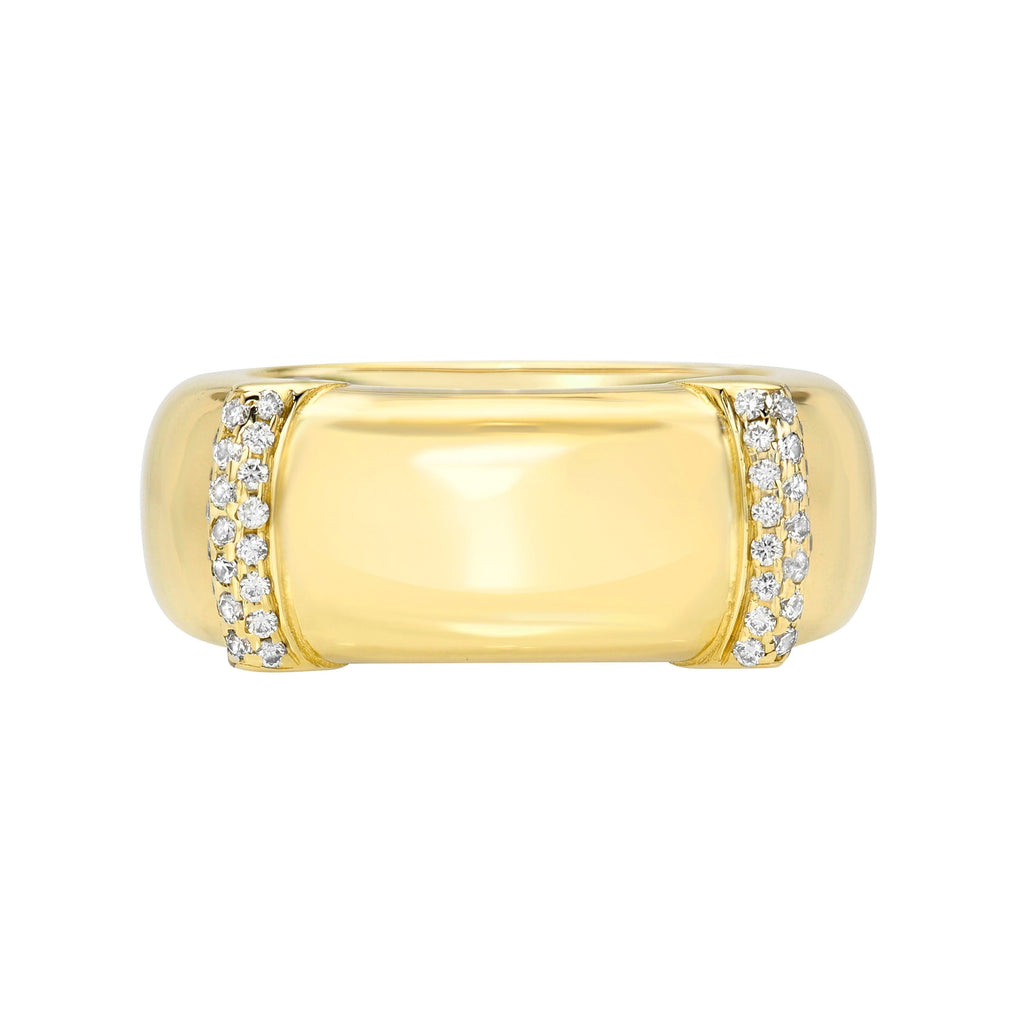
There is a difference between wearing jewelry and communicating with it, and Meghan Markle's return to public life in Nottingham made that distinction unmistakable. By leaving her engagement ring and earrings at home, she demonstrated that restraint is not an absence of style but a refined form of expression. Jewelry expert Nilesh Rakholia of Abelini observed that "what you choose not to wear can say as much as what you do," and we agree completely. This is a masterclass in intentional dressing, one that echoes the quiet power we explored in The Art of Stillness Through What We Choose to Wear, the idea that presence is often felt most keenly in what is withheld. Meghan's look was head-to-toe British: a burgundy Joseph coat, a turtleneck from the same label, a skirt by The Fold, and Jennifer Chamandi pumps. The jewelry she did choose, Princess Diana's Cartier watch, her Welsh gold wedding band, a second gold band, and a Logan Hollowell Aura ring, carried weight precisely because nothing else competed for attention.
For years, as Rakholia notes, Meghan's jewelry was "read and interpreted by everyone but her." The royal family's accessories have always functioned as a coded language, one written by protocol and public expectation rather than personal taste. By stepping out without earrings, a choice the jeweler calls "a real decision", she reclaims the narrative. She is not leaning on diamonds to signal importance. The look feels considered because she resisted the urge to add more, and that restraint is a form of confidence most of us could study. It aligns with the ethos we admired in The Quiet Weight of a Well-Made Earring: that a single, meaningful piece can anchor an entire mood. Here, the anchor was Diana's watch, a piece of family history worn not as a statement, but as a quiet companion.
What this means for our readers is practical, not merely aspirational. The takeaway is direct: editing is an act of self-assurance. Meghan did not need a statement necklace or diamond studs to make her return feel significant; she needed only the pieces that held personal meaning, worn with the conviction that less is never a compromise. When you are comfortable in your own identity, you do not need ornaments to prove your presence. You can let the watch speak, let the band whisper, and let the absence of everything else create the space for people to see you rather than what you are wearing. This is the difference between dressing for approval and dressing for yourself.
The specific consequence to watch is how this approach influences the jewelry industry itself. If a figure of Meghan's visibility can step into a major public moment without earrings, and be praised for it, then the pressure to adorn every available surface begins to loosen. Designers may find themselves creating fewer, more intentional pieces rather than collections built on volume. Rakholia's observation that she "isn't leaning on diamonds to make the outfit feel important" is not just a comment on one woman's wardrobe; it is a quiet signal that the era of more-is-more may finally be giving way to something quieter, more personal, and far more powerful.