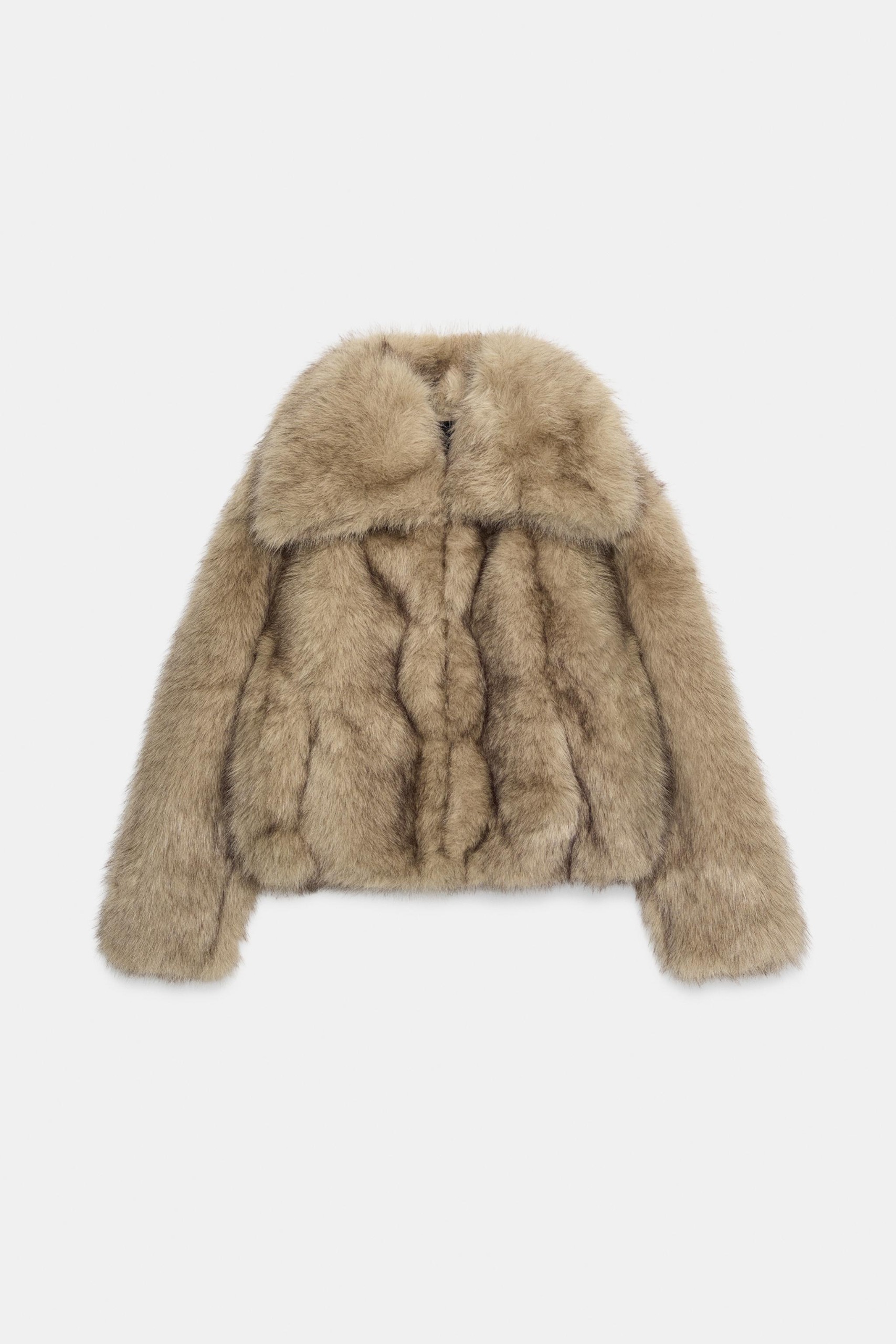
There is something quietly radical about a holiday collection that refuses to shout. Zara's new edit, with its faux fur, slip dresses, and after-dark ease, understands that the most alluring party dressing is the kind that looks like it happened by accident. This is not the predictable sparkle of office festivities; it is the sultry, slightly dishevelled glamour of a woman who knows exactly where she is going and does not need the room to confirm it. The collection trades literal interpretations of festive cheer for something more enduring: a chocolate-brown lace slip, a perfectly draped black dress, leather gloves finished with plush cuffs, sculptural gold earrings that do all the talking. It is a mood, not a costume. This approach echoes the kind of quiet glamour we explored in An intimate evening of cashmere and quiet glamour with Cara Delevingne, where atmosphere and texture mattered more than volume. Here, Zara reaches for the same restraint, and it suits her.
What makes this edit particularly compelling is its refusal to treat holiday dressing as a one-night obligation. The faux-fur jacket that makes jeans feel intentional, the lace camisole that brings romance to an oversized blazer, the satin skirt that will resurface at a February dinner, these pieces are built for a life beyond December. They ask nothing of you except to be worn. That ease is precisely the point. It recalls the philosophy behind Winter 2026 Shoe Trends Rooted in Memory and Movement, where the best clothes are the ones you can actually live in. Zara's holiday offering extends that logic: the velvet-satin dress, the asymmetric cape, the wool coat with detachable faux-fur lapel, each piece feels like it was chosen, not assembled. There is no performance here, only presence.
The '90s supermodel reference is apt, but only if we strip it of nostalgia. This is not about recreating an era; it is about reclaiming a certain kind of confidence. The women who ruled those New York dance floors were not dressed to be looked at. They were dressed to feel something. Zara's collection captures that internal logic: the cherry-red cardigan that becomes an invitation to get dressed up, the beaded shoulder bag that holds nothing but a lipstick and a phone, the asymmetric heeled sandals that suggest movement rather than stillness. These are clothes for a woman who is already complete. She does not need the outfit to finish her. She simply lets it accompany her.
The clearest takeaway from this collection is that the best holiday pieces do not announce themselves. They linger. They reappear. They ask to be worn again, not because they are versatile in the generic sense, but because they carry a memory of the night they were first chosen. That is the quiet allure Zara has tapped into: the knowledge that a woman's wardrobe should feel like an extension of her self-awareness, not a costume for a single occasion. Watch how the faux-fur cape moves through January. That is where the real story begins.