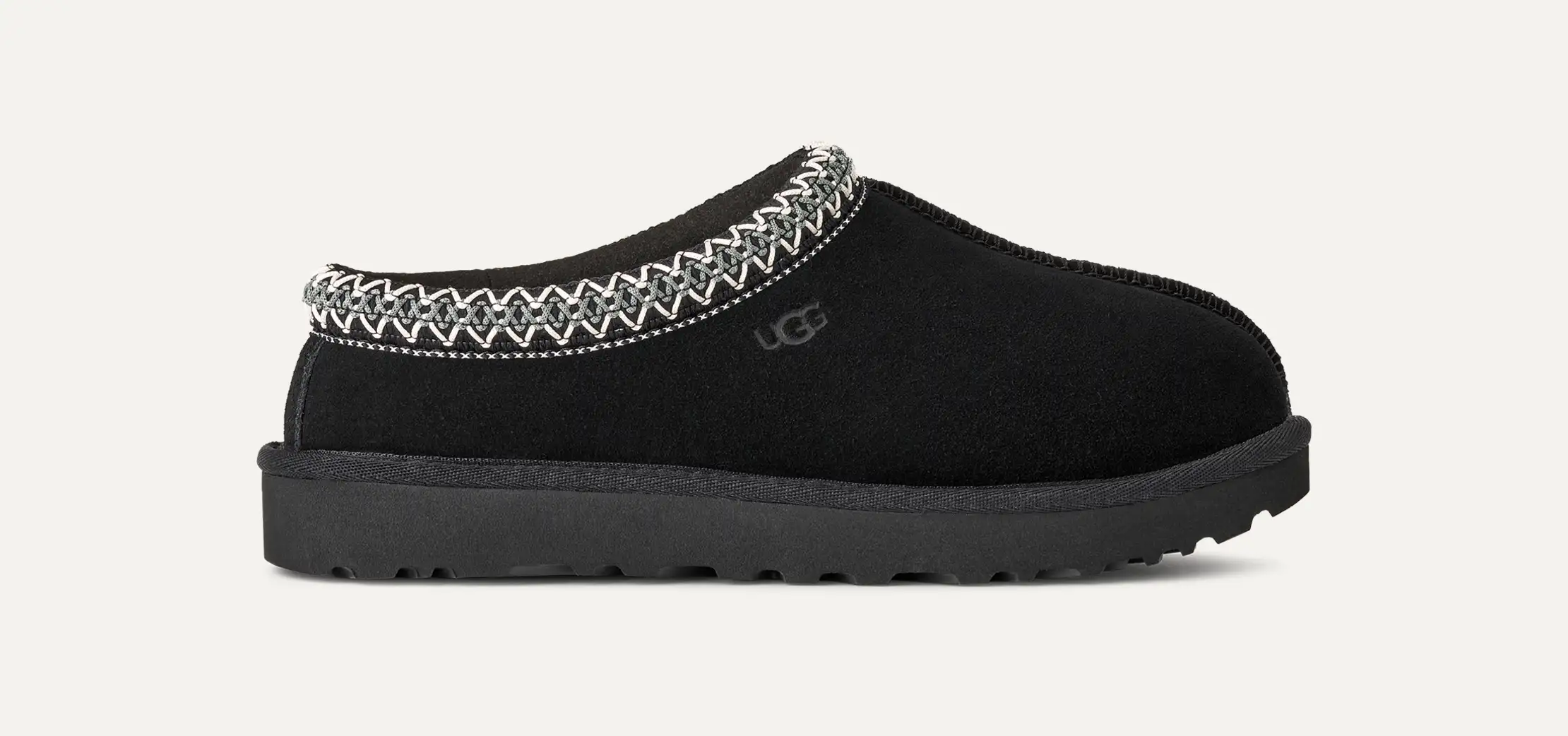
There is something quietly radical about a woman walking through New York in shoes that are clearly not her size. Zoë Kravitz, photographed on set for *Die Alive*, wore Ugg Tasman slippers that seemed to slip past the boundaries of her own feet, lending the whole look an air of borrowed intimacy. It is a styling choice that speaks not to fashion's usual insistence on precision, but to something far more interesting: the comfort of inhabiting someone else's world for a moment. This is not about slippers as a trend; it is about slippers as a gesture.
The Ugg Tasman has long been a staple of genderless appeal, a style that bridges the indoor and the outdoors with a quiet authority that feels particularly relevant this season. In our recent piece on The Quiet Allure of Winter's Most Refined Essentials, we explored how cold-weather dressing often rewards the pieces that ask for nothing, that simply exist in the background of a life well lived. Kravitz's choice of the black Tasman, a departure from the expected chestnut, reinforces this idea. Black does not announce itself. It absorbs light, recedes into the silhouette, and lets the woman wearing it do the talking. Here, the shoe becomes a supporting character, not the lead.
What makes this image linger is the subtext. Kravitz and Harry Styles share more than a red scarf and a fondness for New York; they share a wardrobe philosophy rooted in classic, casual, sporty pieces that resist gendered boundaries. The slippers, seemingly borrowed, suggest a relationship where style is not owned but exchanged. This is not the first time we have seen accessories function as quiet exclamation points in a winter wardrobe. In The Quiet Authority of Accessories That Elevate Winter's Essentials, we noted how the right piece can transform an outfit without demanding attention. Kravitz's Uggs do exactly that: they soften the formality of her midi skirt and zip-up sweatshirt, grounding the look in something approachable and human.
The concrete takeaway here is that luxury in 2025 is not about ownership; it is about permission. Permission to wear shoes that look like they belong to someone else. Permission to choose black over chestnut because it feels quieter. Permission to step onto a New York set in slippers that could double as house shoes, and let the world see that comfort is not a compromise but a statement. Watch for how this idea of borrowed ease, of style as a shared language rather than a personal possession, continues to influence the way women dress this winter. It is a shift that feels intentional, feminine, and deeply self-assured.