Iraq-Bound VLCC Becomes First To Head West Through Strait Of Hormuz After U.S. Blockade
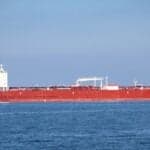


An Iraq-bound very large crude carrier (VLCC), Agios Fanourios I, has entered the Persian Gulf through the Strait of Hormuz on its second attempt, becoming the first crude tanker to head west since a US blockade targeting Iran-linked shipping came into force.
The vessel, which is not under sanctions, is signalling Basrah as its destination, where it is expected to load cargo. Ship-tracking data shows it passed through the strait using a route approved by Tehran, between Qeshm and Larak islands.
Traffic through the strategic chokepoint remains extremely limited. Several vessels that initially crossed into the Gulf of Oman when the blockade was introduced later turned back, including the US-sanctioned Rich Starry.
U.S. authorities said six ships reversed course on the first day of the blockade, though further details were not disclosed.
Another sanctioned tanker, Alicia, was also observed in the area. The vessel, previously known as Montrose, has been moving within the strait and into the Persian Gulf while signalling that it is awaiting further instructions.
Despite the situation, a small number of ships continued to pass in both directions on April 15, according to tracking data.
There were no clear signs of Iranian tankers trying to leave the Persian Gulf, a route that would bring them face-to-face with US naval forces. Movements of vessels with switched-off transponders are not captured in the data.
Iran is reportedly considering a temporary pause in oil shipments. The move is seen as an effort to avoid escalating tensions and to keep the possibility of renewed negotiations open after recent talks collapsed.
The Agios Fanourios I had earlier attempted to enter the Persian Gulf on April 12 but turned back after diplomatic discussions between the US and Iran broke down in Islamabad.
Meanwhile, the bulk carrier Seachampion, which delivered agricultural cargo to Iran, sailed in the opposite direction a few hours later.
The vessel departed Bandar Imam Khomeini, a key grain import hub, on April 13 within a US-issued grace period for humanitarian shipments. It is currently indicating Shinas in Oman as its destination.
The transit is expected to test US assurances that essential cargoes such as food and medical supplies will be allowed passage subject to inspection.
An increased presence of U.S. warships has been reported in the Gulf of Oman, where naval forces are monitoring and controlling vessel movements as part of efforts to restrict Iran’s oil exports.
Since April 13, shipowners, traders and investors have been closely watching movements through the Strait of Hormuz.
The narrow waterway, one of the world’s busiest oil transit routes, has seen traffic fall sharply following US and Israeli strikes on Iran earlier this year and the subsequent escalation.
There was a slight increase in activity over the weekend, with three loaded supertankers passing through on April 11. However, after talks collapsed and blockade warnings followed, many shipowners chose to avoid the route until the situation becomes clearer.
The Rich Starry remains near Qeshm island and is signalling that it is waiting for orders, which usually means it has no fixed destination. Data shows it is still carrying the same cargo it had when it left the Persian Gulf.
Reference: Bloomberg
Want to read more?
Check out the full article on the original site