20 Years Later, I Still Need Body Positivity
Our take
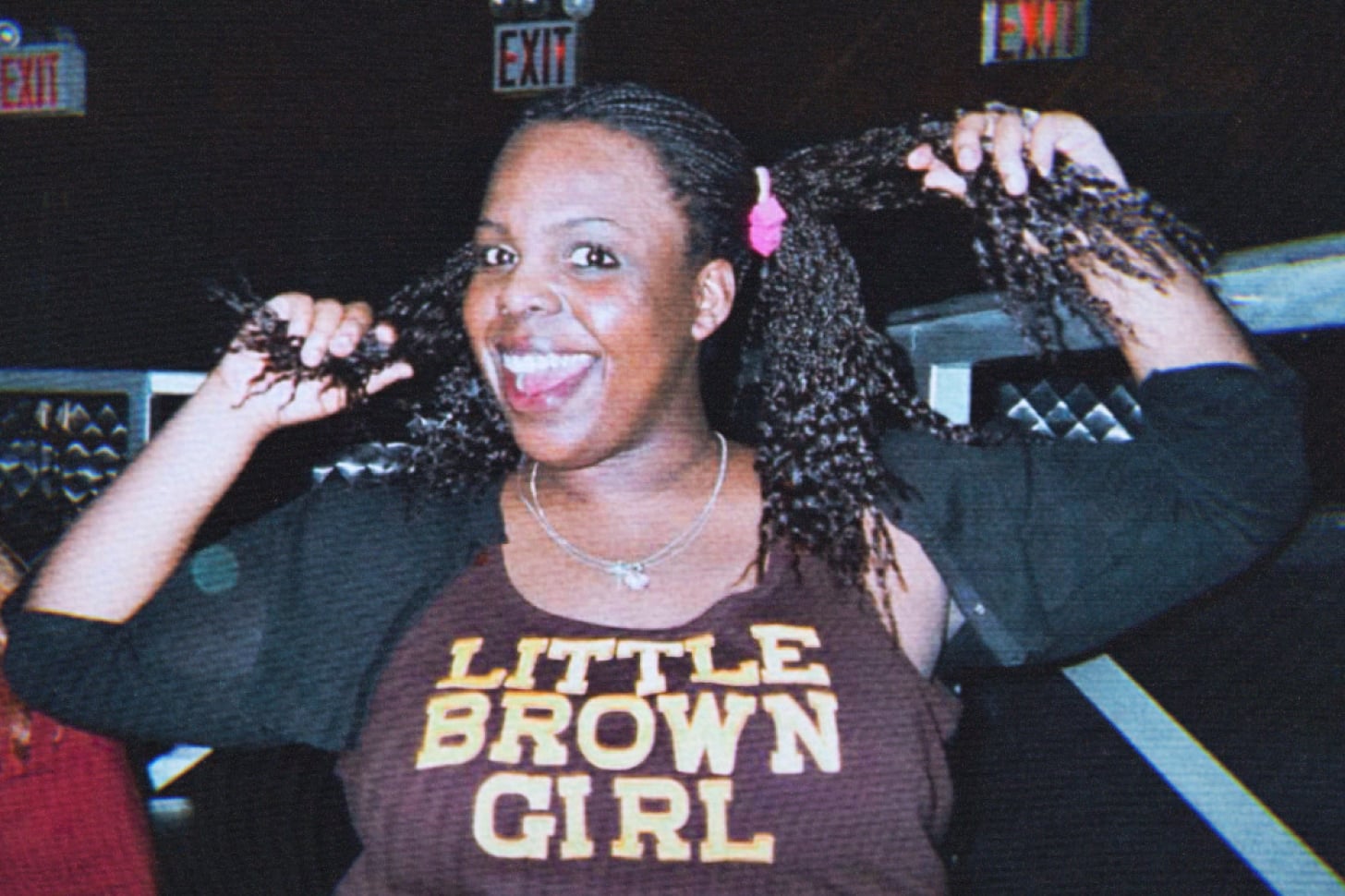
Twenty years. It’s a significant marker, especially when reflecting on cultural shifts. Popsugar’s “Aughts Effect” package, celebrating two decades of the publication and the enduring trends of the early 2000s, provides a fascinating lens through which to examine the evolution of conversations around body image. The piece, "20 Years Later, I Still Need Body Positivity," resonates deeply because it underscores a truth often obscured by the relentless churn of social media and fleeting trends: the fight for body acceptance isn't a solved problem. It’s a continuous journey, one that requires ongoing vigilance and a willingness to challenge deeply ingrained societal norms. The nostalgia woven throughout the “Aughts Effect” – evident in articles like In Defense of Nostalgic Interiors and Shop All the Y2K-Inspired Looks From Our Aughts Effect Cover Shoot – highlights how certain aesthetic ideals, and the pressures they create, cycle back into popularity, demanding renewed attention to the impact they have on self-perception.
The article’s core message – that the need for body positivity persists despite two decades of progress – is profoundly important. While the early 2000s saw the burgeoning of the body positivity movement, often as a reaction against the hyper-thin ideals of the previous era, the landscape has become increasingly complex. The rise of social media, while offering platforms for marginalized voices, has also amplified unrealistic beauty standards, fueled by filters, editing, and the curated perfection of influencer culture. What started as a movement advocating for acceptance of all bodies has, in some corners, been co-opted or diluted, becoming another trend to be consumed rather than a genuine commitment to inclusivity. The author's personal reflection speaks to this ongoing struggle – the persistent internal critic, the lingering societal messages that equate thinness with worth, and the constant need to actively cultivate self-acceptance. It's a vulnerability that fosters connection, reminding readers that they are not alone in their experiences.
The enduring nature of this need speaks to the deeply embedded nature of societal conditioning. Beauty standards are not organic; they are constructed and reinforced by media, fashion, and cultural narratives. The "Aughts Effect" itself demonstrates the cyclical nature of these trends, reminding us that what was once considered fashionable can return, bringing with it the same pressures and anxieties. The conversation has evolved, certainly. We see greater representation of diverse body types in advertising and media (though progress remains uneven). There's a growing awareness of the harmful effects of diet culture and a rejection of restrictive beauty ideals by some. However, the underlying message – that bodies outside of a narrow, often unattainable, standard are somehow “less than” – continues to permeate our culture. This is why the author’s continued need for body positivity, twenty years on, is a vital reminder of the work that still needs to be done. It is not a destination, but an ongoing practice.
Looking ahead, the challenge lies in dismantling the systems that perpetuate these harmful ideals and fostering a culture of genuine self-acceptance and body neutrality. Rather than focusing solely on “loving” our bodies (which can feel performative for some), perhaps the future lies in cultivating a sense of neutrality – acknowledging our bodies as vessels for experience, rather than objects to be judged or manipulated. Will we see a shift away from relentless self-optimization and towards a greater appreciation for the inherent worth and diversity of human bodies? The continued conversation surrounding the “Aughts Effect,” and the ongoing reflections on the body positivity movement, offer a crucial space to explore that question and chart a course towards a more inclusive and compassionate future.
This story is part of our Aughts Effect package, which celebrates 20 years of Popsugar — and enduring culture. Read all the stories here.
It was 1999. I was watching MTV when I saw exactly what I wanted to copy: Mariah Carey in her "Heartbreaker" video in those low-rise jeans, the waistband cut clean off. I ran to my closet and cut the waistband off my own jeans, feeling like I'd cracked some fashion code. But I couldn't bring myself to show my belly at school, so I put a longer shirt over them anyway, hiding everything.
Being a plus-size teenager in the early 2000s taught me that girls with bodies like mine didn't get the happy ending. Not the guy, not the dream wardrobe, not visibility in the glossy version of adulthood I watched on big and small screens. Every rejection, every uninvited comment, every closed door became proof that my weight made me unworthy. Half the racks I wanted to shop didn't carry my size, which felt less like an inventory problem and more like the world telling me exactly where I didn't belong.
That anxiety did not stay in one place. It got dressed with me every morning and followed me from high school into college. Then, around 2006, body positivity found me one night in a downtown Manhattan nightclub, when a mutual friend invited me to a spot where plus-size women weren't the exception in the room, they were the room. I found out later that "BBW clubs" like it existed in major cities all over the country. In those clubs, I wasn't any smaller, but I felt like my weight just stopped being a liability. I wondered, genuinely, what it would feel like to carry that mindset outside those four walls and into the rest of my life. The first time I tested it was a halter dress at a party, no cover up in the bag as backup, which felt less like fashion and more like showing up somewhere without your keys.
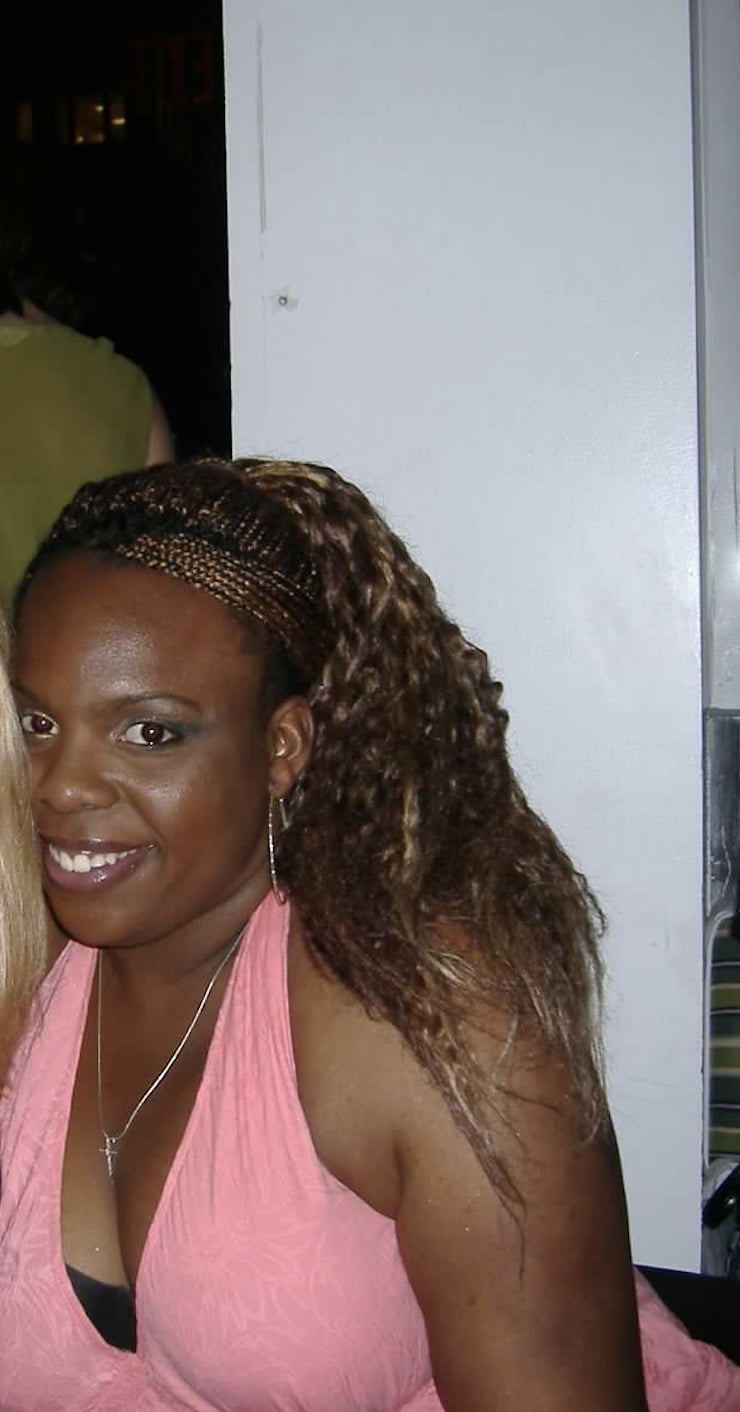 Here I am at the 2006 "BBW club" that changed everything. Image Source: Courtesy of CeCe Olisa
While the BBW parties ultimately weren't my scene, an inclusive, body-positive space like that changed everything for me. I began to explore radical ideas like not covering or hiding my body, and I started to write about it on my website.
Women started leaving comments. Then emails. Then their own stories, unprompted, like they'd been waiting for someone to go first. I didn't realize I wasn't alone until women started telling me they felt the same way. I hadn't been writing into the void. I'd been writing into a room full of people I just hadn't met yet.
Those essays became conversations. Those conversations became friendships. Those friendships became a community I could actually stand inside of. In 2015, that community became The Curvy Con, a plus size fashion convention during New York Fashion Week. One weekend a year, your body stopped being a liability and became the standard. That's the culture that gave me new language for myself. "Big" girl became "plus size" girl, which felt more fashion mag than family reunion, and I said it like a fact I was proud of, because I was.
I was more proud of my body than I had ever been. I built a whole life around the idea that I shouldn't wait on my weight to live the life I wanted, and for a while everything aligned: my confidence, the culture, even the clothing racks, which had finally started carrying my size without making me hunt for it in a back corner.
While I embraced my body, I also told myself that health was a practice, not a pant size, and wellness never needed a smaller number to count, so I made fitness and healthy living a priority without weight loss as a goal.
My first bikini photo, showing arms, legs, and tummy, is still the one I'd choose first if I could only keep one from my whole body-positive awakening. It was taken right before the world shut down for the pandemic.
Here I am at the 2006 "BBW club" that changed everything. Image Source: Courtesy of CeCe Olisa
While the BBW parties ultimately weren't my scene, an inclusive, body-positive space like that changed everything for me. I began to explore radical ideas like not covering or hiding my body, and I started to write about it on my website.
Women started leaving comments. Then emails. Then their own stories, unprompted, like they'd been waiting for someone to go first. I didn't realize I wasn't alone until women started telling me they felt the same way. I hadn't been writing into the void. I'd been writing into a room full of people I just hadn't met yet.
Those essays became conversations. Those conversations became friendships. Those friendships became a community I could actually stand inside of. In 2015, that community became The Curvy Con, a plus size fashion convention during New York Fashion Week. One weekend a year, your body stopped being a liability and became the standard. That's the culture that gave me new language for myself. "Big" girl became "plus size" girl, which felt more fashion mag than family reunion, and I said it like a fact I was proud of, because I was.
I was more proud of my body than I had ever been. I built a whole life around the idea that I shouldn't wait on my weight to live the life I wanted, and for a while everything aligned: my confidence, the culture, even the clothing racks, which had finally started carrying my size without making me hunt for it in a back corner.
While I embraced my body, I also told myself that health was a practice, not a pant size, and wellness never needed a smaller number to count, so I made fitness and healthy living a priority without weight loss as a goal.
My first bikini photo, showing arms, legs, and tummy, is still the one I'd choose first if I could only keep one from my whole body-positive awakening. It was taken right before the world shut down for the pandemic.
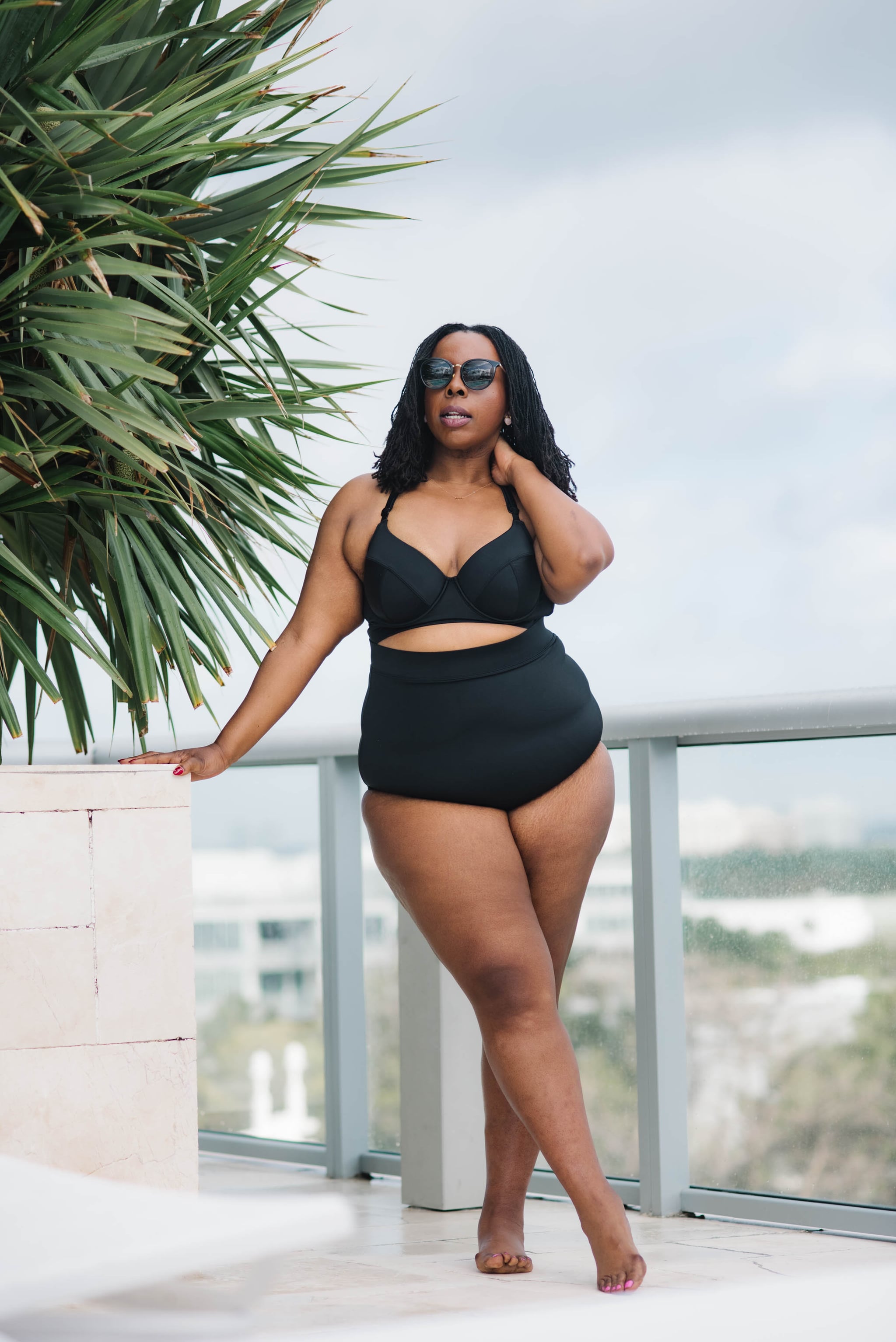 My favorite bikini pic. Image Source: Courtesy of CeCe Olisa
That confidence carried me through the pandemic mostly intact. The world outside my apartment was suddenly talking about health the way I'd been talking about it for years, out loud, without shame, like it belonged to everyone. My knees did not fare as well.
In 2023, my doctor brought up GLP-1s like he was recommending a restaurant. "You should really try these," he said.
I was still fully on my body-positive soapbox, thinking about identity and community and what it would mean to trade being a plus-size girl living her best life for being an obesity patient seeking treatment so she could continue to live her best life. Those felt like two different women to me. It took longer than I'd like to admit to understand that I am not obese. I have obesity. One is an identity. The other is a diagnosis I could actually treat without losing my body-positive values. I told my doctor I wasn't sure. He kept a sample pen at his office for weeks with my name on it. I know this because I refused to pick it up for weeks.
What changed my mind wasn't the mirror. It was a number. When I learned that every pound you lose takes four pounds of pressure off your knees, I picked up the pen from my doctor. The healthy habits I had built as an act of love for my plus-size body, and the medication, turned out to be a great combination for my well-being and longevity.
Weeks later, I ran for a subway car the way I hadn't run for anything in years, and stood on the platform a little stunned that my own knees would let me do something like that.
My weight had started with a three for most of my life, then a two. Now I'm closing in on what some of us call Onederland, 199 pounds, the place where the number in front finally drops below two. You would think this is the part where my desire to show my body gets louder. It's the opposite. Loose skin has me fighting the urge to cover again, except this time I have a body-positive mindset protecting my confidence.
Nobody warns you that when it comes to loving your body, there isn't a finish line, just new ways to keep loving it through the transition.
My favorite bikini pic. Image Source: Courtesy of CeCe Olisa
That confidence carried me through the pandemic mostly intact. The world outside my apartment was suddenly talking about health the way I'd been talking about it for years, out loud, without shame, like it belonged to everyone. My knees did not fare as well.
In 2023, my doctor brought up GLP-1s like he was recommending a restaurant. "You should really try these," he said.
I was still fully on my body-positive soapbox, thinking about identity and community and what it would mean to trade being a plus-size girl living her best life for being an obesity patient seeking treatment so she could continue to live her best life. Those felt like two different women to me. It took longer than I'd like to admit to understand that I am not obese. I have obesity. One is an identity. The other is a diagnosis I could actually treat without losing my body-positive values. I told my doctor I wasn't sure. He kept a sample pen at his office for weeks with my name on it. I know this because I refused to pick it up for weeks.
What changed my mind wasn't the mirror. It was a number. When I learned that every pound you lose takes four pounds of pressure off your knees, I picked up the pen from my doctor. The healthy habits I had built as an act of love for my plus-size body, and the medication, turned out to be a great combination for my well-being and longevity.
Weeks later, I ran for a subway car the way I hadn't run for anything in years, and stood on the platform a little stunned that my own knees would let me do something like that.
My weight had started with a three for most of my life, then a two. Now I'm closing in on what some of us call Onederland, 199 pounds, the place where the number in front finally drops below two. You would think this is the part where my desire to show my body gets louder. It's the opposite. Loose skin has me fighting the urge to cover again, except this time I have a body-positive mindset protecting my confidence.
Nobody warns you that when it comes to loving your body, there isn't a finish line, just new ways to keep loving it through the transition.
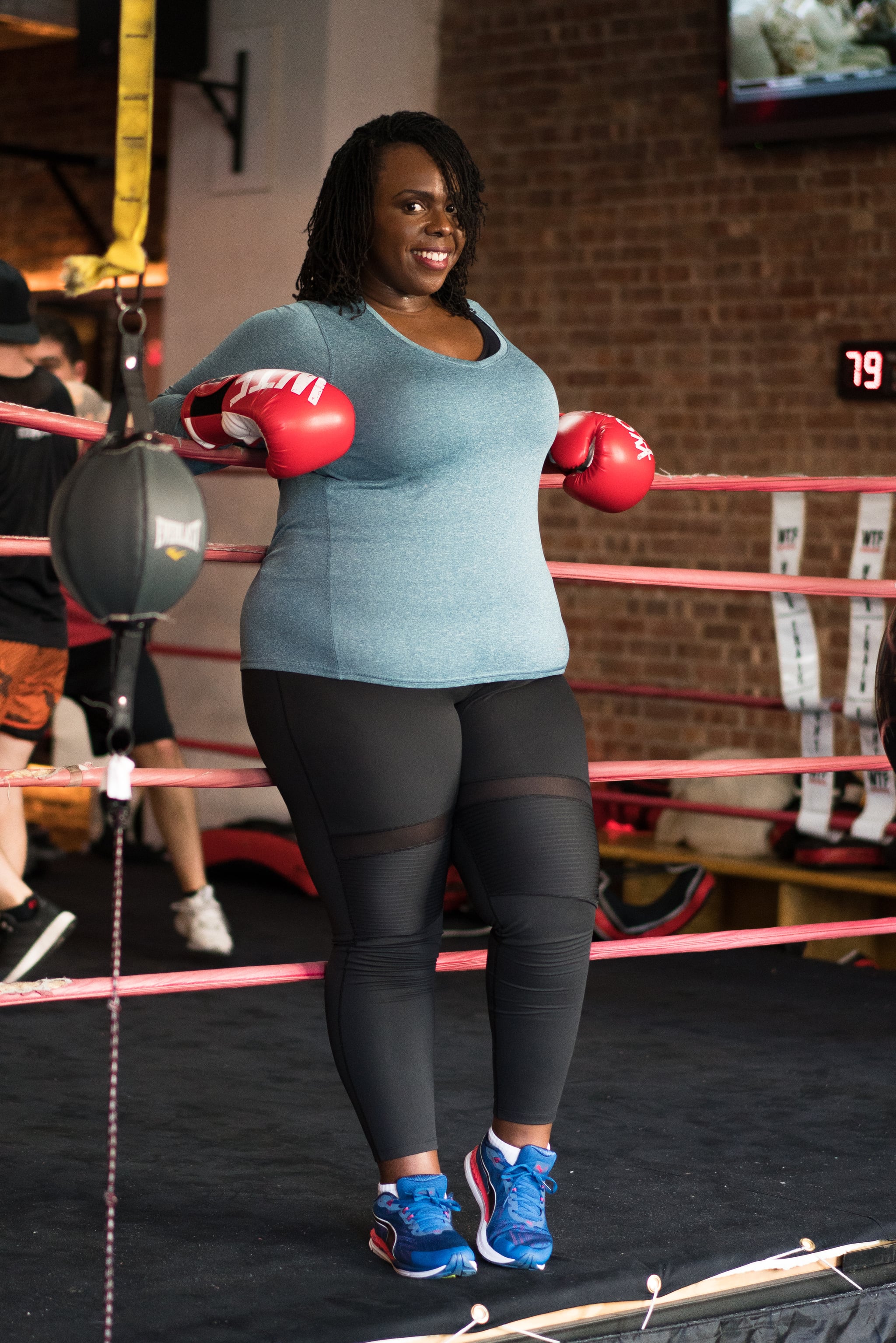 Image Source: Courtesy of CeCe Olisa
In high school, I thought a happy ending meant low cut jeans and a flat tummy. In my twenties, it meant a liberated body and finally being seen. Today, it means loving myself into longevity so I can enjoy the life body positivity taught me I already deserved.
I write about my GLP-1 journey publicly because I'm hopeful that those of us who lived through the body positivity era won't look back on it as a failure now that some of our bodies are changing again. I'd rather we carry it forward, into whatever phase our bodies move through next, the way I'm trying to carry mine into my loose skin era.
Somehow we've still ended up with shame on both sides of this conversation: some women fearing plus size erasure, others staying quiet about a treatment they may need because they're afraid of being judged by a community that means everything to them. Neither kind of shame is fair, and neither deserves to win.
What gives me real hope is smaller than any of that. It's the questions women in my own community ask me lately, not how to hide something, but which leggings actually hold up, which shoes are worth buying for a longer walk. That shift, toward longevity, toward simply being around longer, might be the best happy ending any of us could ask for. Girls with bodies like mine do get the happy ending. It just took me 20 years to understand the ending was never about the size of the body. It was about a life well lived.
CeCe Olisa is a trailblazing voice in inclusive health and beauty, dedicated to inspiring women to embrace self-care with confidence. As a certified fitness instructor and the founder of Cocoa by CeCe, she blends personal experience with expert insight to make health and beauty joyful, accessible, and empowering.
Image Source: Courtesy of CeCe Olisa
In high school, I thought a happy ending meant low cut jeans and a flat tummy. In my twenties, it meant a liberated body and finally being seen. Today, it means loving myself into longevity so I can enjoy the life body positivity taught me I already deserved.
I write about my GLP-1 journey publicly because I'm hopeful that those of us who lived through the body positivity era won't look back on it as a failure now that some of our bodies are changing again. I'd rather we carry it forward, into whatever phase our bodies move through next, the way I'm trying to carry mine into my loose skin era.
Somehow we've still ended up with shame on both sides of this conversation: some women fearing plus size erasure, others staying quiet about a treatment they may need because they're afraid of being judged by a community that means everything to them. Neither kind of shame is fair, and neither deserves to win.
What gives me real hope is smaller than any of that. It's the questions women in my own community ask me lately, not how to hide something, but which leggings actually hold up, which shoes are worth buying for a longer walk. That shift, toward longevity, toward simply being around longer, might be the best happy ending any of us could ask for. Girls with bodies like mine do get the happy ending. It just took me 20 years to understand the ending was never about the size of the body. It was about a life well lived.
CeCe Olisa is a trailblazing voice in inclusive health and beauty, dedicated to inspiring women to embrace self-care with confidence. As a certified fitness instructor and the founder of Cocoa by CeCe, she blends personal experience with expert insight to make health and beauty joyful, accessible, and empowering.Read on the original site
Open the publisher's page for the full experience