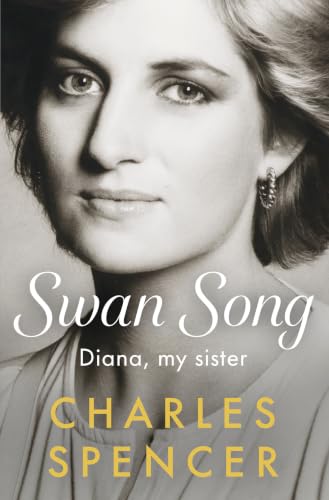
There is a particular restraint required when a family must grieve in public, and the late Queen Elizabeth understood that restraint better than most. Yet, according to Princess Diana's brother, her televised address following Diana's death in 1997 was not merely restrained, it was "serious and respectful." This is a generous assessment from a man who had every right to bitterness. It speaks to a quiet truth the monarchy has long understood: when words are scarce, they carry more weight. The Queen's brief, solemn appearance was not a failure of emotion but a choice of tone, one that mirrored the institution she represented. It is a lesson in the power of saying less, a principle that resonates deeply with those of us who believe confidence does not require volume. For a deeper look at how the current King may be approaching this tradition differently, we recommend reading A Quiet Evolution at Sandringham: A King Open to Change.
What makes Earl Spencer's account so compelling is not the revelation of a misstep, but the acknowledgment that a misstep can still be received with grace. He does not call the address cold or distant. He calls it serious. There is a difference. Seriousness implies intention, a deliberate, measured response to an impossible situation. The Queen was not trying to console a nation in the way a mother might console a child. She was speaking as a sovereign, and that role demands a certain distance. We can argue about whether that distance was appropriate, but we cannot argue that it was accidental. This was a woman who had been trained her entire life to place duty above display. Her instinct was not to emote; it was to endure. For those of us who value intentionality, there is something almost admirable in that refusal to perform grief for the cameras. It is the opposite of the modern impulse to over-share, to explain, to justify every feeling. The Queen chose presence over explanation.
Yet the story leaves us with a question that matters far more than historical judgment: what do we owe the people we grieve? The Queen's address was delivered to a nation, but Diana's brother was watching as a brother. His ability to separate his personal loss from his assessment of the sovereign's performance is a quiet act of emotional maturity. It reminds us that we can hold two truths at once, that a leader can be both flawed and dignified, that a moment can be both underwhelming and respectful. This is not about excusing the monarchy. It is about understanding that the most refined responses are often the ones that feel incomplete. For a related reflection on knowing when to hold firm and when to release, consider The Quiet Confidence of Knowing When to Walk Away.
The takeaway is this: the sovereign's misstep was not her silence, but her assumption that silence would be understood without context. Seriousness requires the listener to meet you halfway. Diana's brother did. The public, in their raw grief, did not. The lesson for anyone navigating a moment of public or private loss is that tone is not enough, you must also consider who is receiving it. A single, concrete detail to watch is whether King Charles, in his own moments of national mourning, will carry forward his mother's restraint or learn from her miscalculation. That choice will define whether the crown remains a symbol of quiet strength or becomes a relic of quiet distance. For a lighter but equally telling look at the Queen's personal habits of thrift, The Sovereign's Quiet Ritual of Resourceful Royal Soaks offers a glimpse into the same disciplined mind.