There is something deeply human about seeing a life reframed not as tragedy, but as unrecognised complexity. Charles Spencer's reflection that Princess Diana may have been neurodivergent does not diminish her legacy; it illuminates it with a quieter, more compassionate light. We believe this perspective matters because it shifts the conversation from what Diana endured to how she experienced the world, a distinction that changes everything for those of us who have ever felt like we were performing normalcy rather than living it.
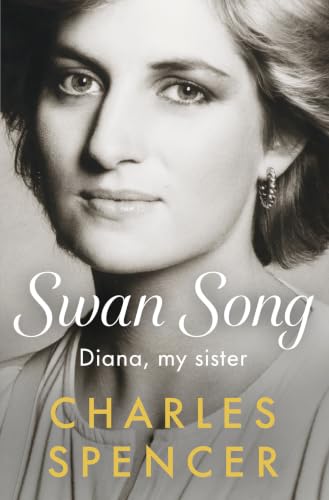
Spencer, who has spoken openly about his own late-in-life ADHD diagnosis, suggests in his new book *Swan Song: Diana, My Sister* that the late princess's "extraordinary public life" may have been shaped by an undiagnosed neurodivergence. This is not a revisionist claim designed for shock. It is a brother's retrospective clarity, the kind that arrives only after years of personal diagnosis and reflection. We find it compelling precisely because it refuses to reduce Diana to either saint or victim. Instead, it offers something rarer: an explanation that honours her complexity. In A Palace in Motion: Charles Supports a New Tribute to Diana's Legacy, we saw the royal family continuing to shape her public memory. Spencer's account, by contrast, shapes her private truth, and the two need not conflict.
What strikes us most is the practical consequence for how we understand her public persona. The empathy that made Diana extraordinary, her ability to connect with strangers, to kneel beside a sick child, to offer warmth in a room full of protocol, may not have been a calculated performance. It may have been the natural expression of a mind that processed emotion and sensory input differently. This reframes her so-called "quirks" not as eccentricities to be smoothed over, but as evidence of a brain working in its own way. For readers who have ever wondered why they feel deeply, move differently, or struggle with spaces others navigate effortlessly, this is not an abstract footnote. It is a mirror.
We also appreciate that Spencer does not speak in absolutes. He offers a possibility, not a diagnosis from the grave. That restraint is the mark of someone who understands that neurodivergence is not a neat label but a lived texture. It echoes the quiet authority we admire in those who speak from experience rather than speculation. In Diana's Quiet Chicago Moment: One Unlikely Conversation on Motherhood, we saw a glimpse of her private self. Spencer's reflection gives that glimpse a new framework.
The question that lingers for us is not whether Diana was neurodivergent. It is how many extraordinary women have been misunderstood not because they were difficult, but because the world lacked the vocabulary to describe them. We will be watching to see whether this conversation opens a gentler space for public figures, and for ourselves, to be seen as we are, not as we are expected to perform.