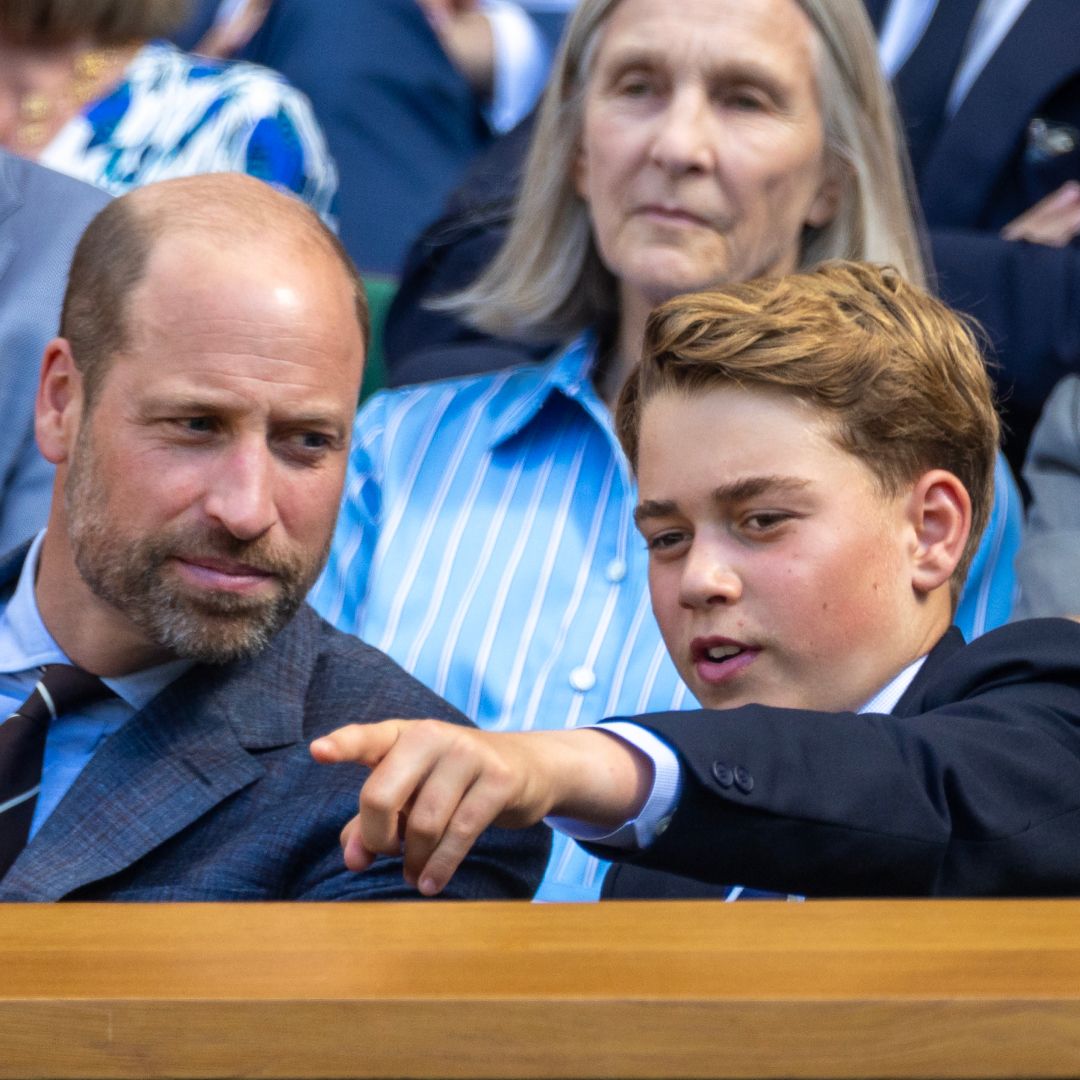
There is a particular kind of quiet that settles over a child who learns, too early, that the world is watching. Prince George is about to step into that world at Eton this fall, following the path his father took at the same age. But as author Robert Jobson notes, the eldest Cambridge child faces a different set of struggles than Prince William did. His father grew up in the shadow of his mother's very public pain, navigating a fractured home life under the glare of the tabloids. George, by contrast, is growing up in a household that has been meticulously curated for privacy, a fortress of normalcy built deliberately within the palace walls. The comparison is not about whose burden is heavier; it is about how the texture of that loneliness changes with the era.
We often romanticize the boarding school ritual as a rite of passage, a stiff upper lip passed down through generations. But watching George prepare for this transition, we are reminded that the privilege of the crown is not immunity from the ache of leaving home. It is a different kind of exposure. William had the chaos of Diana's raw emotional world to process; George has the weight of a digital legacy he did not choose. Every photograph of him as a boy is already a historical artifact. The question is not whether he will cope, but whether we will allow him the grace of a flawed, unremarkable adolescence. This is where the story resonates with us on a more intimate level. It connects to the idea we explored in The Quiet Confidence of Knowing When to Walk Away, where the central act of strength is not clinging to a role, but stepping back from it. For George, that might mean walking away from the pressure to perform a version of royal masculinity that feels outdated.
The more compelling narrative here is not the historical parallel to his father, but the quiet divergence from it. Diana was drawn to reinvention, a trait her brother recently described as a "mischievous attraction" to becoming someone new. William, too, had to reinvent himself, trading the memory of his mother for the mantle of heir. George, however, is being raised in an environment that seeks to minimize reinvention altogether. The goal is stability, not transformation. That is the luxury of his generation: he does not have to become a symbol of change; he simply has to be a boy who likes football and happens to be third in line. Yet that stability is its own cage. When your life is predicated on consistency, the act of leaving for school becomes a public spectacle, a milestone we all feel entitled to dissect.
What we would tell a reader who asks us about this is simple: do not pity him, and do not envy him. Watch instead for the small signs of rebellion. In a life where every move is choreographed, the most telling detail will be what he chooses to keep private. The real test of his character is not how he handles the pomp, but how he handles the quiet moments when no one is watching. We saw this tension play out in A Lingering Wish: Exploring King Charles’ Enduring Hope, where a father's persistent desire shaped a legacy. For George, the open question is whether he will inherit that emotional weight or finally break the cycle by simply being content. The concrete thing to watch is not his first school photo, but his first major public engagement after Eton. Does he look like a prince who has found his footing, or a boy performing duty? That is the moment we will know if the childhood he was given was a gift or just a longer runway to the same inevitable distance.