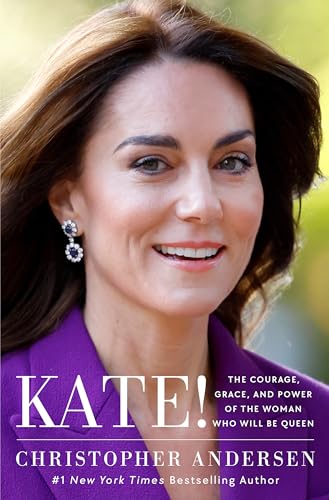
There is a particular kind of power that arrives without announcement. It does not need to raise its voice, because it is certain of its own gravity. Kate, the Princess of Wales, embodies this in a way that feels almost radical in our current moment. The observation that she will be England's first genuine commoner queen, indeed its first middle-class queen, is not a statement about genealogy. It is a statement about the changing architecture of grace. Queen Elizabeth II saw it clearly, recognizing early on that Kate would be a huge support to William when he assumed the throne. She never doubted her suitability. That quiet endorsement from the ultimate arbiter of duty is the foundation upon which a new kind of royal presence has been built.
We are drawn to these stories of quiet ascension because they mirror our own private negotiations with expectation. It is the same thread we see in The Quiet Confidence of Knowing When to Walk Away, where the power is found in the silent exit rather than the loud protest. Kate's path was never about seizing the crown; it was about growing into it with a patience that borders on artistry. In a world that demands constant self-promotion, she offers a counter-narrative: self-possession. She does not need to perform her role because she inhabits it. This is the lesson for us, the practical takeaway. We are not all destined for a throne, but we are all tasked with reconciling where we came from with who we choose to become. Her journey suggests that the middle-class virtues of diligence, restraint, and emotional prudence are not liabilities to be shed in high office, but the very tools that build a durable character.
There is an emotional intelligence to her reinvention that feels reminiscent of other public figures who have navigated the weight of expectation. The pull toward reinvention is a powerful undercurrent in the stories we follow, from Diana, Drawn to Reinvention, Received a Proposal from Across the Atlantic to the more private hopes of the monarch himself. But where reinvention often implies a breaking from the past, Kate's iteration feels more like an integration. She has not rejected the institution; she has modernized its texture from within. She has made the role feel less like a performance and more like a life lived deliberately. For our readers, the question is not whether you can relate to a future queen, but whether you can relate to the act of becoming. It is a slow, unglamorous, deeply human process. And it is precisely that groundedness that makes her uncommon. The crown may be heavy, but she has already shown that her strength comes from not pretending it is weightless. That is the detail to watch: how she continues to define duty on her own terms, proving that true modernity is not about discarding tradition, but about holding it with a steady, unadorned grace.