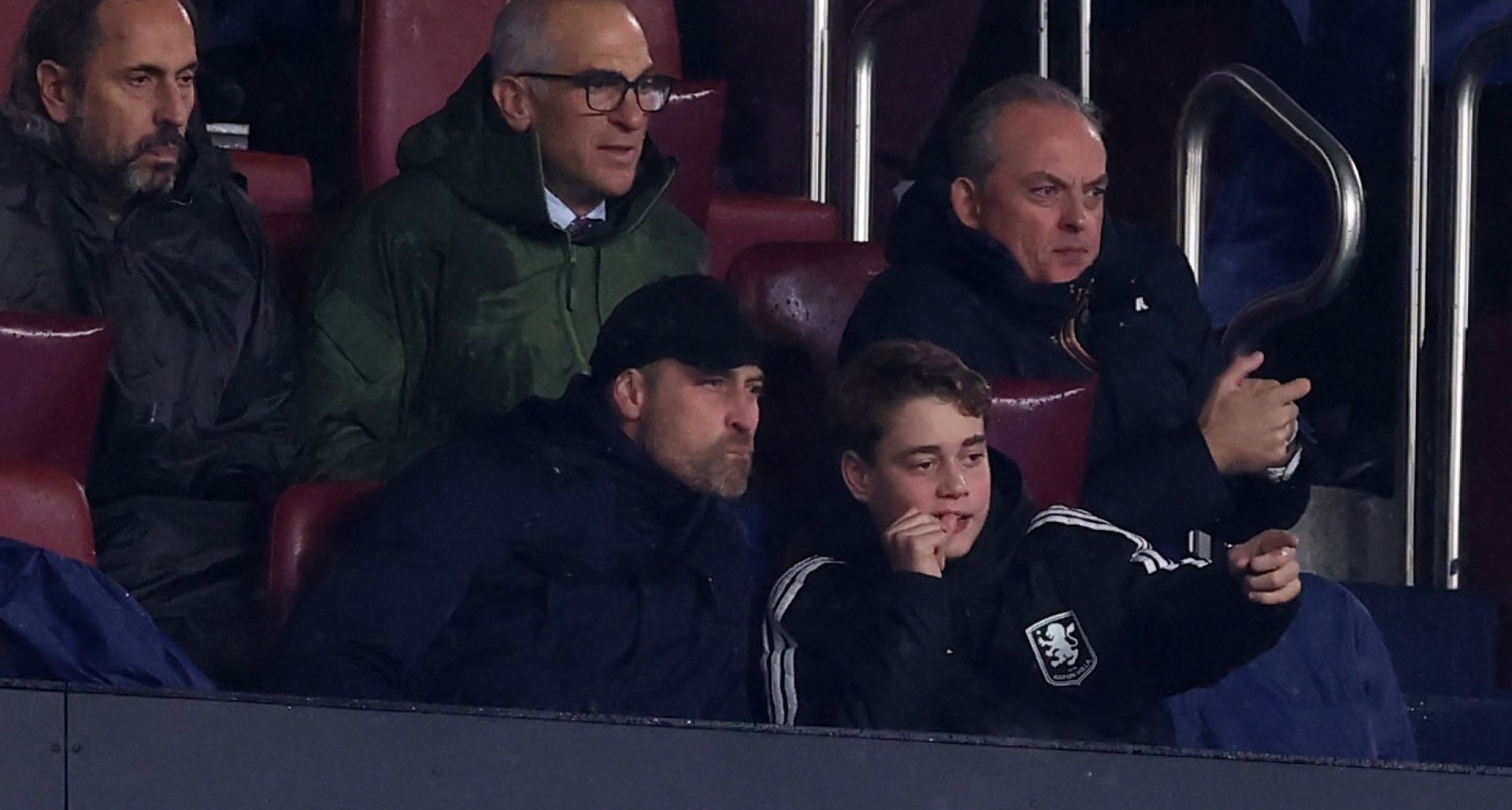
There is something quietly radical about a future king being allowed to simply be a boy. The image of Prince William and Prince George, huddled in a Barcelona presidential box as rain streaked the night, watching their team lose 3-0, is not the stuff of royal spectacle. It is the stuff of memory. And that, we suspect, is precisely the point. This is not a photo op; it is a father choosing to build something unshakable with his son, one damp Tuesday at a time.
The details are telling. William, in a navy coat and baseball cap, stands beside his teenage son, who wears a black Adidas jacket with the Aston Villa logo. They are not performing. They are present. The Prince of Wales has spoken openly about the importance of these moments, noting last year in Paris that bringing George to a European competition was "a big deal", a chance for an 11-year-old to experience a night away from home in a big competition. Now 13, George is older, quieter perhaps, but the ritual remains. This is the kind of inheritance that cannot be written into a constitution: the knowledge that you are worth a father's undivided attention, even when the match is lost and the weather is miserable.
This quiet intimacy feels especially poignant when set against the more public chapters of royal life. Consider Sarah Ferguson Turns the Page on a New Chapter, Unpacking a Lifetime, where the former Duchess of York is starting over in England, a story of reinvention born from distance. Or The Silent Image That Told Diana and Charles's Real Story, in which a single photograph needed no caption to reveal the emotional truth of a fractured marriage. Here, the image of William and George is equally silent, but its truth is one of steadiness. Where Diana and Charles's story was defined by what was withheld, William's approach with George is defined by what is offered: time, presence, a shared loss in a foreign stadium. Princess Kate, meanwhile, told a woman at a hospice visit that she was "looking forward to George coming home, she's missed him," adding that the family "may be going somewhere" during the break. That casual, maternal longing, spoken to a stranger, is the grounding note that makes this story feel less like a headline and more like a lived life.
What we are watching, then, is the slow, deliberate crafting of a new kind of royal fatherhood. It is not loud. It does not announce itself. It shows up in the rain, buys the losing team's shirt, and calls it a memory. The specific takeaway is this: the most enduring legacy William can offer his son is not a throne, but the proof that he was there. For our readers, the question worth holding is not whether George will be a good king, but whether he will one day look back on a rainy night in Barcelona and remember that his father chose to be beside him, even when the game was already lost.