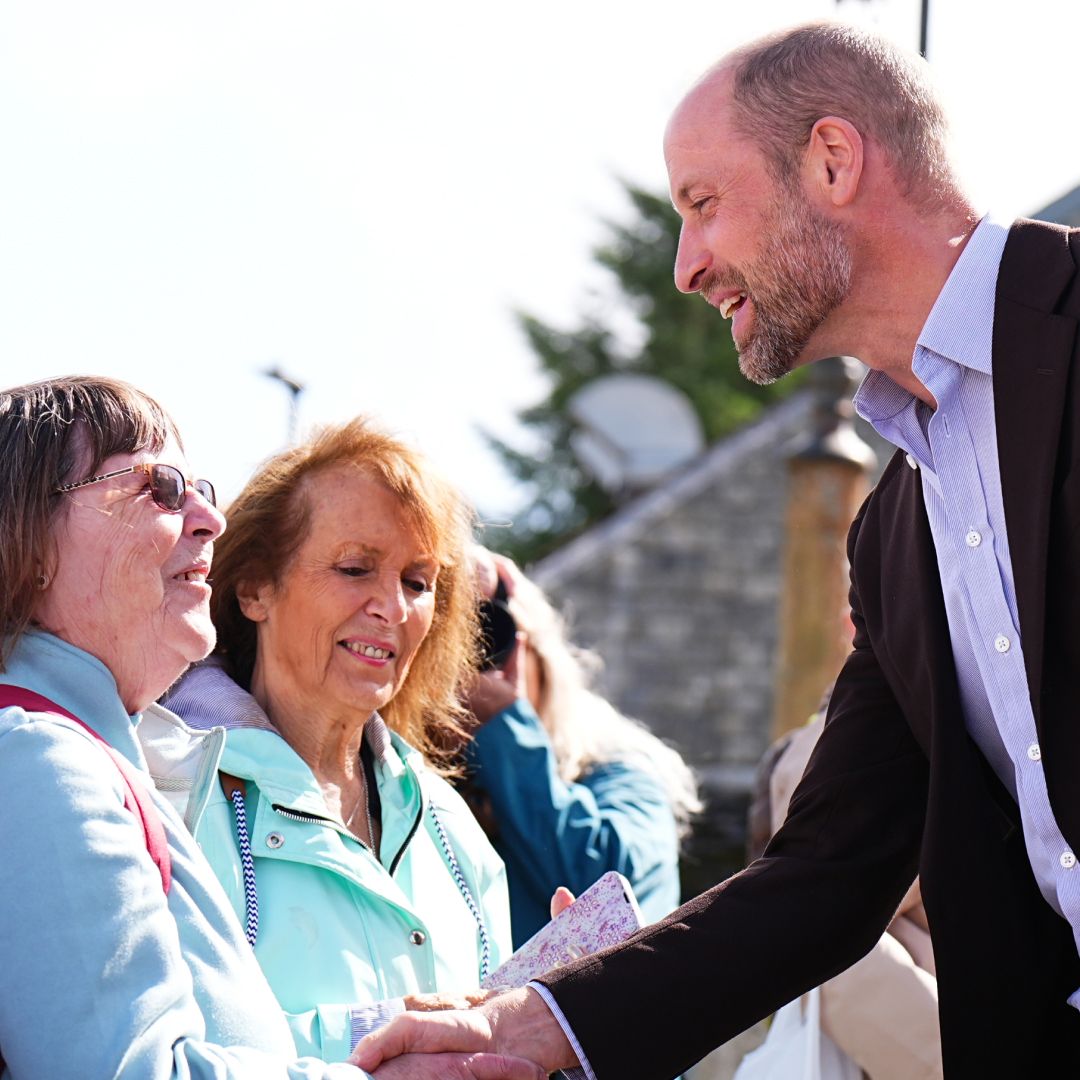
There is a particular kind of power that does not need to announce itself. Watching the Prince of Wales greet the crowd in Princetown after announcing a £250,000 community-led fund, we are reminded that presence is often a matter of posture, not volume. The small move in question, the instinctive gesture of connection, is a quiet inheritance. It is the same language his mother spoke fluently, one that suggested she saw the person in front of her, not the crowd. This is not about mimicry; it is about an emotional memory that lives in the body. For those of us who study the subtleties of human connection, it is a masterclass in how to make another person feel like they are the only one in the room, a lesson that transcends royal protocol and applies directly to how we move through our own lives.
We often talk about legacy as something grand, a building, a title, a foundation. But the true inheritance is often in the micro-gesture, the way one tilts their head, the moment of eye contact that says, "I am here with you." This story reminds us that connection is a practice, not a performance. It echoes the spirit of Diana, Drawn to Reinvention, Received a Proposal from Across the Atlantic, where reinvention was not about becoming someone new, but about becoming more fully oneself. Similarly, the quiet disapproval that once met a Royal Style Shift: When Diana’s Choice Met Quiet Disapproval shows us that being genuine often means risking the comfort of others. The lesson for us is that we do not need to force warmth; we need to be receptive enough to let it flow through us. It is a form of confidence that is soft, yet unshakeable.
For our readers, the practical takeaway is this: slow down. The next time you walk into a room, or cross a street, or hand a barista your card, consider the weight of your attention. You do not need to say more; you need to be more present. The Prince's approach is a lesson in the power of the pause, the deliberate act of seeing. It is a reminder that true confidence is not loud; it is a calm assurance that you are enough, exactly as you are. This is the energy we can carry into our own interactions. It is not about performing a role, but about inhabiting your own skin so fully that others feel safe to do the same. The question we might ask ourselves is not "How do I appear?" but "How do I make this person feel?"
The detail to watch is not the next public appearance, but the quiet moments in between, the unguarded seconds where the mask slips and we see the person beneath the title. That is where the connection is either forged or lost. It is a standard we can all hold ourselves to, not because we are royalty, but because we are human. And in that shared humanity, we find a quiet confidence all our own. The most interesting question is not what he does next, but how we choose to show up in our own lives, one small, deliberate gesture at a time.