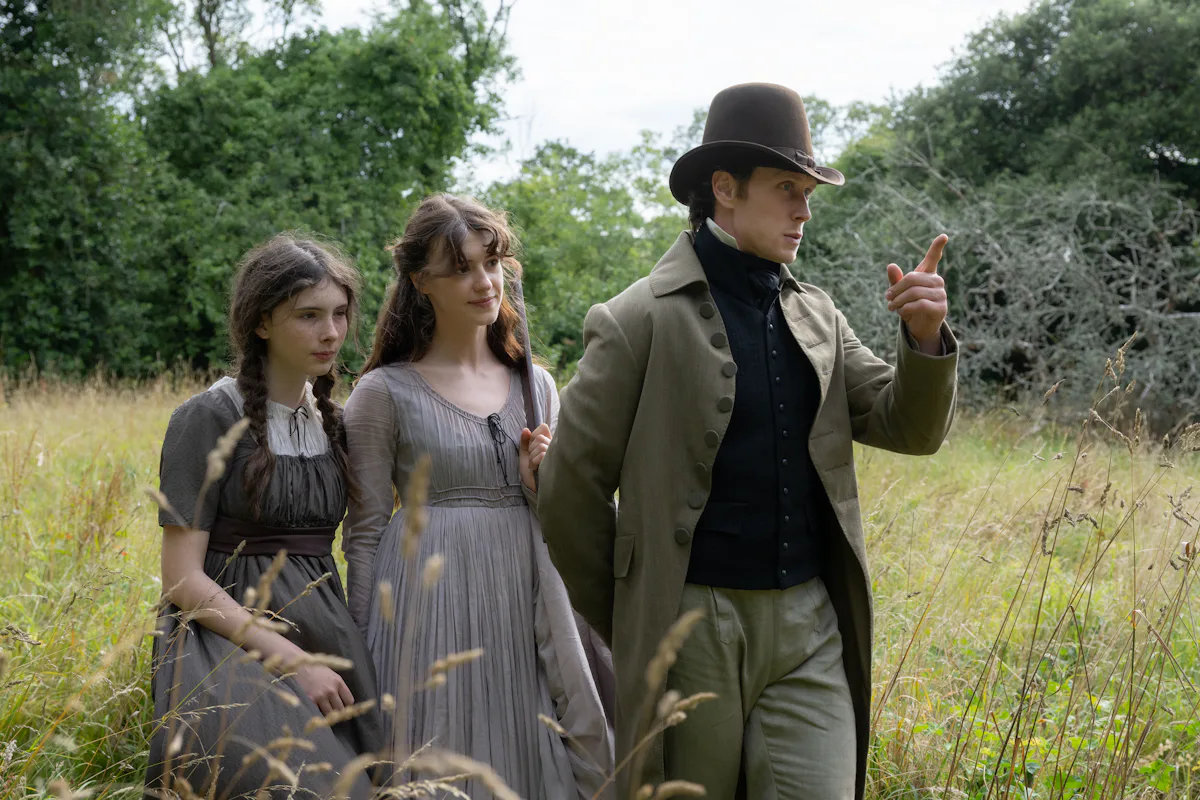
There is something quietly radical about a period drama that dares to show its heroines with dirty fingernails. The new *Sense and Sensibility*, directed by Georgia Oakley with costumes by Grace Snell, makes a deliberate choice to unsettle our collective memory of Jane Austen's world, not with loud declarations, but with the subtle language of fabric, dye, and an undone waistcoat. This is not the pristine Regency of our imagination, and that is precisely the point. For those of us who appreciate fashion as a form of inner expression, this film offers a masterclass in how clothing can tell a story of selfhood without ever raising its voice. It is an approach that feels deeply aligned with the Six effortless looks under $500 that feel quietly styled, where intention, not volume, defines the impact.
Snell's research led her to a revelation: the surviving garments from the late 1790s belonged almost exclusively to the wealthy, whose dresses were preserved rather than worn to death. The working and emerging middle classes, the very people Oakley wanted to centre, left behind almost nothing. This missing history became a creative north star. The costumes are built around the idea that clothing was shared, remade, and restyled until it fell apart, a kind of 18th-century upcycling that feels unexpectedly modern. Snell dyed Marianne's dresses with elderflowers and Elinor's with logwood, embedding their emotional divide into the very fibres. Marianne is sunlight and romantic impulse; Elinor is lavender and quiet containment. Yet by the film's end, the sisters borrow from one another, Marianne wears Elinor's dress with her own frilly scarf, and Elinor runs after Edward with her waistcoat open and hair falling loose. It is a visual resolution that feels earned, not explained. This kind of restrained, symbolic storytelling is reminiscent of The quiet return of the retro coat ruling chic style, where a single silhouette carries the weight of an entire mood.
Snell's decision to pull references from Comme des Garçons' 1994 Metamorphosis collection and Galliano's Fallen Angels show grounds the period in something tactile and familiar. She wanted the costumes to look "self-styled," as if the characters had dressed themselves with intention but not perfection. That idea, that a mistake, a misbuttoned bodice, or a scarf that doesn't quite go can be more telling than a perfectly pressed gown, is a quiet rebellion in itself. Esmé Creed-Miles chose to play Marianne without a corset in intimate scenes, a choice Snell admits "isn't necessarily historically accurate" but felt right for a woman unbound by convention. Meanwhile, Elinor stays laced throughout, her physical restraint mirroring her emotional discipline. The contrast is subtle but unmistakable, and it invites us to consider how our own clothing choices might reflect the internal negotiations we make every day.
The specific takeaway here is not merely that costume design matters, it is that the smallest details, from a bum roll riding too high to a scarf borrowed from a sister, carry the emotional architecture of the entire story. Snell did not set out to shock Austen purists. She set out to dress women as they actually were: sharing clothes, making do, and sometimes getting it wrong. For anyone who has ever felt that fashion is a language worth learning, this film offers a quiet confirmation that the most powerful statements are often the ones that look, at first glance, like imperfection. Watch for the moment Elinor's composure finally breaks, not in a speech, but in a mud-stained hem and an undone waistcoat. That is the rebellion, and it is exquisite.