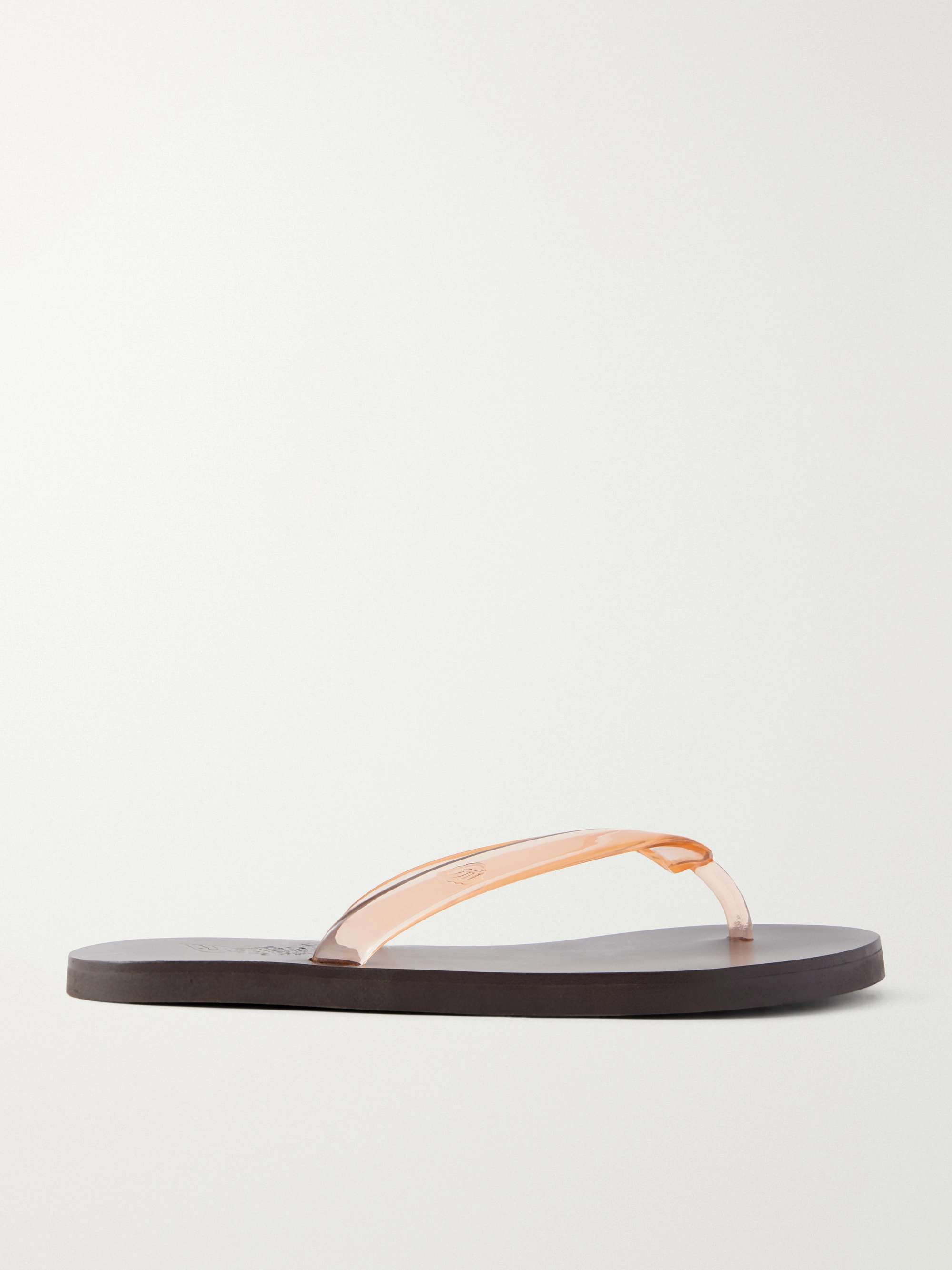
The return of the Y2K flip-flop is being framed as a revival, but what we are actually witnessing is something far more deliberate. The Noughties aesthetic, with its low-rise jeans and bug-eye sunglasses, has resurfaced before, yet this iteration feels less like a loud nostalgia trip and more like a quiet reclamation. We are not seeing the chaotic energy of the early 2000s; we are seeing its forms filtered through a lens of intentionality. This is where the trend aligns with the ethos of The Quiet Edit: 26 Pieces Our Editors Are Wearing Now, where the focus is on curation over volume. The flip-flop, once a symbol of careless ease, is now being reimagined as a statement of considered comfort, a piece you choose because it grounds you, not because it screams for attention.
Our honest take is that this shift reflects a deeper cultural need. The original Y2K moment was defined by excess and a certain performative edge, but the modern woman is not interested in performance. She is interested in presence. This is why the trend resonates with the emotional undercurrents we explored in A Royal Style Shift: When Diana’s Choice Met Quiet Disapproval, where a single, understated choice carried more weight than any grand gesture. The flip-flop, in its reimagined form, asks us to slow down. It asks us to feel the ground beneath our feet, literally and metaphorically. For our readers, this is not about chasing a silhouette; it is about adopting a mindset. When you reach for that pair, you are not just following a trend. You are telling yourself that your ease is non-negotiable, that your comfort is a form of luxury.
Practically, this means we should stop treating the style as a mere throwback and start treating it as a building block for a more grounded wardrobe. The pieces we choose to wear are extensions of our inner states, and the flip-flop, when styled with intention, becomes a tool for self-connection. It pairs beautifully with the protective, textured hair trends we are seeing for fall, as discussed in Fall 2026: Protective Styles and Textures to Define the Season, because both speak to a desire for low-maintenance, high-calm beauty. The question we should ask ourselves is not "Is this in fashion?" but rather "Does this quiet my mind?" That is the filter through which we should view every purchase this season.
The consequence to watch is whether this aesthetic can maintain its restraint as it gains momentum. The danger with any revival is that it loses its soul in translation, becoming just another loud trend to consume. For us, the test is simple: if the flip-flop remains a symbol of personal peace rather than a badge of trend-hopping, then it has earned its place. We would tell any reader that the power is not in the shoe itself, but in the confidence you bring to it. Wear it because it feels honest, not because it is new. That is the only way this quiet return stays quiet.