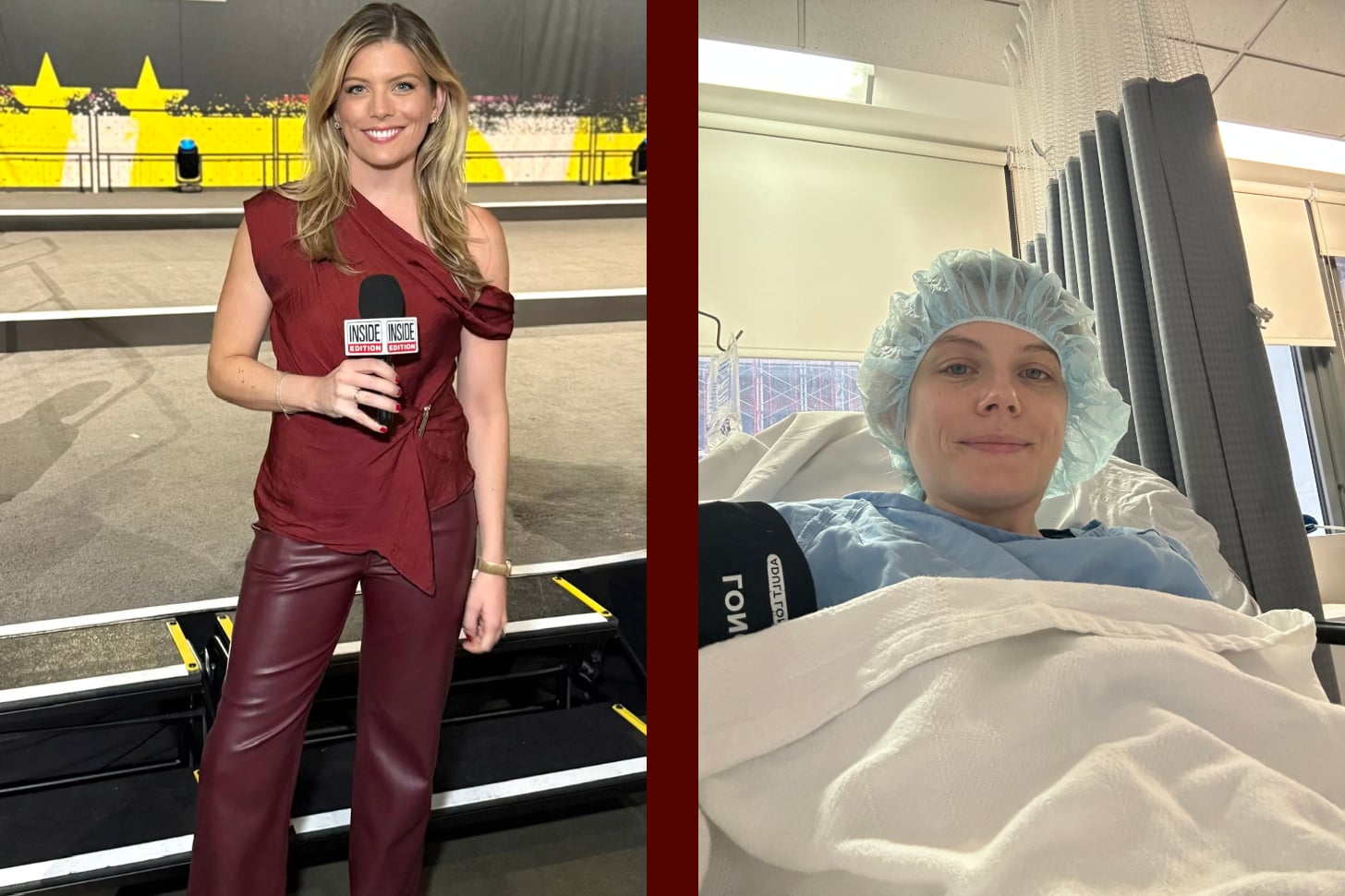
There is something quietly radical about a woman learning she has breast cancer while reporting on another woman's story, and then choosing to share every part of that discovery with the world. Alison Hall's experience is not just a remarkable coincidence; it is a profound reminder that information, when pursued with intention, can alter the course of a life. We believe this story matters because it strips away the abstraction of health statistics and shows what happens when awareness becomes action, not for a headline, but for survival.
Hall's assignment to cover Olivia Munn's diagnosis seemed straightforward until a simple risk assessment test revealed her own 36 percent likelihood of developing breast cancer. That number, just one point below Munn's, became a quiet alarm. We see in Hall's decision to take the test on camera a kind of bravery that does not announce itself. It is the same steady presence we have observed in other women navigating difficult health journeys, a willingness to be vulnerable in order to educate others. Her story echoes the themes explored in The Quiet Evolution of Breast Health in a New Era of Awareness, where we noted that younger generations are facing breast cancer at higher rates and must rethink prevention. Hall's experience makes that abstract point visceral: she had already tested negative for the BRCA genes, yet her dense breast tissue hid early-stage cancer that only an MRI and subsequent biopsies could reveal.
What stays with us is not the shock of the diagnosis itself, but the way Hall moved through it with clear-eyed intention. She did not treat her body as a problem to be fixed; she treated it as a landscape to be understood. After her double mastectomy and reconstruction, she spoke openly about the emotional work of rebuilding a sense of safety in a changed body. That kind of honesty is rare, and it is precisely the kind of self-awareness we value. She reminds us that recovery is not a linear return to before, but a patient practice of acceptance. This is not a story about a lucky break or a dramatic rescue; it is about a woman who followed the thread of information, trusted her doctors, and then did the harder work of making peace with what remained.
The bond Hall now shares with Munn, and with the countless women she has met in the breast cancer space, points to something larger. It suggests that when women share their health stories without performance or pretense, they create a quiet network of accountability and care. Hall's advice to be patient with oneself, and to actively work toward self-love rather than waiting for it to arrive, is a concrete takeaway we can all carry. The open question her story leaves us with is this: how many other women are walking around with a number they have never been told, simply because no one asked them to take the test?