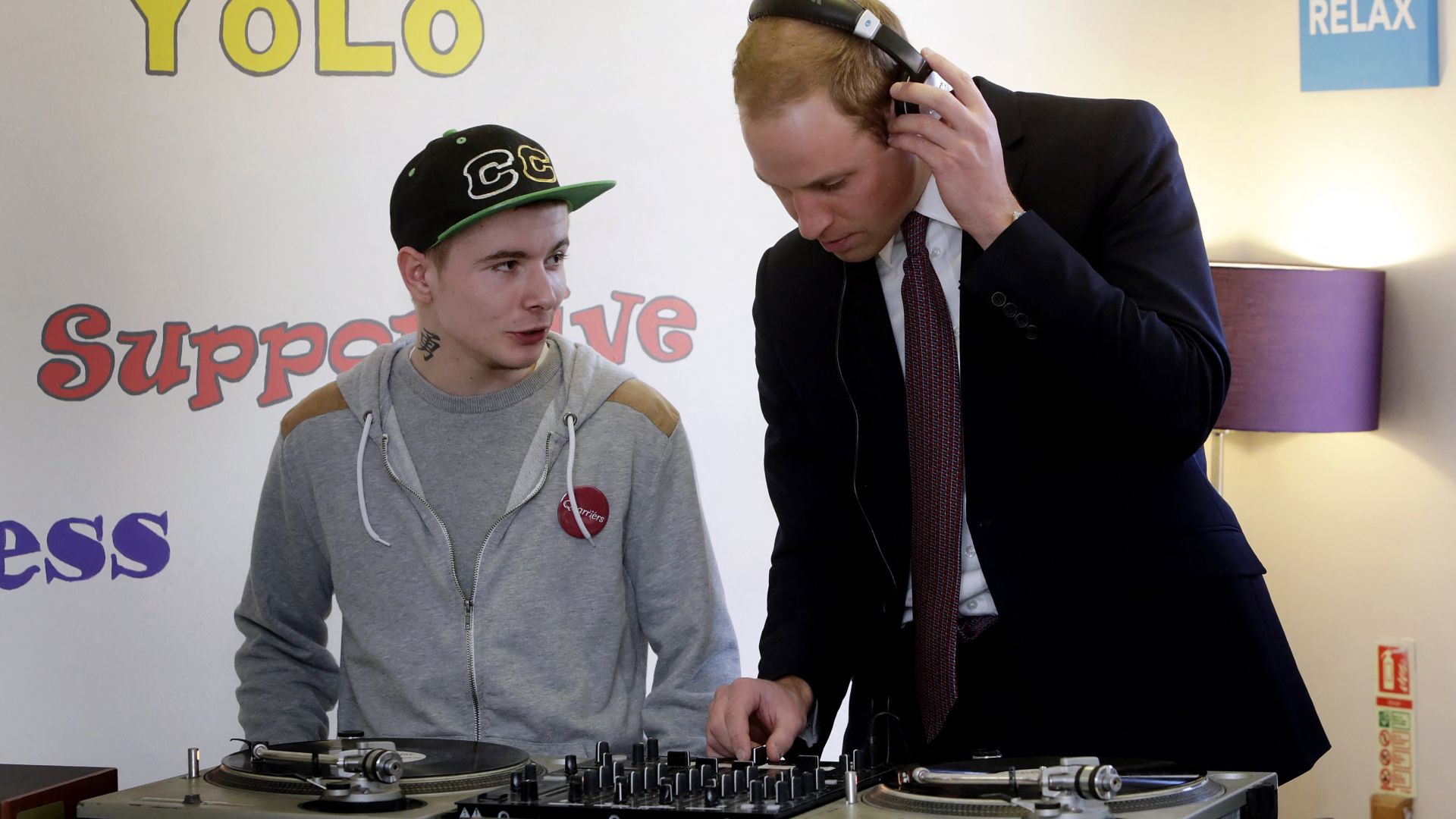
There is something quietly disarming about watching a future king fumble over the lyrics to "Purple Rain." Prince William's recent confession on *The Graham Norton Show*, that a well-meaning gentleman once mistook him for the legendary musician Prince and asked when he would sing, is not merely a charming anecdote. It is a rare, unguarded moment that reminds us the monarchy operates in a space where expectation and reality often blur. We find this story delightful because it reveals a man who, despite his titles and training, can still be caught off guard by the sheer unpredictability of public life. For our readers, this is a gentle lesson in the power of self-possession: William did not bristle at the mix-up. He laughed, told the story, and moved on. That is the mark of someone secure enough to let the world see him as human.
This incident feels especially resonant when placed beside other recent glimpses of the royal family. In A Quiet Glimpse of the Royal Three, Growing in Grace and Style, we saw how the younger generation navigates public appearances with increasing poise. Here, William does something similar but with a different register: he permits himself to be the subject of the joke, not the keeper of the formality. It is a subtle shift, but an important one. Similarly, A subtle shift in royal proximity, a quiet distance formed explored how even small changes in body language can signal deeper emotional currents. William's willingness to share this story, to admit he does not know the lyrics to one of pop music's most iconic songs, is a verbal parallel to that same idea. He is not retreating from proximity to the public; he is allowing himself to be seen in a light that is not strictly regal.
What we find most compelling is the prince's delivery. He does not over-explain the moment or try to spin it into a lesson about humility. He simply lets the absurdity land. "Turns out he wanted me to sing Purple Rain, which I don't know the lyrics for," he said, and the audience laughed because the image is genuinely funny. But beneath the humor is a quiet confidence. William knows exactly who he is, a man who can fly helicopters, cook lasagna, and spin records, but not a man who can convincingly channel Minneapolis funk. That self-awareness is the same quality we admire in A Rare Glimpse of Royal Vulnerability Before a Pop Icon, where a different kind of vulnerability surfaced in an unexpected setting. In both cases, the power lies not in perfection, but in the willingness to be seen as you are.
The concrete takeaway here is simple: grace is not about never being mistaken. It is about how you respond when you are. William could have corrected the man, clarified his identity, or steered the conversation back to his official duties. Instead, he let the moment breathe, and in doing so, revealed something more enduring than a title. The next time a public figure faces a case of mistaken identity, we will watch not for the correction, but for the laughter that follows. That is where the real character shows itself.