Ayan Broomfield Saw Something Missing From Tennis—and Did Something About It
Our take
Ayan Broomfield’s story, as detailed in Ayan Broomfield Saw Something Missing From Tennis—and Did Something About It, resonates deeply within the current cultural conversation around inclusivity and representation, particularly within traditionally exclusive spaces. Her realization – the stark absence of Black women at a major tennis tournament – wasn’t merely an observation; it was a catalyst for action. It’s a familiar narrative, isn’t it? Seeing a void, a lack, and responding not with complaint, but with creation. This echoes the spirit of entrepreneurs like Courtney Kelly, founder of the tennis brand Courting, who is also actively reshaping the landscape of the sport’s fashion and appeal – Courting Is The Tennis Brand Fashion Girls Are Watching. Broomfield's initiative, Power Play, is a testament to the power of recognizing that absence and building a community to fill it, a community centered around diamonds, tennis, and ambitious plans. The broader trend of elevating the aesthetic and cultural significance of tennis, exemplified by the spotlight on Coco Gauff’s style and New Balance sneakers – Coco Gauff's Winning New Balance Sneakers Give This Color Trend a 2026 US Open Close-Up – further underscores this shift.
The significance of Power Play extends beyond simply creating a social event. It’s about challenging the unspoken gatekeeping that has historically marginalized certain demographics within tennis. For decades, the sport has carried an image of exclusivity, often associated with privilege and a particular aesthetic. Broomfield’s work actively disrupts that narrative. It’s not about dismantling the established world of tennis; it’s about expanding it, making it more welcoming and reflective of the diverse communities that exist alongside it. The focus on diamonds, while seemingly a luxurious detail, is a deliberate choice – a visual signal of aspiration and empowerment, demonstrating that sophistication and inclusivity aren't mutually exclusive. The event itself becomes a symbol of possibility, a space where Black women can not only enjoy the sport but also feel seen, celebrated, and connected. This is a powerful shift from simply acknowledging a problem to actively fostering a solution.
This movement aligns with a larger cultural trend – the reclamation of traditionally exclusive spaces by those who have been historically excluded. We see it in fashion, art, and numerous other industries. It’s a recognition that these spaces belong to everyone, and that diversity is not just a matter of social responsibility, but also a source of innovation and creativity. Broomfield's approach, rooted in personal experience and a clear vision, is particularly compelling because it feels both authentic and aspirational. It’s not about tearing down existing structures; it’s about building new ones that are more equitable and inclusive. The subtle but profound impact of seeing oneself represented – of witnessing someone who looks like you thriving in a space where you were previously unseen – is immeasurable. It fuels a sense of belonging, inspires confidence, and unlocks potential.
Ultimately, Broomfield’s work invites us to consider the subtle ways in which exclusivity manifests itself in our own lives and communities. How can we be more intentional about creating spaces that are truly welcoming to all? Power Play isn't just about tennis; it's about reimagining what's possible when we actively challenge the status quo and build a more inclusive future. The question now is: will other traditionally exclusive spaces take note and follow suit, recognizing that true strength lies not in maintaining boundaries, but in embracing the richness and dynamism of diversity?
Ayan Broomfield's realization that retiring from playing tennis didn't have to mean retiring from tennis as a whole changed her life. If you aren't familiar with Broomfield, she briefly went pro as a teen before an injury made her decide to play in college instead. She was hugely successful during her college career, winning the NCAA Division I Women's Tennis Championship in doubles—with her partner Gabrielle Andrews—in 2019.
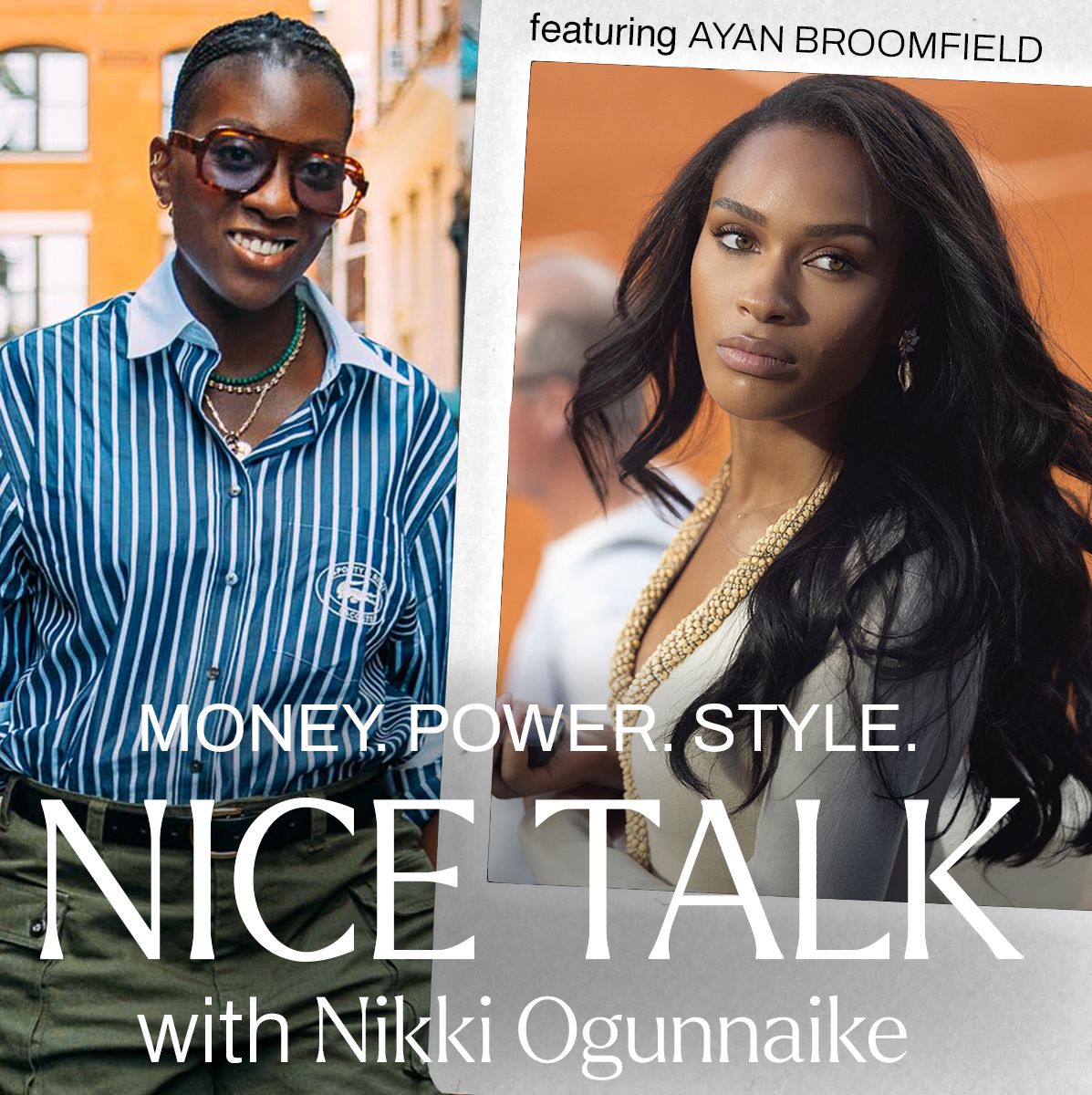
But while Broomfield is no longer playing tennis, her life is still all about the sport. She delves into all of it on the latest episode of "Nice Talk".
To start, Broomfield was a tennis double for Saniyya Sidney, the actor who played Venus Williams, in the 2021 film King Richard.
"It just gave me this first sight into the fact that you don't have to be a professional tennis player to still be in the tennis world," she says. "There's acting. There's modeling. There's all these different things that you can do because of your 20 years' experience as a tennis player. And I joke about it, but I essentially was like, I have a PhD in tennis."
And she's putting it to good use. Aside from becoming a content creator with a tennis bent, staring a foundation to help children get into the sport, and redefining WAG as she supports her pro tennis player partner Frances Tiafoe, Broomfield was able to spot something that was missing in tennis and she decided to fix it herself.
"On court, I feel like the girls have done such an incredible job with diversity and showcasing it," Broomfield says. "You start, obviously, with Althea Gibson, who passed the torch to Serena and Venus [Williams], who passed the torch to Sloane Stephens and Naomi Osaka, who passed the torch to Coco [Gauff], and there is a growing representation of women of color on court, which is absolutely amazing and great."
But, she goes on, "Traveling with Frances, I did notice that there was a discrepancy between women of color on court and women of color off court ... I think at one point—and this is where it was like, I got to do something about this—I had gone to a tennis tournament five days in a row, had not seen one Black woman there."
She took matters into her own hands. After making a TikTok video about the situation and hearing from women that the tickets were too expensive or that they "didn't know our community goes to tennis tournaments," she decided to get butts in seats the only way she could at the time.
"It started off with me using my allotment of tickets that we get through the tournament. I don't even know if that's something you're supposed to do," she admits. "Each player gets like 10 to 15 tickets, so I would ask for, like, two additional tickets and send it to girls through my DMs."
From there, she started being able to work with tournaments directly to "allocate free tickets for women of color to come." Then came brand collaborations, which mean even more tickets. "And then, like, these suite experiences, and I was able to just bring so many women of color to the tournament. It's just grown into something new and fresh, and it's just amazing to see our community in these spaces and having a seat at the table."
Broomfield ended up calling the initiative Ayan's Aces, and she's since expanded into Formula 1 and golf, two other sports where women of color are underrepresented in the crowd.
"I just want to put us into everything," the 29-year-old says. "I'm in a very blessed position that I'm able to work with incredible brands. I'm able to go to incredible events, and I just want to make sure that I'm using my platform to bring other girls with me and foster this community, because the more times that women of color are seen, the more opportunities we'll all get."
For more from Broomfield—including her tennis tournament style and how she got into content creation—check out this week's installment of "Nice Talk." The episode is available everywhere you listen to podcasts.
Read on the original site
Open the publisher's page for the full experience