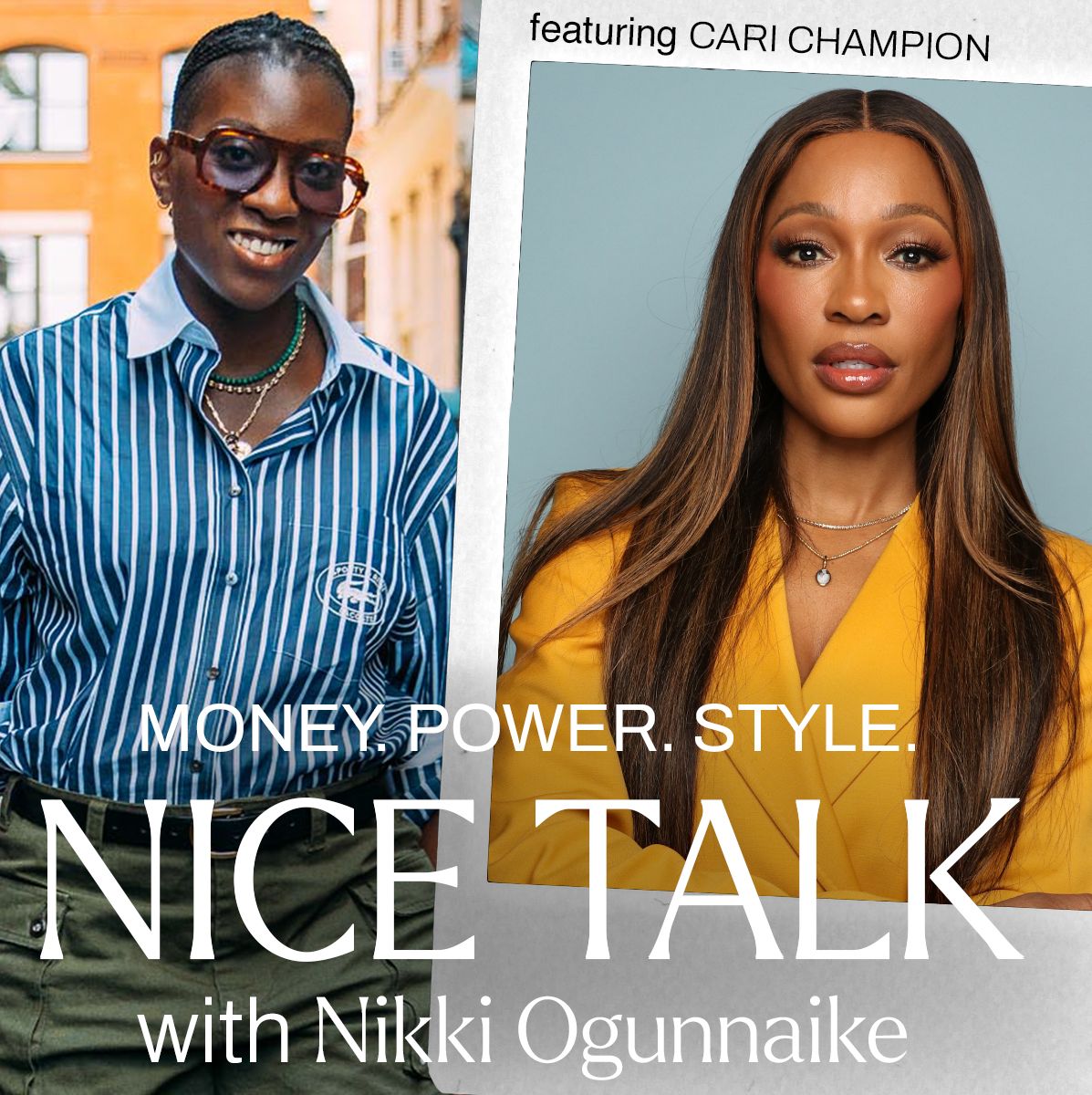
There is a particular kind of exhaustion that comes from watching a conversation you care about get hijacked by people who have no intention of listening. Cari Champion names it plainly on *Nice Talk*: the trans athlete discourse is "maddening." She knows, because she has watched this cycle repeat itself, Colin Kaepernick, the WNBA, every time politics enters the arena, the actual game gets buried under manufactured outrage. For those of us who follow sports for the craft, the discipline, the poetry of a perfectly executed play, this noise is not just distracting. It is draining. Champion's clarity cuts through it, and her willingness to name the pattern is a kind of quiet authority we recognize and respect.
What strikes us most is how this conversation connects to a broader cultural truth we have been tracking. When we wrote about Elevated Influence: The New Etiquette for Sporting Style, we noted that the most compelling figures in sports today are those who move with intentionality, who understand that presence is a form of communication. Champion embodies that. She does not shout. She states. The "maddening" quality she describes is not anger; it is the measured frustration of someone who has seen the same distraction technique deployed again and again, and refuses to pretend it is a good-faith debate. That is the difference between performance and substance. The discourse around trans athletes is rarely about fairness or data; it is about using a marginalized group as a wedge to generate clicks and division. Champion knows this, and she says so.
This matters practically for our readers because the cultural distractions Champion identifies are not confined to sports media. They seep into every space where women are competing, creating, or simply existing in public. Consider Kylie Kelce Champions Girls' Sports with World Cup Dream Trip, a story about actual investment in girls' futures, about showing up and funding dreams rather than arguing about who belongs. That is the alternative Champion is pointing toward. The question she leaves us with is not whether trans athletes should compete. It is why we allow the loudest, least informed voices to set the agenda while the athletes themselves, the women training, sacrificing, and playing at elite levels, are pushed to the margins of their own story.
The takeaway we would offer a reader who asks about this: watch who gets to define the conversation. Champion's power is that she refuses to let the distraction stand. She redirects attention back to the game, to the athletes, to the work. That is the posture we admire. The specific detail to watch is whether the media ecosystem that profits from this "fight" will ever choose clarity over chaos. Champion has given us the language to name what is happening. The rest is up to us.