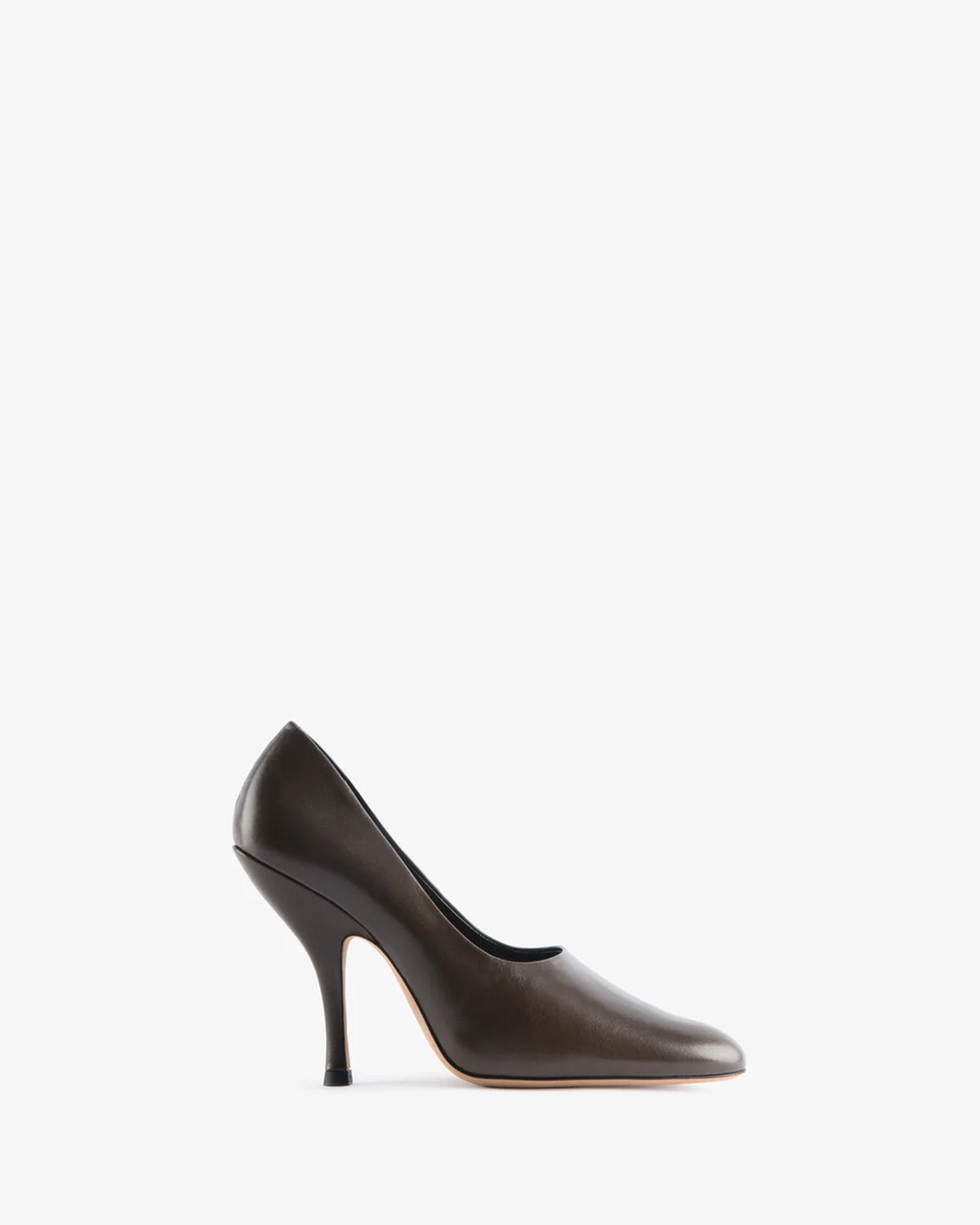
The shoe is not an accessory in *Die Alive*, it is the narrative anchor. Zoë Kravitz's recent on-set appearance, wearing a four-inch high-vamp pump from French label Jude, confirms what we have long suspected: the most compelling stories are told not through dialogue but through silhouette. In a single frame, the Date Pump in mocha leather accomplishes what pages of script cannot, and we are grateful for the clarity. This is not merely a costume choice; it is a thesis on how fashion communicates intention. As we explored in What She Didn't Wear Speaks Louder Than What She Did, absence and restraint often carry more weight than abundance. Here, the high vamp does the same work, it covers, it elongates, it refuses to be overlooked.
What makes Kravitz's styling noteworthy is not the celebrity endorsement alone but the quiet authority of the shoe itself. The high-vamp heel demands a particular poise. It is not a shoe for rushing. It asks the wearer to slow down, to stand taller, to let the foot become part of the line of the leg. Kravitz understood this when she paired the pump with a slate gray tank, pistachio green midi skirt, and eggplant coat, an exercise in indiscriminate color-blocking that only works if the foundation is unshakeable. Jude, the French house behind the pump, has built its reputation on this retro-modern tension: a silhouette that nods to the 1950s yet feels entirely current. Daisy Edgar-Jones, Sofia Richie Grainge, and Greta Lee have all worn the label, and now Kravitz places it at the center of a major production. This is how a shoe graduates from trend to signature.
There is a deeper resonance here for anyone who follows the quiet evolution of personal style. The high-vamp heel shares DNA with Kravitz's own signature ballet flats, the same glove-like upper, the same commitment to covering the instep. The difference is elevation, both literal and metaphorical. By choosing a four-inch version for *Die Alive*, she signals that the character inhabits a world of heightened stakes. Costume, in this context, becomes character development. We are reminded of what Molly Dickson's Diamonds Hint at a Red-Carpet Debut taught us: that a single object, worn with precision, can function as a promise. Here, the pump promises a woman who is composed, exacting, and unafraid of coverage.
What we are watching, then, is not a film shoot but a masterclass in the economics of attention. Kravitz does not need to explain her character. She steps onto a New York sidewalk in a vintage Fendi Baguette, the same bag Carrie Bradshaw used to articulate an entire philosophy of urban womanhood, and the story writes itself. The question that lingers is not whether *Die Alive* will succeed, but whether the rest of the cast can match the vocabulary that Kravitz's wardrobe has already established. We will be watching the next set of paparazzi shots with the same focus we bring to a film's final cut.