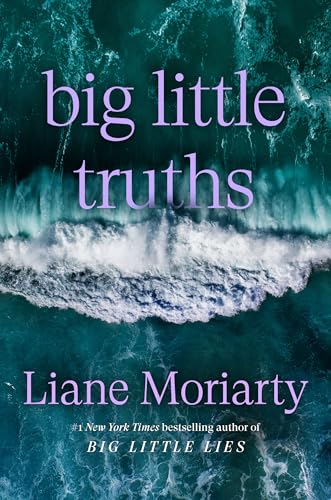
Twelve years after *Big Little Lies* introduced us to the churning emotions beneath Monterey's calm surface, Liane Moriarty is finally giving us more. The news that she is publishing the sequel fans have long begged for arrives with a rare kind of honesty. Moriarty says she "wanted to own the fact that the show affected my writing." That admission is quietly radical. In a culture that often treats a screen adaptation as a footnote to the "real" work, she is folding the adaptation back into the source material. She is not protecting her authorial ego; she is telling us that the story grew up, and so did she. This is what creative confidence looks like. It does not cling to the original. It lets the new version change it.
There is a lesson here about how we hold our own narratives, especially the ones we think we have already written. So much of modern femininity is about performing a finished version of ourselves, the polished Instagram feed, the calm voice, the curated home. But Moriarty's move suggests that true confidence is found in revision. She is not erasing the book that started it all; she is letting the television series, with its own visual poetry and its own silences, speak back to her. For our readers, this is an invitation to consider what would shift if we let the outside world in. Not to be swayed by it, but to let it inform us. It is the difference between a still life and a living one. The Effortless Fall Style: The Essential Pieces for Quiet Confidence we admire is not about hiding flaws; it is about being comfortable enough to let a new season change your palette.
Moriarty's transparency also reframes how we should think about influence. We often treat inspiration as a one-way street: the writer writes, the show adapts, the audience watches. But she is pointing to a loop, a continuous conversation where the adaptation becomes a lens through which she re-sees her own work. It is a reminder that our personal style, our sense of self, and even our creative output are never fully our own. They are shaped by what we consume, who we meet, and the quiet moments in between. This is not dilution; it is expansion. Similarly, A Secret Within Borden’s Walls: Unraveling Bridget Sullivan’s Story shows us how a new perspective can unearth fresh emotional truth from a familiar name. And Evening Echoes: After-Party Style as Radiant as the Emmys proves that the most compelling looks are the ones that carry a story forward, not just repeat a highlight reel.
So what do we tell a reader who asks whether this sequel will be worth the wait? We tell them that the wait was never the point. The point is that Moriarty has shown us what it means to be a modern muse to your own work. She is not chasing a trend; she is following a thread that the story itself pulled. Our advice is to approach this sequel the way she did: with an open hand, not a closed fist. Let it be different. Let it be older. The takeaway here is simple and worth quoting: "The most honest creative act is to let what you have made change you." Watch for how she handles the characters we thought we knew. That is where the real story lives.