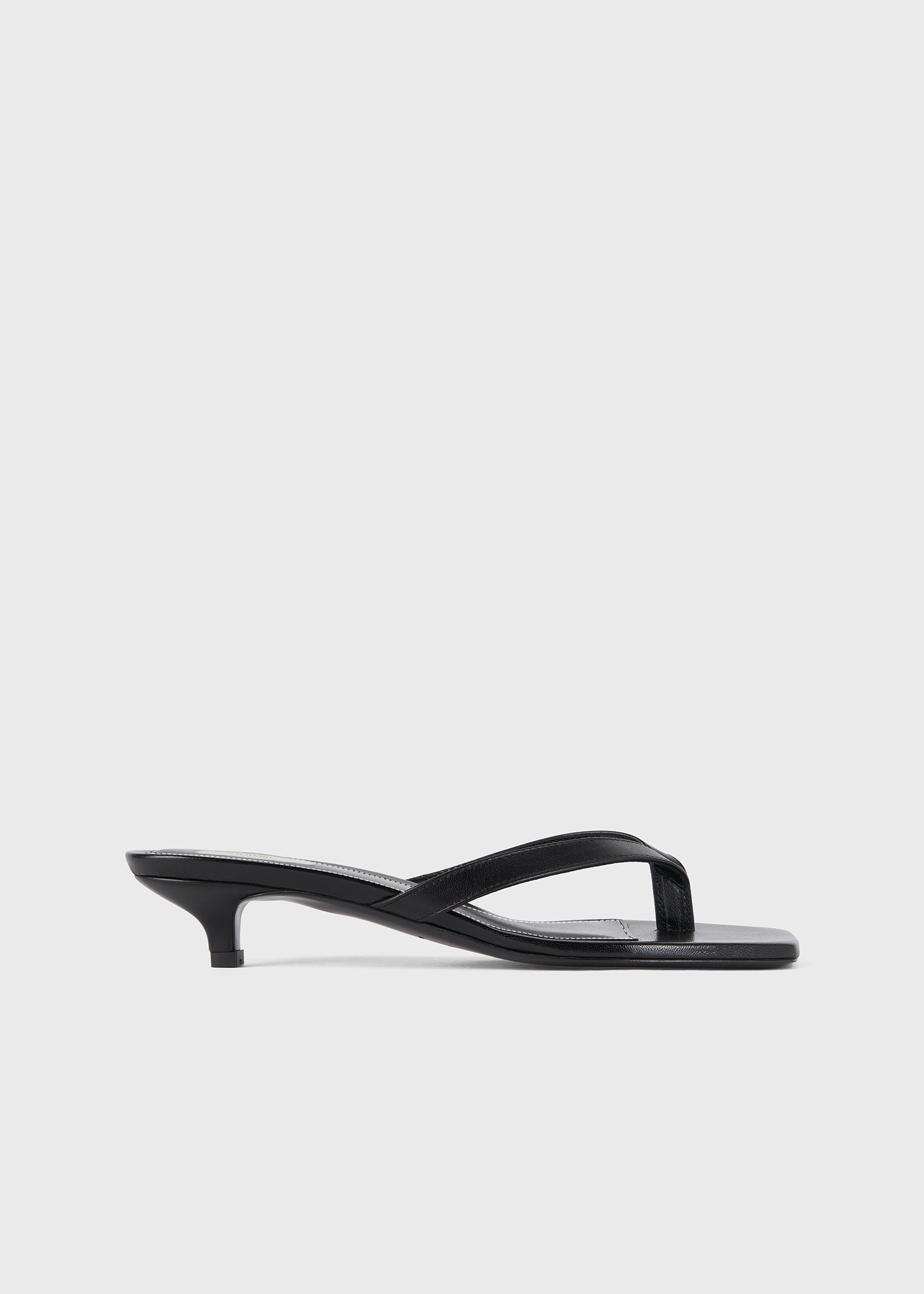
There is a particular kind of woman who understands that true style is never about volume. It is about the quiet choices she makes when no one is watching. The recent conversation around elevated flip-flops, sparked by Hailey Bieber's ever-expanding rotation and the understated offerings from The Row, A.Emery, and Toteme, feels less like a trend report and more like a confirmation of a philosophy we have long held. It is the same sensibility that drew us to Pamela Anderson's recent September, where she moved through Venice with a Pamela Anderson’s September: A Month of Venetian Grace and Vogue Moments that felt less like performance and more like presence. When a woman like Bieber reaches for a thong sandal, she is not dressing for the crowd; she is dressing for her own rhythm.
This is the quiet luxury we keep returning to. It is not about the price tag or the logo; it is about the intention behind the object. A flip-flop, in its most basic form, is humble. But when reimagined by Toteme or The Row, it becomes a study in restraint, a small rebellion against the noise. We see this same language in the street style emerging from Milan, where Milan's Street Style: A Quiet Revelation of Effortless Elegance proved that the most compelling outfits are often the ones that look inevitable. The flip-flop is the ultimate test of this aesthetic. You cannot hide behind structure or embellishment. You must be comfortable in your own skin, and the shoe simply follows.
What we would tell a reader who asks us about this shift is simple: stop waiting for the moment to feel complete. The ease we are chasing is not a destination; it is a state of being. We are drawn to these sandals because they ask nothing of us. They do not demand attention or validation. They simply exist, much like the sculpted silhouettes in Victoria Beckham's fall collection, where Sculpted Silhouettes: Victoria Beckham’s Fall Collection Finds Quiet Strength found power in form rather than fanfare. The connection is not in the item itself, but in the confidence it takes to wear it. A flip-flop is not a statement; it is a conclusion. It says, I have nothing to prove, and that is the most luxurious thing of all.
So, what do we make of this? We make the choice to participate. We let go of the idea that summer requires effort. We buy the elevated flip-flop, not because we need it, but because it reminds us that we are enough. The specific detail to watch is how these designers continue to refine the everyday, taking an object of leisure and turning it into a symbol of self-possession. The question is not whether you will wear them, but whether you are ready to walk with the same quiet certainty. Because once you do, you will realize the outfit was never about the shoe. It was about you.