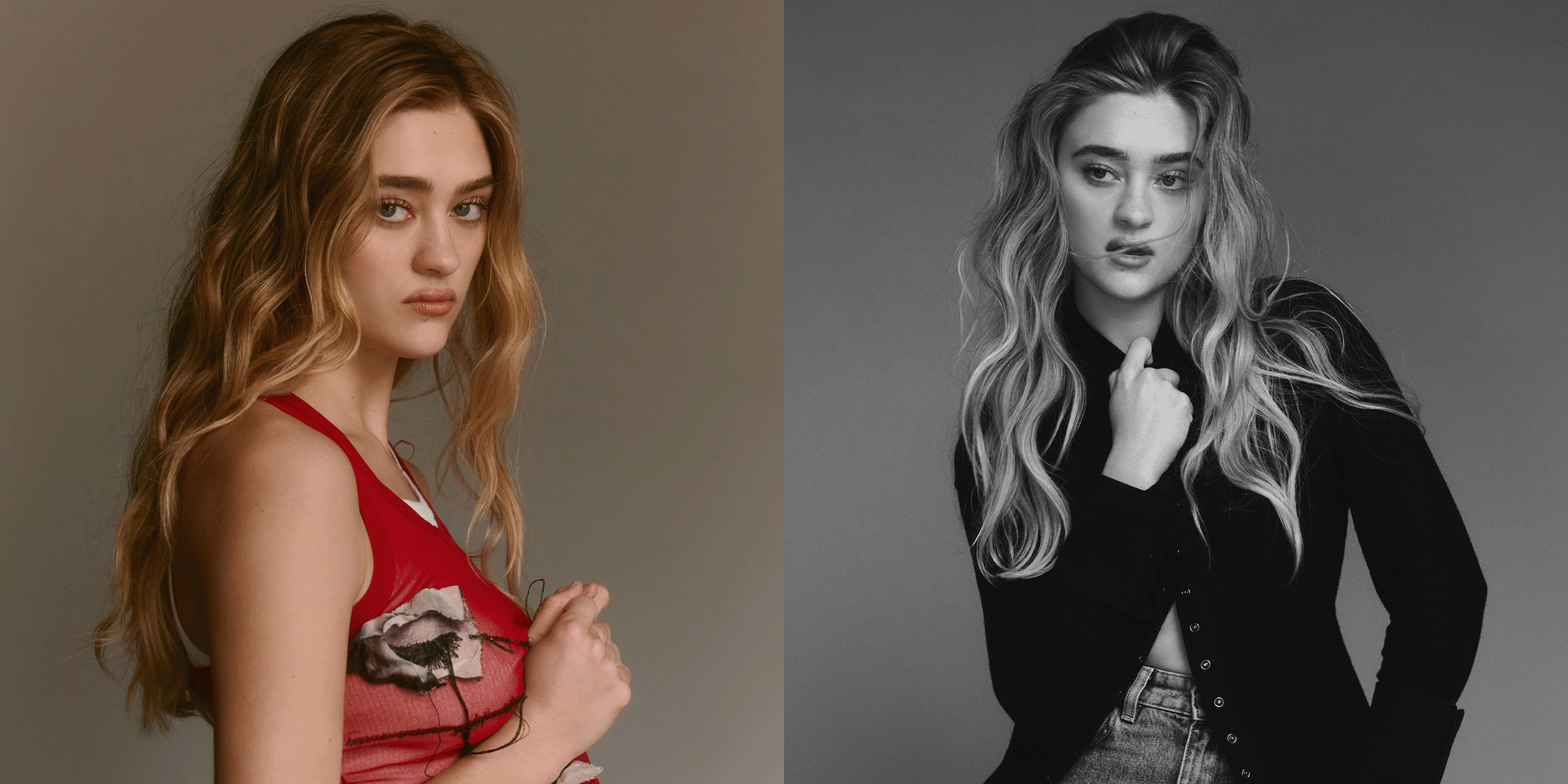
There is a particular kind of woman who finds her reflection in the mess, not in the pristine corners of a curated life. Lizzy Greene, through her portrayal of Lauren in *Ransom Canyon*, understands this intimately. The show's sophomore season throws Lauren, Lucas, and Kit into a familiar storm of brotherly rivalry, but what feels radical is not the triangle itself. It is the permission granted to the heroine to be unfinished. In a cultural moment where we are often sold the fantasy of arriving fully formed, Lauren's unfiltered journey is a quiet rebellion. She does not ask for our forgiveness for her jagged edges; she simply dares to live with them.
This is the tension we find so compelling. We have watched similar dynamics play out with Belly, Conrad, and Jeremiah, or the eternal pull between Elena, Stefan, and Damon. The archetype is well-worn, yet Greene's take introduces a texture that feels distinctly modern. It is not about choosing between two men; it is about what those choices reveal about the self. For our readers, this is the core takeaway: perfection is a distraction. The real drama, the kind that actually changes a person, lives in the uncomfortable admissions. We see echoes of this in other stories we have covered, where women ascend not by avoiding the fall but by walking through their own rubble. Consider how From Grief to Glory: Mariana Khalil's Unprecedented Ascent in 'Physical 100' frames a narrative where personal tragedy becomes the foundation for strength, or how Beyond Lizzie Borden: Unraveling the Story of Actress Nance O’Neil complicates the line between public persona and private truth. There is a through-line here: the most magnetic women are rarely the most polished.
Lizzy Greene's performance asks us to sit with the discomfort of not having all the answers. In a world that demands we curate our lives for external approval, choosing to show the unfiltered version is a form of soft power. It is a deliberate act of self-containment. We would tell any reader who asks about this show that the appeal is not the drama itself, but the emotional honesty Greene brings to it. She does not perform imperfection; she inhabits it. This is what separates a plot device from a character study. The practical takeaway for us as an audience is permission. Permission to be a work in progress, to make choices that look messy from the outside, and to trust that our own narrative arc does not need to be tidy to be beautiful. The question of whether Lauren ultimately chooses Lucas, Kit, or herself is almost beside the point. What matters is that she stops performing for them. That is the moment the camera stops feeling like a witness and starts feeling like a mirror. For us, the detail to watch is not the next episode's cliffhanger, but how Greene holds her own stillness amidst the chaos. That quiet confidence, that refusal to break character for the sake of likability, is the real story. It is the kind of presence that cannot be written, only felt.