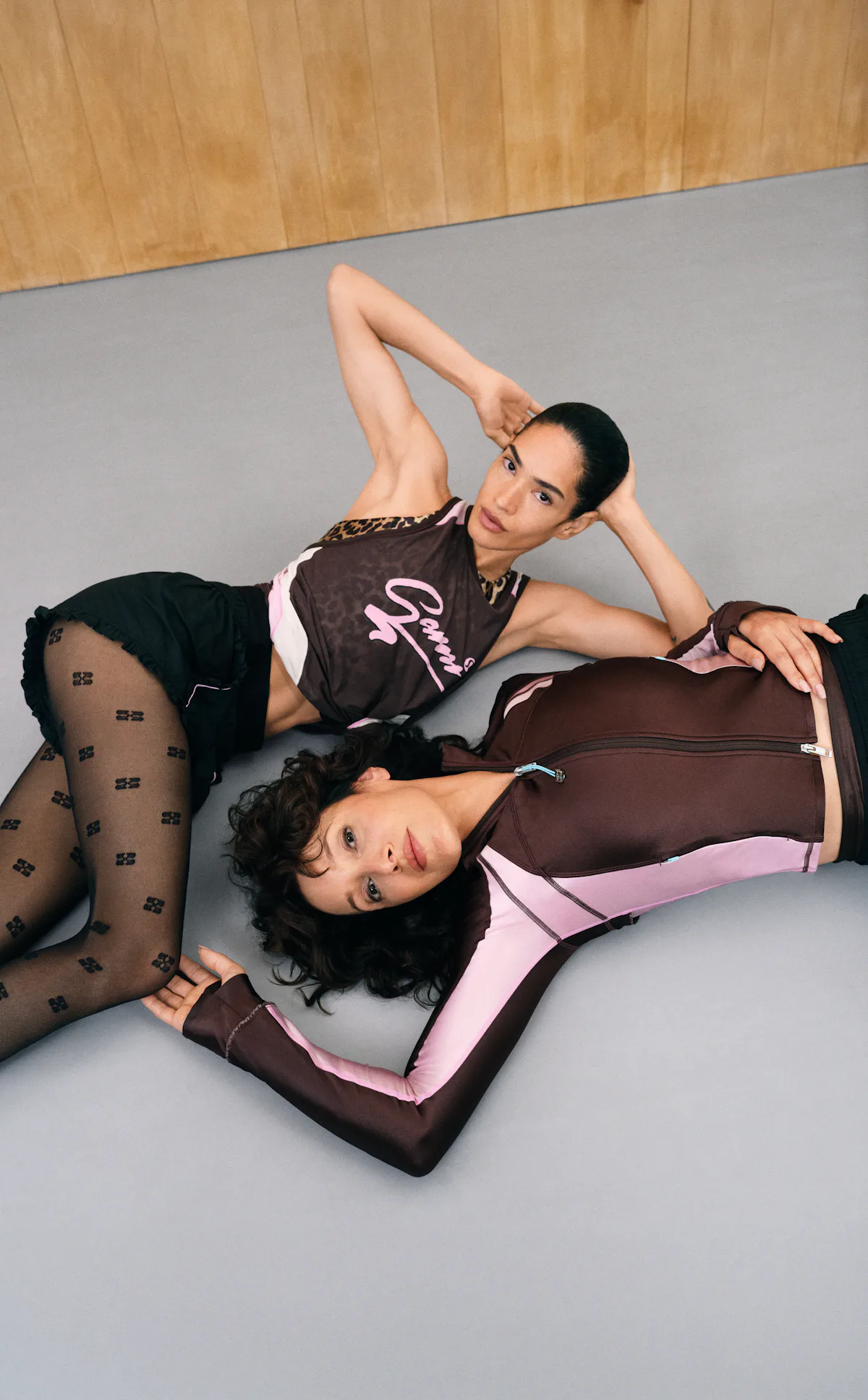
There is something quietly radical about a collaboration that refuses to choose between performance and poetry. The Ganni x Lululemon collection, a 22-piece ode to '80s dance films and the joy of movement, does not ask us to sacrifice technical excellence for whimsy, nor does it demand we pick a side between the studio and the street. It simply proposes that both can exist in the same garment, and that is precisely why this collaboration feels less like a merchandise drop and more like a manifesto for the modern muse who moves through life with intention. In an era where fashion often feels fractured between the utilitarian and the fantastical, this collection offers a rare synthesis, one that speaks directly to the woman who wants her clothing to reflect her inner state, not just her schedule. It is a natural companion to the conversation we have been having about the designers who are The New Fashion Order: 8 Designers Defining 2026, where the through-line is a refusal to be boxed into one category. Here, Ganni and Lululemon are drawing a similar line: movement is not just exercise, it is self-expression.
The collection takes its cues from the energy of *Footloose*, *Flashdance*, and *Fame*, not the nostalgia of the costumes, but the emotional resonance of dance as a form of freedom. Ganni's Creative Director Ditte Reffstrup describes being drawn to "the energy, determination, and sense of freedom" in those films, and that spirit is translated through Lululemon's best-selling archetypes, the Define Jacket, the Mid-Rise Tight, reimagined with cropped silhouettes, mono-line script logos, and ruffle trims. The result is a wardrobe that feels both grounded and aspirational, much like the approach of women who have mastered The Los Angeles uniform that makes Lindsey Carter feel at ease in her own style, where ease is the ultimate luxury. But where that uniform leans into laid-back Californian simplicity, Ganni x Lululemon injects a dose of theatricality, a mesh top that works with a mini skirt and heels, a track jacket that lives alongside denim. The collection does not demand you become a dancer; it invites you to borrow the dancer's confidence.
Our take is this: the most compelling thing about this collaboration is not the prints or the technical fabrics, though both are noteworthy. It is the underlying philosophy that movement, whether in a dance studio, on a city street, or in a quiet living room, is a form of emotional intelligence. Lululemon's global creative director Jonathan Cheung notes that everything flowed from Reffstrup's admission that her movement practice is dance, and that single detail reframes the entire collection. It is not about peak performance; it is about presence. The campaign, starring *Flashdance*'s Jennifer Beals and dancer Mette Towley, is titled "Joy Is a Power Move," and that phrase captures the collection's quiet thesis: confidence is not loud, it is embodied. For the woman who already knows that the way she dresses affects the way she feels, this collaboration offers a wardrobe that supports that self-awareness without demanding she explain herself.
The practical takeaway is straightforward: buy one piece, not the full look. The collection is designed to be mixed, a ruffle-trim jacket paired with your favorite denim, a merino wool-blend bolero layered over a simple dress. The real power lies in how these pieces translate into your existing wardrobe, not in how they look on the campaign model. Watch how the Define Ruffle-Trim Jacket functions outside the gym, or how the Jacquard Mesh Tank Top holds its shape under a blazer. That is where the collaboration proves its worth: not in the nostalgia of an '80s dance film, but in the quiet, confident way it moves through your life.