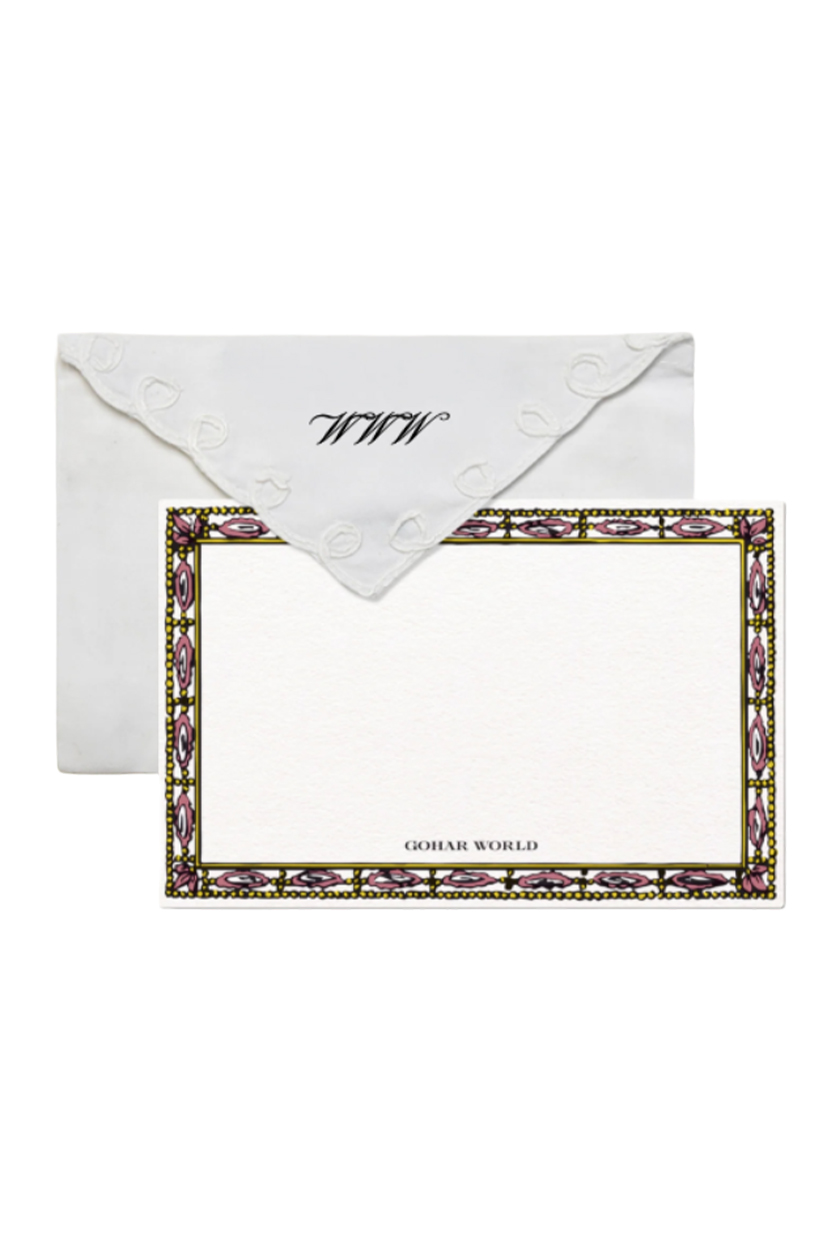
The art of gift giving has little to do with the price tag and everything to do with the act of seeing someone clearly. Who What Wear's annual Low Cost, High Joy Gift Guide proves this year after year, and their 2026 edition of 50 understated treasures under sixty dollars is a quiet masterclass in the practice. There is a particular kind of intimacy in selecting a hand-embroidered envelope from Gohar World or a silver-coated porcelain cutlery rest, objects that carry no urgency, only intention. This is not about accumulation; it is about the ritual of choosing something that says, *I noticed you*. It echoes the same sensibility we explored in The Quiet Elegance of Wearing Nothing Beneath Winter's Finest Coat, where restraint itself becomes the most powerful statement.
What makes this guide so compelling is not the quantity of options but the philosophy behind them. These are not generic trinkets pulled from a corporate wishlist. They are deeply personal: an engraved buffalo horn comb with a tassel, a satin dust bag made one-of-one in Chicago, a handkerchief embroidered with a loved one's handwriting by Cressida Jamieson in her London studio. Each item feels like a small secret shared between two people. This is the same emotional territory we covered in The 11 Rituals That Anchor My Skin and Hair Routine, where the value of a practice lies not in its complexity but in its consistency and care. A monogrammed note card or a pair of satin ballet slippers from Zara Home does not shout for attention, it simply exists as a quiet acknowledgment of someone's taste, their habits, the way they rest.
The guide also understands that self-care is not a luxury reserved for the wealthy. A Blue Lagoon hydrating face mask made from Icelandic geothermal seawater, a set of handcrafted Mudle Crayons from Jeju, or a sleek metal bookmark from Craighill all invite the recipient to slow down. These are gifts that create atmosphere, not clutter. They align with the fail-safe formula we outlined in The winter formula that needs no introduction: simplicity, quality, and a refusal to overcomplicate. The best gift you can give someone is permission to pause, and these objects deliver that permission without a single instruction.
The specific takeaway here is this: the most memorable gifts are not the ones that cost the most, but the ones that require the most thought. A personalized satin pouch filled with small beauty products, or a photo frame ornament in chrome with a chartreuse ribbon, becomes a vessel for memory rather than a disposable object. The question this guide leaves us with is not *what to buy*, but *how well do you know the person you are buying for?* That is the real gift, and it costs nothing at all.