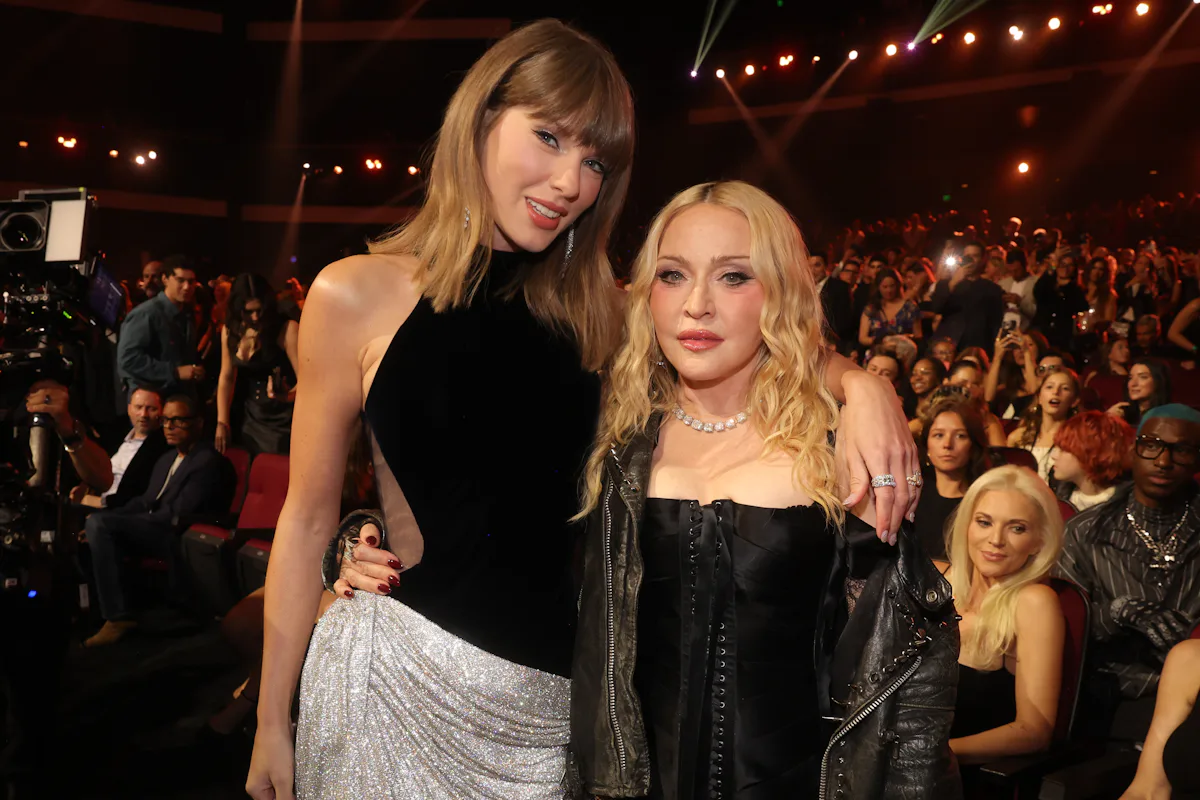
There is something deeply intentional about Madonna's return to the MTV stage after 23 years. She did not choose a grand arena or a nostalgic greatest-hits medley. She chose a cinematic club bathroom, complete with cameos and layered references to her own four-decade career. It was not a victory lap. It was a statement of presence, delivered on her own terms, in a setting that felt intimate rather than monumental. That distinction matters. For anyone who has followed her trajectory, the choice signals a shift from proving relevance to inhabiting it quietly, confidently, without explanation.
This performance echoes a theme we have been tracking across culture this season: the power of restraint. In A Red Carpet Skipped, a Stage Outfit That Rewrites the Night, we explored how one artist bypassed the traditional red carpet entirely, saving her reveal for the moment that actually mattered. Madonna did something similar. She let the stage do the talking. The club bathroom setting was not accidental. It evoked a mood of private revelry, of a world that exists whether or not the cameras are rolling. That is the energy of someone who has stopped performing for approval and started performing for herself. Our readers, many of whom are navigating their own relationship with visibility, can take note: confidence does not require volume. It requires clarity of intention.
The cameos and Easter eggs were plentiful, but they did not overwhelm the core. That is a difficult balance to strike. Too many references and a performance becomes a museum tour. Too few and it loses the thread of legacy. Madonna threaded it with precision, weaving nods to her history without letting them dominate the present moment. This is a lesson in curation, not just for artists but for anyone building a public identity. In The Quiet Appeal of Windbreakers Beyond the Gym, we discussed how even outerwear can signal a shift in self-perception when styled with intention. Madonna's performance was a similar exercise: she took something familiar, her own catalog, the VMAs stage, and reframed it through a lens of current self-awareness.
What we would tell a reader who asked about this performance is simple: watch how she moved through the space. She was not rushing. She was not over-explaining. She occupied the bathroom set as if it were her own private domain, and the audience was invited in, not summoned. That is the difference between performance and presence. Madonna has always been a master of the former. At this stage, she is refining the latter. The specific takeaway here is that reinvention does not always mean transformation. Sometimes it means returning to the same stage with a different internal posture. The open question for the rest of us is whether we are willing to do the same: to stop announcing ourselves and simply arrive.