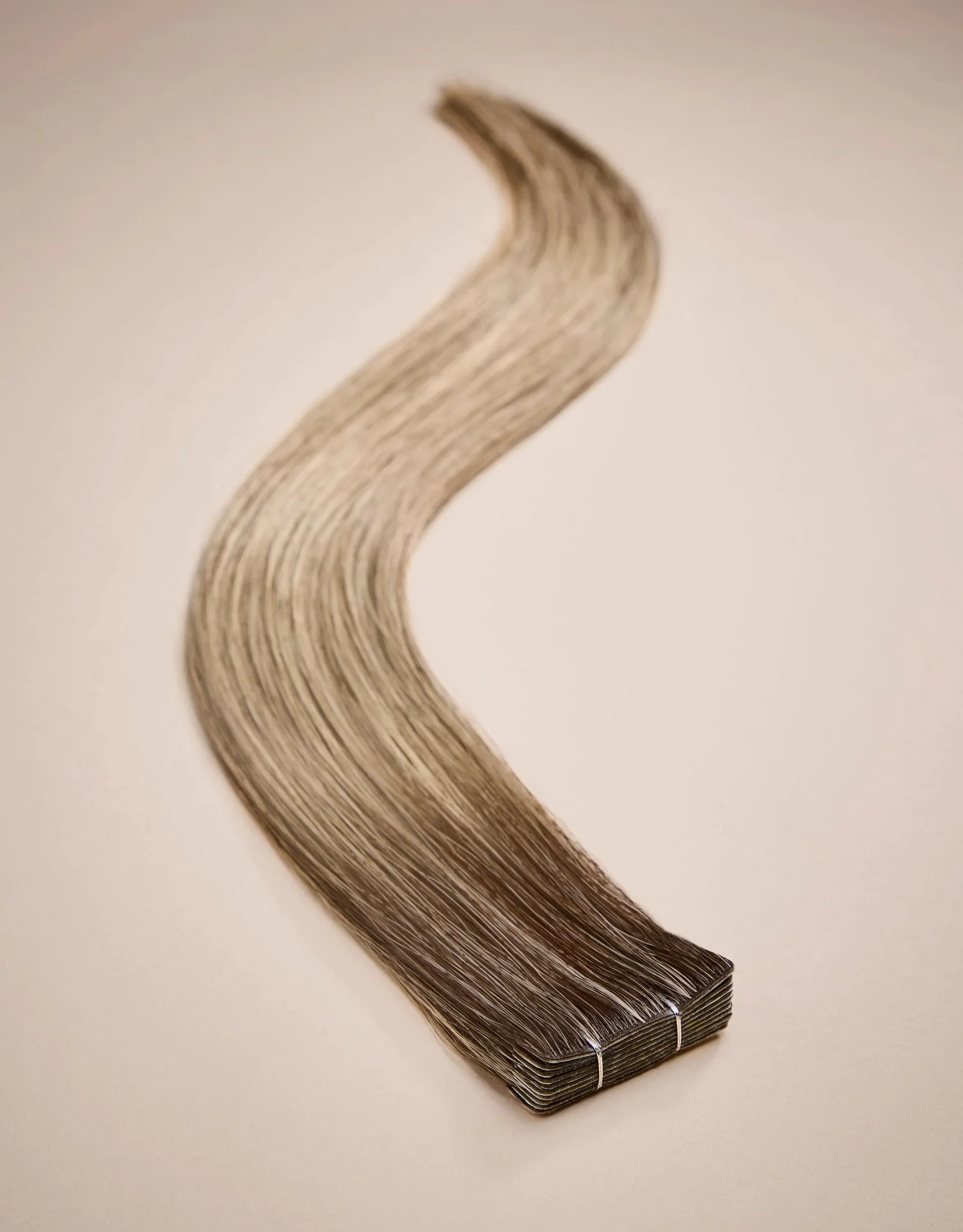
There is something quietly radical about a hair trend that asks to be noticed for what it isn't. Nude hair, as it is being called this autumn, is not about transformation. It is about refinement. And that distinction matters, because it signals a cultural shift away from the obvious and toward the intentional, a mood we have been watching unfold across beauty, interiors, and even our own routines lately. As we explored in our piece on A Quiet Shift in Manicure Mood for the Refined Season, the same instinct is guiding our hands toward softer, more personal expressions of polish. Nude hair is the extension of that same sensibility upward.
The premise is deceptively simple: work with your natural base, refine the tone, and create a finish so seamless that the colour itself becomes almost undetectable. Celebrity hairstylist Adam Reed describes it as "taking something familiar and natural and making it feel beautifully elevated." This is not the language of a trend cycle. It is the language of a philosophy. And it requires a more considered approach than the high-contrast balayage we have seen dominate salon chairs for years. Here, the goal is harmony over contrast, dimension without obvious placement. The result is hair that reads as expensive not because it looks worked on, but because it looks entirely at ease. For those of us who have been quietly recalibrating our relationship with excess, whether in our wardrobes, our homes, or our financial habits, as we discussed in Seven Books to Quiet Money Anxiety and Realign Your Routine, this feels like the natural next step.
What makes nude hair particularly compelling is that it asks more of you, not less. Because the colour relies on subtle tonal differences and light reflection, the condition of your hair becomes paramount. Softness, shine, and movement do the work that contrast once did. This is not a trend you can fake with a single gloss treatment and hope. It demands a personalised regimen, regular conditioning, and a relationship with your colourist that is less about requesting a shade and more about communicating how you want your hair to feel. As Reed advises, the best consultation begins with understanding the finish, not the colour name. That shift in language, from what to how, is the quiet luxury we keep returning to.
And so the real question becomes not whether nude hair suits your complexion, but whether you are ready to let your appearance do less explaining. In a culture that rewards the loud and the legible, choosing a colour that almost disappears is a vote for something else: presence over performance, ease over effort. As we watch this season's palette soften, the most telling detail to watch is not the shade itself, but how much space it leaves for everything else.