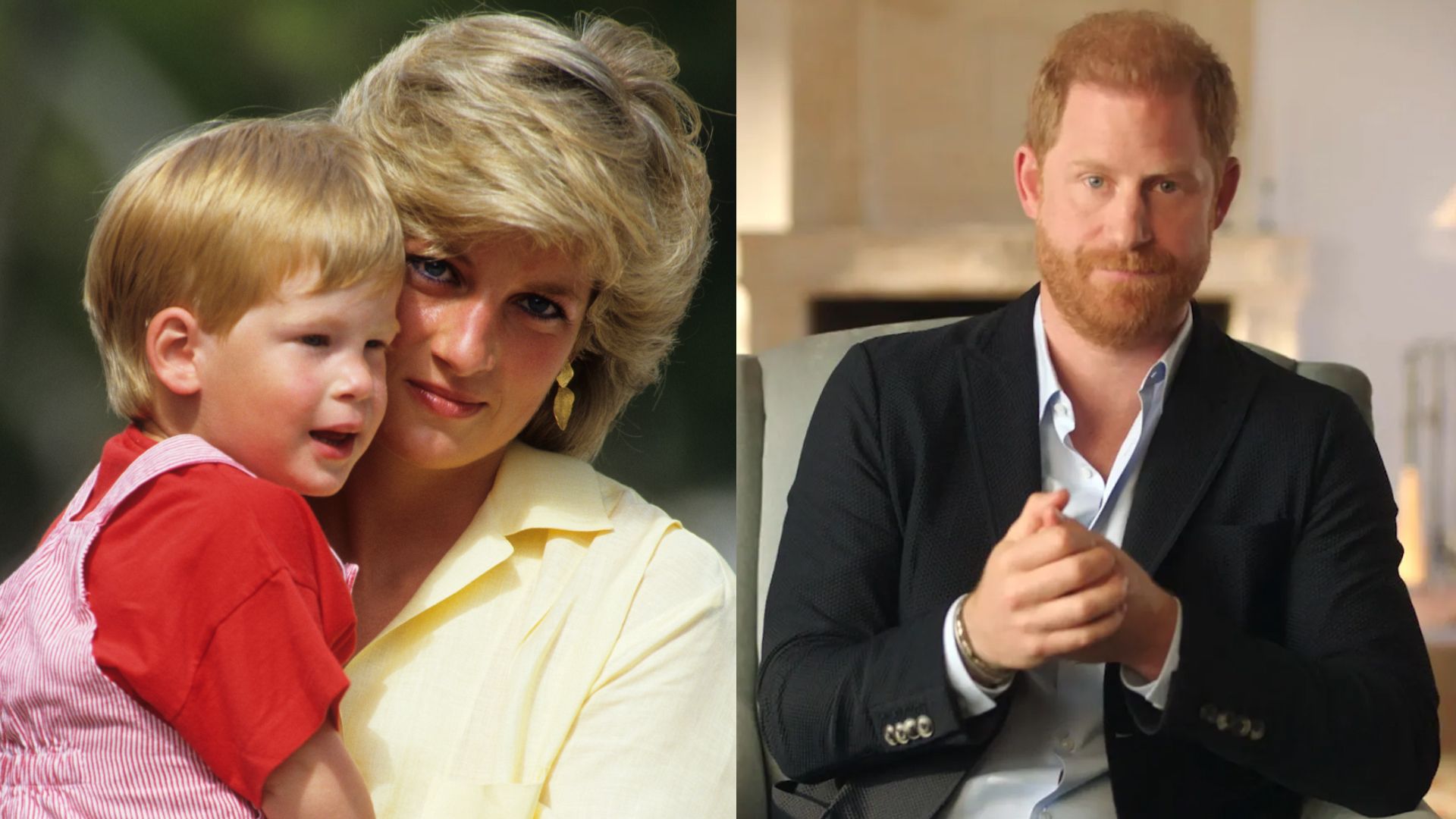
There is something profoundly disarming about a man who admits he forgot his mother's laugh. Prince Harry's MasterClass on grief, launched ahead of World Mental Health Day, offers no tidy resolution or redemptive arc. Instead, it gives us the raw architecture of avoidance: a twelve-year-old boy who did not cry when told his mother had died, who mistook emotional shutdown for strength, and who spent nearly two decades unable to access the very memories he longed to keep. In The Weight of Letting Go Harry on Adrenaline, Crash and Uselessness, we have seen this theme surface before, Harry's reliance on stress to feel functional, the restless energy that kept him moving when stillness threatened to undo him. This latest revelation connects those dots with devastating clarity. The suppression was not a failure of love. It was a survival strategy, and it carried a cost he is only now articulating.
What strikes us is the mechanism of his reconnection. Not a breakthrough in therapy, not a sudden catharsis, but a scent. When his therapist asked him to spray Princess Diana's favorite perfume, First by Van Cleef & Arpels, Harry described it as "unlocking everything that had been locked previously." The olfactory nerve bypasses the thalamus, connecting directly to the amygdala and hippocampus; science confirms what experience already knows. Scent holds memory in a way nothing else can. For Harry, that single spray of perfume was not nostalgia. It was permission. It allowed him to feel what he had refused to feel, and in doing so, to remember what he had convinced himself was lost. This is not a man reclaiming a headline. This is a man reassembling fragments of a mother he could no longer visualize or hear.
We find the quiet dignity of this confession especially resonant when placed beside Charles Spencer on Finding Peace at Diana's Island Sanctuary. Her brother speaks of her resting place as "incredibly peaceful and beautiful." Where Spencer offers physical sanctuary, Harry offers emotional archaeology. Both are trying to hold space for the same woman, but Harry's work is internal, rebuilding a memory damaged by the very defenses that once protected him. The two stories, read together, reveal how grief negotiates different registers. One seeks stillness in a place. The other seeks release in a feeling.
The practical truth for the rest of us is almost unbearably simple. Harry's tears did not arrive when logic dictated they should. They came two decades late, summoned not by will but by a fragrance. The lesson is not that grief has a timeline. It is that grief has a sensory language we often dismiss. We expect ourselves to cry at the funeral and move on. We forget that our bodies may not cooperate with that schedule. For those carrying their own suppressed loss, Harry's story invites a single, specific question: What are you not letting yourself smell? The answer may be the only key that actually fits.