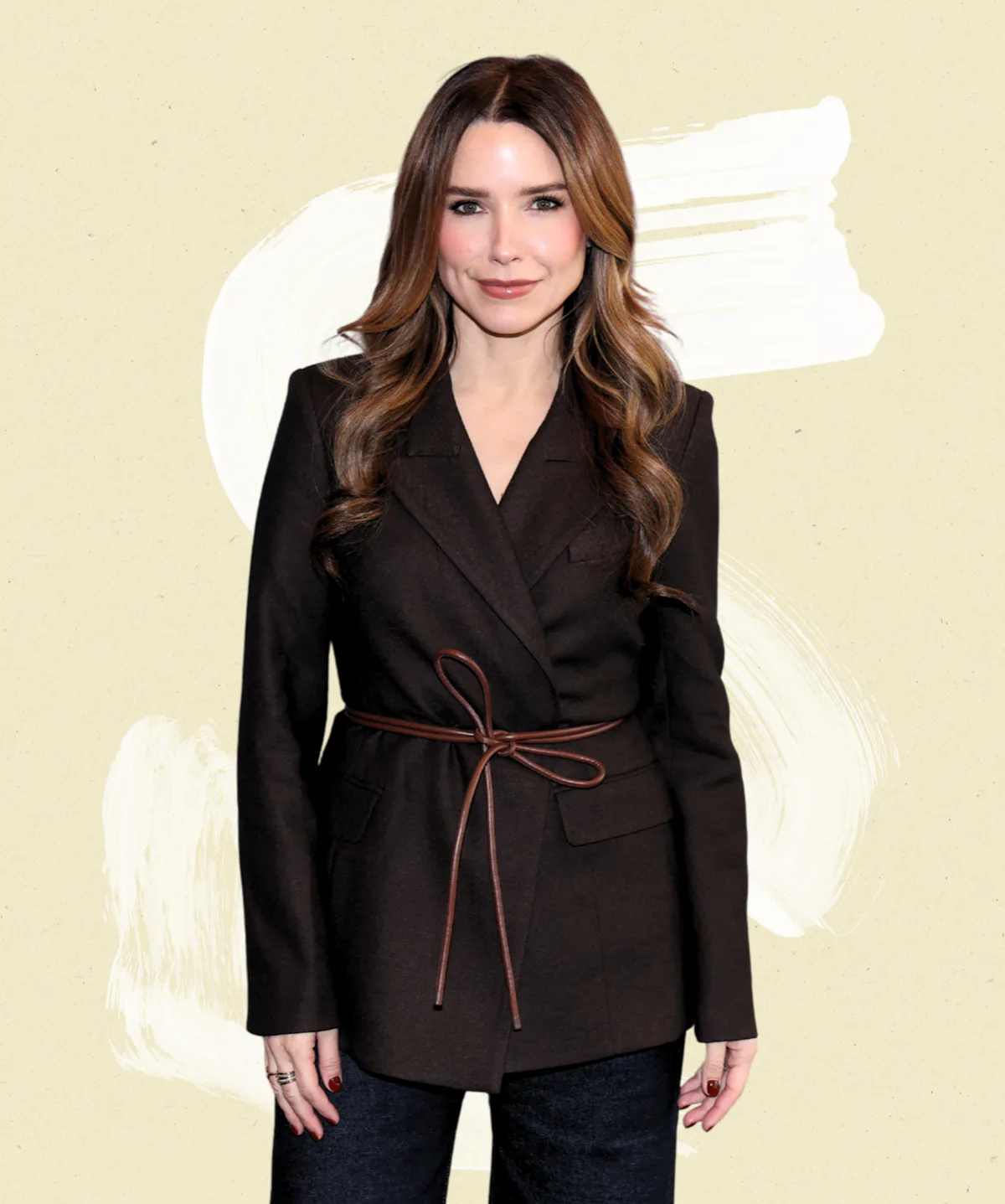
There is something quietly radical about admitting you do not have a perfect morning routine. Sophia Bush, in a recent interview, does exactly that, and the result is far more aspirational than any five-step, phone-free, cold-plunge manifesto could ever be. She wakes up, brushes her teeth, makes pour-over coffee, and does her best to put the phone down, but she does not pretend to have conquered the pull of the screen. This is not a performance of wellness; it is a negotiation with reality. And for anyone who has ever felt that the gap between their ideal morning and their actual one is a personal failure, Bush's honesty is a quiet permission slip to let go of the guilt. It echoes the same grounded, no-nonsense energy we recently explored in Prince Harry on Finding Tears as the Key to Unlocking Grief, where emotional honesty, rather than perfect processing, became the point. Here, the point is that a meaningful ritual does not need to be pristine to be powerful.
What makes Bush's approach so resonant is that she refuses to glamorize discipline for its own sake. She calls sleeping in without an alarm "winning the lottery." She admits she is in a workout rut and that she misses Pilates. These are not confessions of failure; they are acknowledgments of a life that is full, active, and not always controllable. She has young children, a demanding career, and a public platform, yet she frames her self-care not as an elaborate spa day but as batch-cooking chili and pre-batching protein shakes to solve for "decision fatigue." This is luxury redefined as intentionality, not indulgence. It is the same sensibility we admired in Inside the Quiet Discipline Shaping Mia Tindall's Rising Equestrian Path, where discipline is not about rigidity but about showing up consistently within the constraints of real life. Bush's version of that is making one pot of chicken soup a week so she does not end up eating old Doritos. It is unglamorous, and that is precisely why it works.
The most compelling throughline in Bush's interview, however, is not about mornings or meals. It is about permission. When asked what she would tell her younger self, she says: "You deserve to be the one writing your own permission slip." She observes that women are "over-advised, but under-permissioned", a line that lands with the weight of lived experience. She is not prescribing a new set of rules; she is inviting her audience to examine whose rules they are following in the first place. This is the same emotional architecture that underpins her partnership with BetterHelp, where she is giving away 10,000 free hours of therapy to her podcast listeners. She is not selling a product; she is creating access to the kind of introspection that allows a person to ask, "These worlds you live by, are they yours?" It is a question that reframes self-care from a surface-level routine into a deeper act of self-ownership.
The takeaway here is deceptively simple but worth stating directly: the most luxurious thing you can do for yourself is not to perfect your morning, but to stop performing it. Bush's alarm-free mornings are not a goal to replicate; they are a reminder that the real work is in giving yourself the grace to wake up however you wake up, and then asking yourself whether the structure you are building actually serves you. The question she leaves us with, are the worlds you live by yours?, is not rhetorical. The answer, for each of us, requires more than a ritual. It requires a reckoning.