Then and Now: Making an Entrance in Tennis
Our take
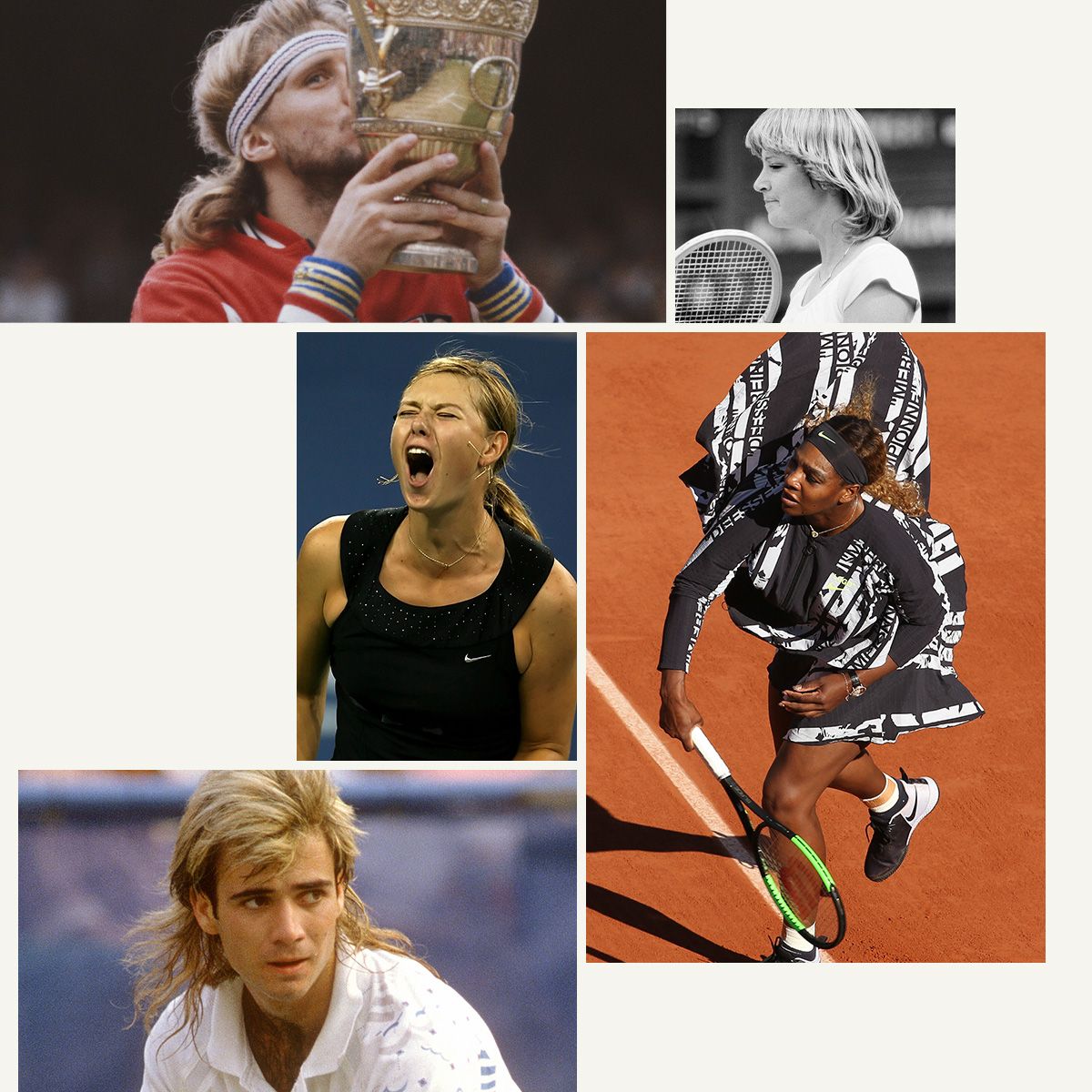
The resurgence of interest in Carolyn Bessette Kennedy's style, perfectly captured in Sunita Kumar Nair’s book *CBK: Carolyn Bessette Kennedy: A Life in Fashion*, has undeniably rippled through the fashion landscape, and her latest work, *Ace: The Times & Style of Tennis*, continues this exploration of understated elegance and impactful presence. Nair’s ability to distill a powerful narrative through clothing choices, whether examining the late Carolyn’s iconic minimalism or now charting the evolution of tennis attire, speaks to a deeper cultural fascination with intentional style over ostentatious display. It aligns with a broader shift we're seeing, a move away from fleeting trends and toward timeless pieces and considered aesthetics, a sentiment echoed in pieces like Hold the Biker—This Timeless Jacket Looks Far Chicer When Styled Like This which champions classic silhouettes over fleeting trends, and Texture Is Fall’s Fashion Hero — & These Stunning Pieces Elevate Every Outfit, highlighting the power of considered materials and detail. The focus on "walkout looks" in tennis, as Nair explores, reveals a surprising intersection of athleticism, personal expression, and cultural impact.
What’s compelling about Nair’s analysis isn't merely a cataloging of memorable outfits, but an understanding of how these sartorial choices reflected the era and the personalities of the players. Serena Williams’ powerful, often diamond-studded looks, for instance, weren't just about fashion; they were statements of confidence, Black excellence, and a deliberate challenge to the often-conservative traditions of the sport. Similarly, the understated elegance of players like Billie Jean King demonstrated a different kind of strength—one rooted in poise and a quiet determination. This isn't simply about *what* they wore, but *how* they wore it, the narrative they conveyed through their clothing choices, and the cultural conversations those choices sparked. It’s a far cry from the era of overtly branded sportswear, instead highlighting a subtle power that resonates with today’s consumer who values authenticity and self-expression. Even seemingly simple choices, like a particular shade of lipstick or the cut of a skirt, could become emblematic of a player’s persona and influence their public image, a concept also touched upon in The 5 Best Drugstore Lip Liners Rival My Favorite Designer Formulas for Under $10, demonstrating how even subtle beauty choices can communicate a distinct style.
The broader significance of this exploration lies in its reflection of a wider cultural conversation surrounding personal branding and the power of image. In a world saturated with influencer marketing and fast fashion, Nair’s work offers a refreshing perspective—one that prioritizes timelessness, intentionality, and the underlying narrative behind the clothes. It underscores the idea that true style isn't about chasing trends, but about cultivating a personal aesthetic that reflects one’s values and aspirations. Tennis, with its unique blend of athleticism and tradition, provides a compelling case study for this phenomenon, demonstrating how clothing can become a powerful tool for self-expression and cultural commentary. The careful curation of a "walkout look" – the moment a player steps onto the court – becomes a performance in itself, a visual introduction to the athlete’s personality and approach to the game.
Looking ahead, it’s worth considering how the rise of athleisure and the blurring lines between sportswear and everyday wear will continue to influence the evolution of tennis style. Will we see a greater emphasis on comfort and functionality, or will players continue to push the boundaries of fashion with bolder, more expressive looks? Perhaps the most intriguing question is whether the understated elegance championed by figures like Carolyn Bessette Kennedy and Billie Jean King will make a lasting comeback, signaling a renewed appreciation for timeless style and quiet confidence in a world obsessed with instant gratification. The legacy of these iconic walkout looks, as meticulously documented by Sunita Kumar Nair, will undoubtedly shape the future of tennis fashion and inspire a new generation of athletes to embrace the power of intentional style.
When longtime stylist, creative director, and writer Sunita Kumar Nair released CBK: Carolyn Bessette Kennedy: A Life in Fashion, she perfectly teed up the television series that followed, Love Story: John F. Kennedy Jr. and Carolyn Bessette, returning the late couple into the zeitgeist 26 years after their tragic passing. Bessette, in particular, was ubiquitous all over again, with her effortless eye for dressing making her one of if not the most influential personalities of 2026. That's not to say that Nair's book singlehandedly brought Bessette back into the fold, but its role cannot be understated. Neither can the impact of her sophomore project.
"When you do well on something, people always want to know what your next idea is, and I didn't want it to be [another] icon. I really wanted it to be something completely different," Nair tells me over Zoom from a sofa in her vacation rental. (It is August, after all.) Though her book, Ace: The Times & Style of Tennis, a deep dive into the relationship between fashion and tennis, came out in June, a best-selling author's press tour never truly ends—PTO be damned. Genuinely enjoying the subject matter helps, of course. "When you do a book on anything, you've got to really love it," she says. Fashion might have been Nair's first love, but it wasn't the only one. "[Tennis] was always kind of in my sideline," she says. That's how Ace was born.
To assemble the US Open–blue coffee table book, Nair used her years of experience in every corner of the fashion landscape, from styling and market research to writing and editing. In doing so, she was able to retell the numerous style stories that have shaped professional tennis for decades, weaving in the words of the very talent she selected to spotlight inside it—think Coco Gauff and Maria Sharapova—to contextualize their outfits in a manner that hadn't been done before, neither by a fashion point of view nor a sporting one. The result? An answer to the question that many of us who reside at the intersection of sports and fashion have asked ourselves countless times: What makes one athlete's outfit remain, becoming as much a piece of lore as any close match or missed rally, while another's is forgotten? Well, that and about a hundred other queries to do with the times and style of tennis. Who inspired Serena Williams's iconic denim miniskirt from the 2004 US Open? What's the story behind the first-ever tennis bracelet? All of the above can be found in my conversation with Nair below.
Tell me about your background.
My background was in true fashion. I went from [being] a styling assistant to styling to market work. I was very fortunate with the people I worked with. Unbeknownst to me, when I was [first getting] work experience, Isabella Blow was heading the Sunday Times Style team, and I mean, she was definitely eccentric, but seeing someone like that be fearless in their thinking and explore different areas really made an impression on me. I went on to a whole load of magazines, from Dazed & Confused to Wallpaper and then Sunday Times Style. All that amazing background of working quite grittily in the fashion world got me ready for working in New York, working with big stylists. Then, I did a long stint of being on set and [figuring out] my creative visionary taste.
But I always loved writing. That was always the bubbling undercurrent that I never dared tell anyone. I came from a classics background, so I loved writing and reading. When I moved back to London, I just really wasn't getting the kick out of styling [anymore], and then CBK came to me.
What about tennis?
When you do a book on anything, you've got to really love it, and [tennis] was always in my sideline. There really wasn't anything in the market that spoke to [tennis style], and so that was very exciting for me to be like, Okay, what can I bring, and how can I do this honestly and invite people who have nothing to do with tennis to pick up that book?
Given that you were already present in both of these spaces, how, if at all, did your point of view change about the impact that an outfit can have on an athlete, a fan, a brand, etc., from writing and researching this book?
It really occurred to me that [fashion's] impact [on tennis] was actually happening in stages, and that was logical because everything reflects our time. At the beginning of the century, it was just about women wanting to break free. I want to run after a ball. Why do I have to wear a corset and a long picnic dress right down to my [ankles]? Funnily enough, I think the repressions that women, and probably the men, too, were feeling at the beginning of the century are the same [today] in a way. So then, it's the question: Have we evolved?
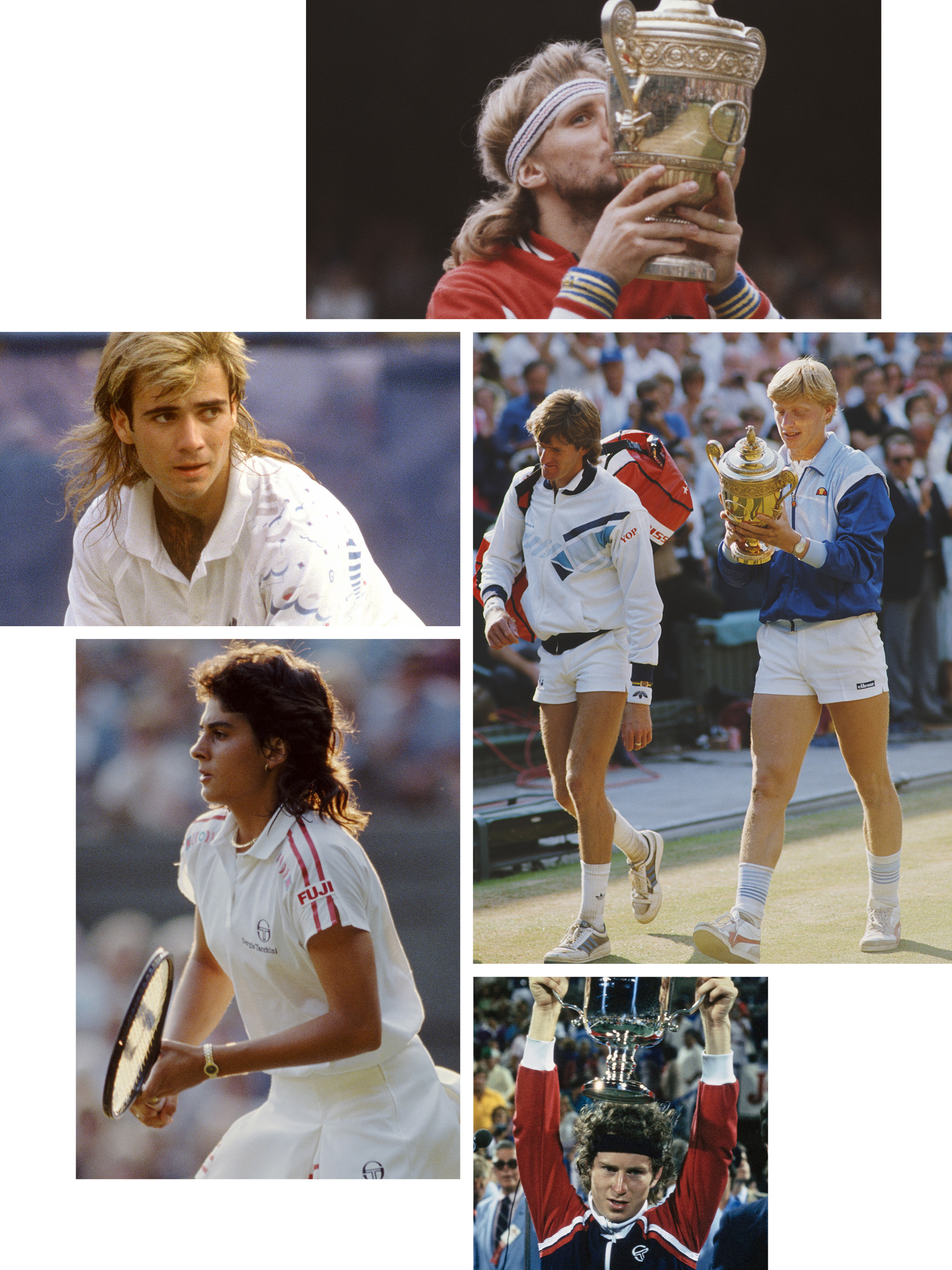
That was purely functional, right? Then it became [about] performance, when the sport really did pick up in the 1940s to the '60s and then from the '80s, fashion [enters], with people like [Andre] Agassi, [Boris] Becker, and [Gabriela] Sabatini. Really, [John] McEnroe and Björn Borg were responsible for making [tennis style] very rock and roll back then. And fashion really supported those players and their image—it really did take a stronghold. It was there at the beginning. [Jean] Patou had never spoken about it. Chanel spoke quite a lot about it, but I think for them it was so experimental: There is no wardrobe for women who want to play sports. So what do we do about that? You're thinking about rich, elite people who really don't have anything to do—they don't need to work, so they're going to play sport or travel.
There's so much to it beyond just what's happened in the last few decades. From a psychological standpoint, after doing so much research on the topic, how much of an impact do you think an outfit can have on an athlete? Obviously, it's not going to turn a so-so player into a champion…
If only. With fashion, I think you have to understand it—you have to get it. [If it's disingenuous], the fans won't buy into it either. When it's not a believable story, it just doesn't work across the line. I've seen plenty of players who've really tried to put [themselves] out there, and it's just not believable because that's not really who they are.
It won't have a lasting effect if it's not real.
How can you equate it in the fashion world? There are so many style icons, even Carolyn. Why are we drawn to those people? It's because there's an innate understanding of how fashion works for that person, and then it becomes something idealized and something that people want to capture or replicate in a way.
I do like it when [athletes] don't like fashion necessarily; that's totally okay. But the ones who are in this weird mid-gray area, it just doesn't work. What's really interesting is when you look at sports, most players won't take the chance of doing something that's not them because their main aim is to win.
Right. I always use Lewis Hamilton as an example for this. He took so much heat to become the cultural icon beyond sport that he is today. You're not going to do that if you just don't care.
And it's the same for brands. You're not going to get a player to agree to wear something if it's going to feel uncomfortable. I'd like to think that quite a lot of sports players have already defined their identity by the time they are well known or professional because they've been doing it since they were quite young. Most of us only really know ourselves probably in our mid-30s—what we like to wear and what we don't like to wear, or what makes us feel what we [want to] feel. But I think players, because they have this arc very early on, they understand what works for them, and so a lot of the in-house sports designers say that they're very vocal.
They know what they want.
Yeah. Of course, you're always going to get one or two [who] you're like, why are they coming out in that? What is that about?
It never has a lasting impact. Obviously, this phenomenon of embracing style in sport is everywhere now. We see it in basketball and football with the tunnel 'fit, or in motorsport, it's the paddock 'fit. What do you think sets tennis apart?
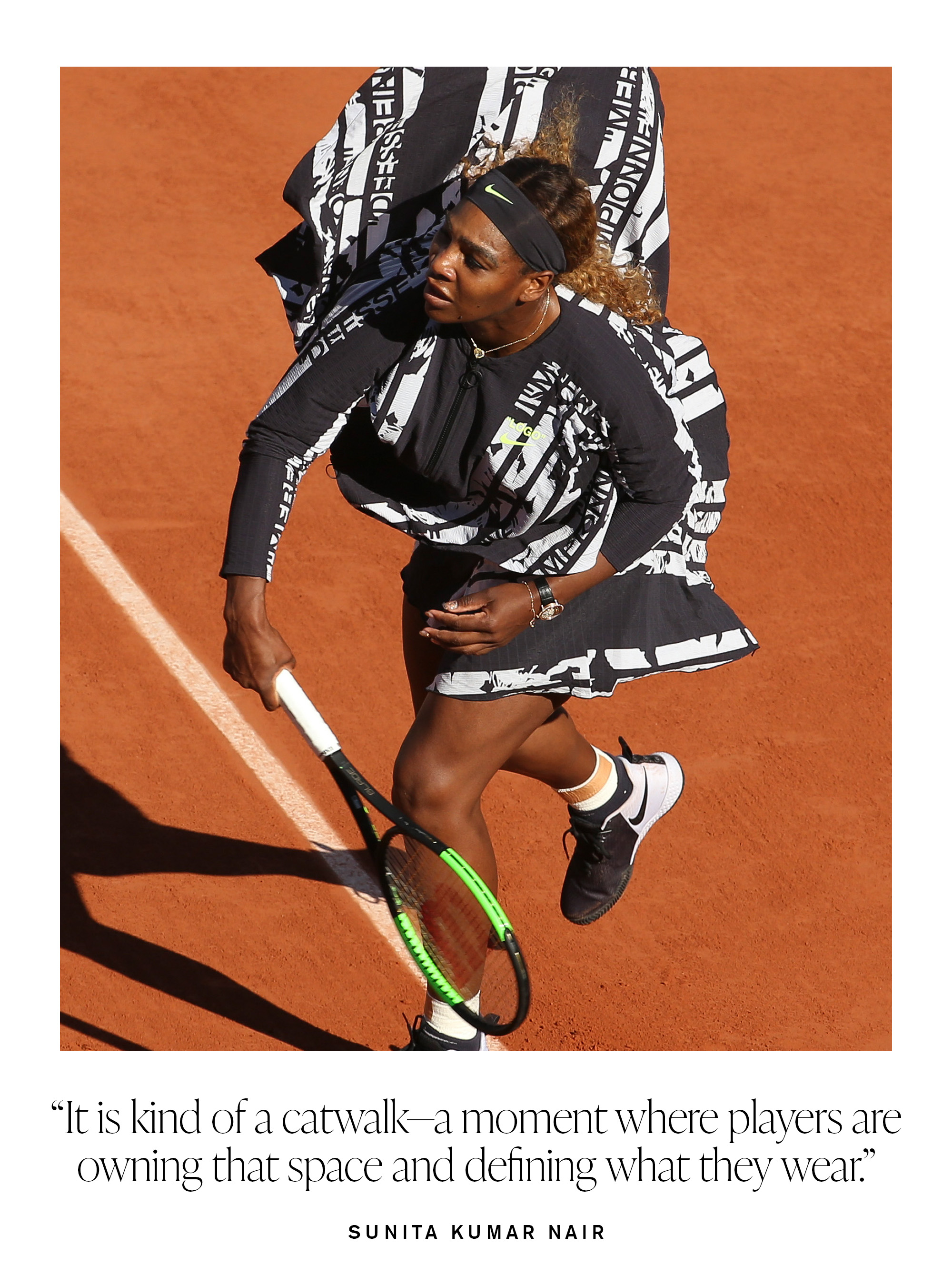
It is unique in that it is a one-person sport. Obviously, motorsport is as well, but [with tennis,] you are looking at the player on the court for a good amount of time—say two to five hours—and without sounding crass, that's a huge advertising moment for a lot of brands. Everybody knows it. This is not a hidden secret. The players know it, the brands know it, and so now, you get this open forum where you can participate in that. What's also really interesting with the sport is it's non-contact, so you're not really going to get the clothes messed up; they're going to remain the way the designer intended throughout play, unless they are rolling around in the clay. So I think that has a lot of appeal aesthetically when you're looking at why tennis is such a great sport [stylistically]. It really calls in so many aspects. And now there's this thing with the walk-on moment. It is kind of a catwalk—a moment where players are owning that space and defining what they wear.
Brands have been in and out of the sport, but their involvement seems to be getting more intentional. Players carrying handbags, for example. It's not like, Oh, this is your tennis bag, and we tweaked it. It's a purse.
A lot of people have asked me, is that right or wrong? I think as long as it doesn't get in the way of the play, that's fine. Some of the opponents said that it's intimidating, but I think that's good, right? As soon as you go into a sporting arena, it's fair game for everyone, and you know, if peacocking makes you feel good, why not?
It's a multipronged strategy: It makes you feel good, especially if you have a hands-on part in making it. It boosts your confidence, but it also intimidates the opponent. Plus, it allows fans, as you said in the book, to get a window into who players are personally.
Yeah.
And obviously, you get paid.
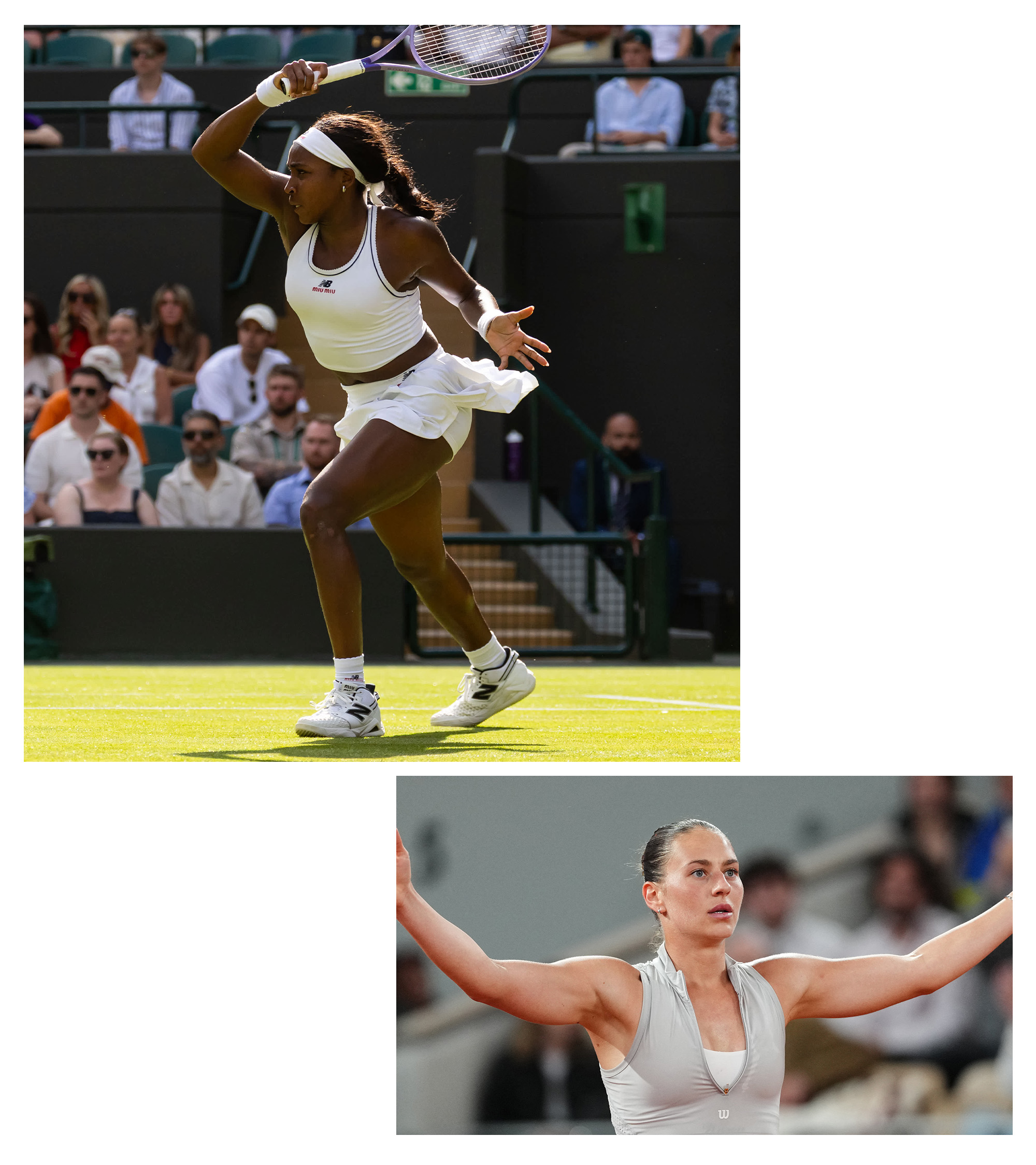
Yeah, it is a win-win. And I've said this a few times in interviews, but you know, even me, I was watching Marta [Kostyuk] play at the French Open, and I was quite close to watching her play. I was looking at [Wilson's chief creative officer] Joelle [Michaeloff]'s design for her on that day—that beautiful gray dress against the clay—and then I just happened to walk into the shops there, and there was the dress. That's huge. Now, we have this experience where it's straight to the consumer. You've got a bit of a superhero outfit, so it's empowering. You're going to wear it on the tennis court and feel a bit like Marta. There are so many layers of feelings that the consumer probably has from that.
Right, and obviously, if you're going to a tennis match, you have enough money to pay for the ticket. It's a pricier sport, so you probably have the means to spend a little bit more and buy the Miu Miu x New Balance dress that Coco Gauff wore. Or, I always thought it was so cool that the signature shoe for these elite players is actually the shoe they wear. It's not just an imitation. And you can buy it.
Yeah, and I think you're going to probably see more of that happening at a faster pace because that is gold right there, isn't it? For both the brand and for the athlete.
Even compared to Formula One, they can wear the outfit to walk in, but then they have to take it off. In tennis, athletes get to wear the outfit the whole time.
There's this kind of traversability, like being on court and then coming off court, and it's still really chic, and you can also wear it, and it still speaks to something, whether you play the sport or not, and I love that aspect of tennis.
Completely. Next, I want to dive into a few looks. Obviously, you looked at I don't even know how many to pick the ones that you ended up choosing for Ace.
A lot.
After doing so, what do you think makes a look become one of the ones, like Sharapova's Breakfast at Tiffany's dress or Serena's denim-miniskirt-and-boots outfit?
These are landmark pieces that either the player identified for them or I had in my mind. With my background, obviously, anything that looks great photographically for the player, or I think there are certain nuances when you are looking at sports outfits that are not necessarily so obvious in a photograph, where I visited the headquarters, and there was some kind of specification in the way it was designed. You know, Wilson [Smith] at Nike was great. He's retired now, but [he came] from an architectural background and [had] that idea [to make a sneaker into a boot for Serena]. This was actually the blueprint for what Agassi had done, you know, what Serena had wanted, and what was gold about that look was even though we had already decided that we were going to talk about that, [we discovered that] other players had referred to that look [as well], which I thought was really interesting.
When we think about our fashion world, when we reference Prada 1996, we all know it. We can identify those very important moments down our fashion line, and the same occurs in tennis as well. I don't think I'd ever seen tennis or sport be defined in that way, but of course, for sports designers, how else are they going to earmark whatever happened back in time? But I don't think that was so obvious. As consumers, we are so aware of the way that fashion designers tag historical looks or what they reference, but that is what I was bringing to Ace [for tennis]. Like, hey, these are landmark looks that really were either incredible in terms of their technique or caused a media breakout or it was a landmark moment for the designer and for the player.
Amazing.
Or they just looked photographically brilliant.
Do you feel like on-court dominance is involved at all? How much does that play a role, too, in the memorability of a look?
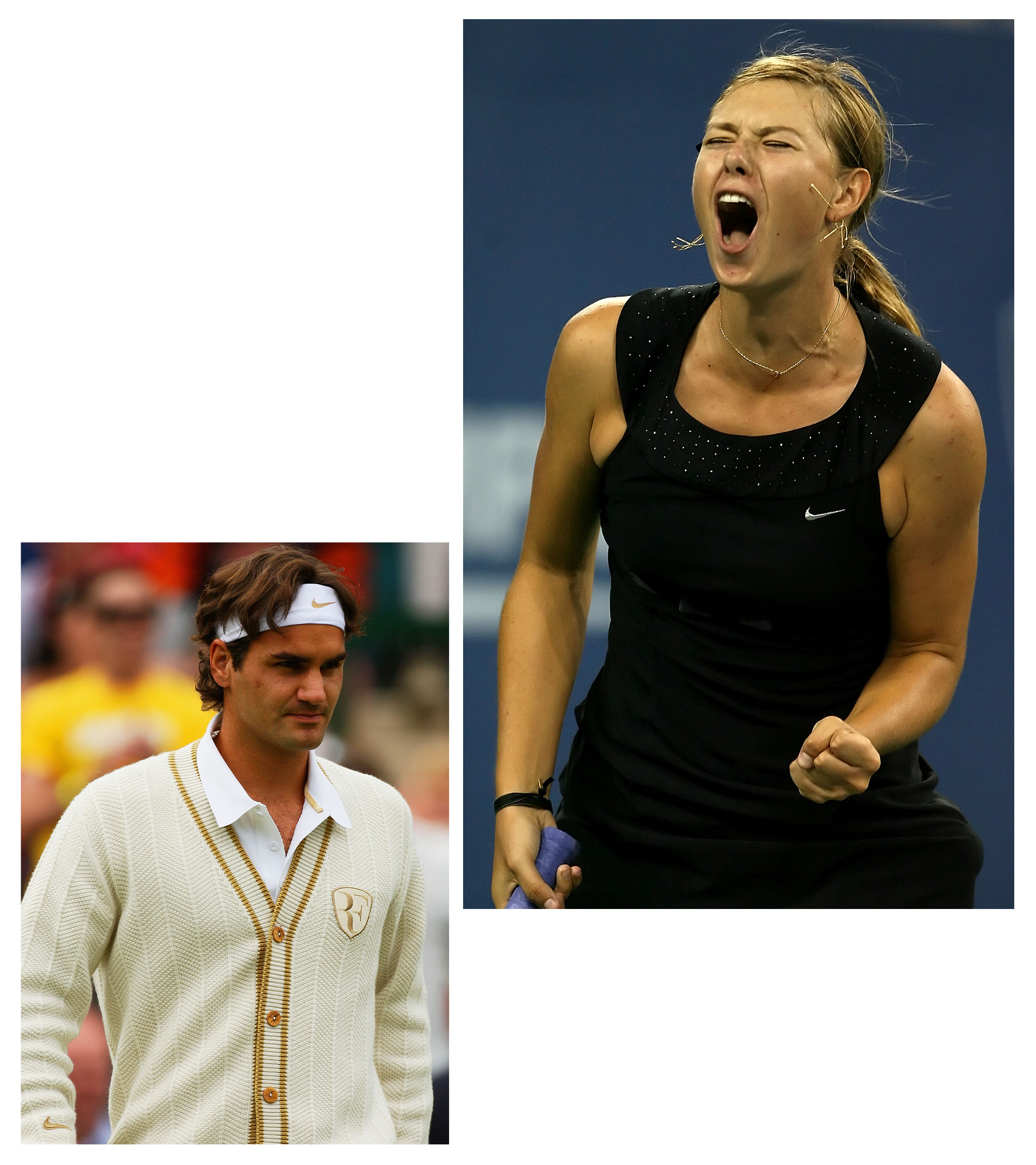
I think a lot. Why do we remember Serena in that gladiator look, or Maria in that little black dress, or even, let's take a man, like Roger Federer and his cardigan? It is visually compelling, yes, but it's also the persona of who's wearing it. They're really owning it.
Maybe it takes becoming established to really own your outfit on the court.
Yeah, or you know yourself, and you know what best enables your persona, or I thought it was interesting, with one of Serena's looks where she was told off, like the catsuit, where it became this domino effect of her rebelling with [the sport], and then she got Virgil [Abloh] on. That's just a beautiful story.
You brought up Serena's Off-White catsuit. What are some specific other looks that we haven't talked about that you feel had a similar impact on the sport and fashion? And why do you feel that way?
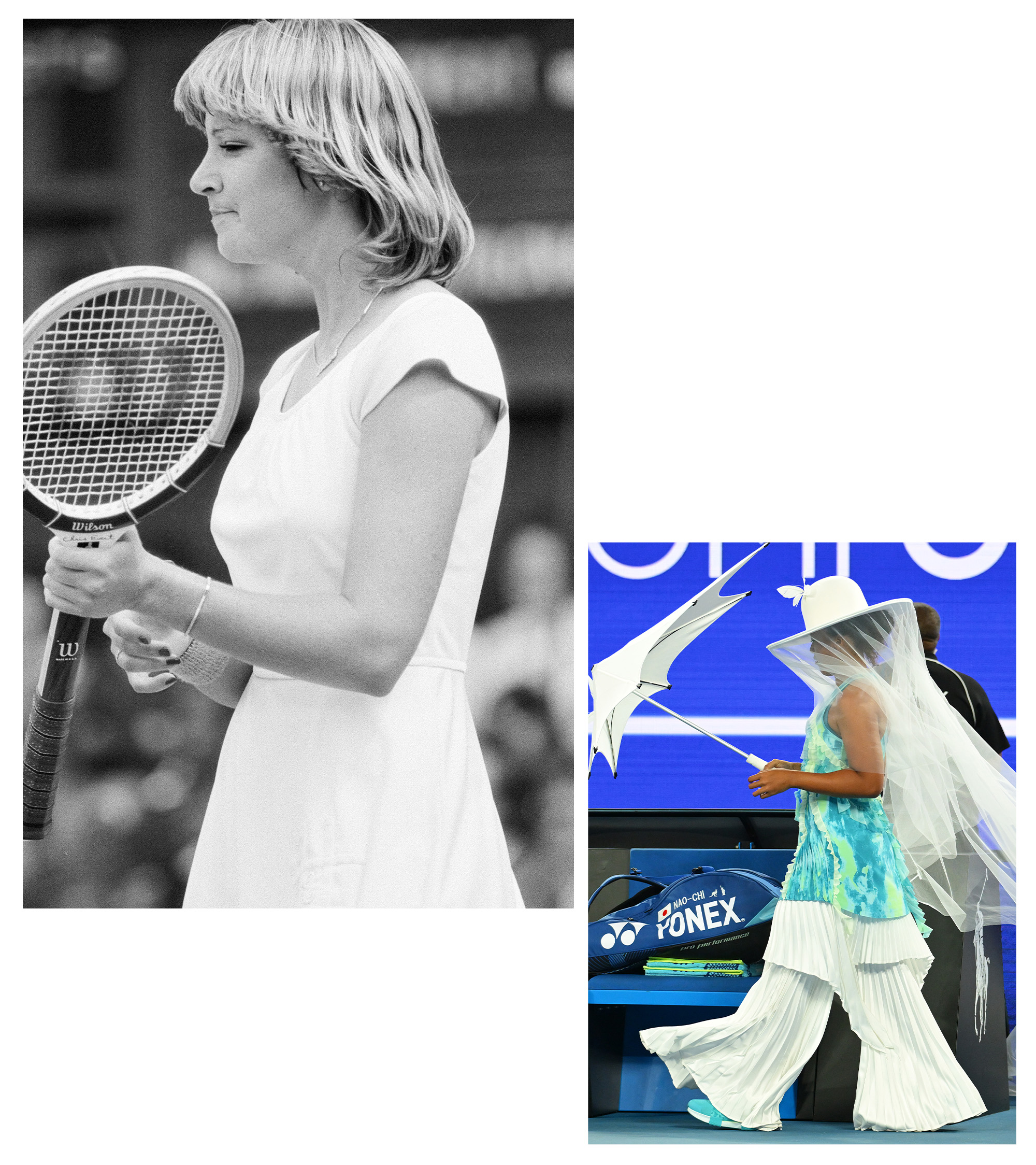
I feel like Suzanne Lenglen's first look was major. She was just such an incredible character, and I didn't know about her really until I'd done research for the book. There are the breakthrough moments, like Bunny Austin deciding to wear shorts, which was huge. Chrissie Evert, even though we're not talking specifically about her tennis look, but more about her wearing diamonds on the court, and that to her, buying her own diamonds [and wearing them] on court was such an indication of where women were at that time—that they were their own powerhouse. And then, who can discount Naomi Osaka when she came out in that incredible fully Edwardian look for the Australian Open. That was one of the last looks I managed to put in [the book], and it just felt very full circle that she could choose to wear what women [before her] were breaking free from wearing. I love that.
She really embodies the modern fashion-athlete combo.
Totally. What's fascinating about her is that she really does use style and fashion as her language to speak. She's talked before about her mental hurdles, and she's not a big talker, but when she comes out, it's beautiful. It's absolutely breathtaking. And she really does channel the fashion to work for her, and she just doesn't seem to care, which I love.
I love that her looks aren't just to walk out in. She really plays in them too.
What I love is actually her energy and spirit when she's in the interviews. They're like, Oh, this is another costume. And she really becomes quite defiant about it.
That's when fashion works really beautifully. One last question, from your point of view, where would tennis be without style?
I think this is the most interesting story, and it's a great question. There wouldn't have been Ace. I don't think there would have been a story if fashion hadn't worked with tennis and vice versa. There were these incredible women who discovered the sport—it was the same time that football was discovered—but for some reason, tennis got stuck in this elite [box]. It really needed a designer, someone to actually take a look and say, "Let me try and design some kind of dress for you."
Wow, yeah.
After I'd finished writing, I realized that it really wouldn't have been possible for the game to have developed [without that]. So, ironically speaking, when players say they don't really care about the fashion part, they are actually living [in it no matter what].
Even if you don't care at all, style is tangentially helping you.
It is the will to win. It's the chase of the ball. It is how aerodynamic you can be. There are so many aspects that started with that first dress, or wearing shorts, and it still enables the movement today on a basic level—chasing the ball.
Read on the original site
Open the publisher's page for the full experience