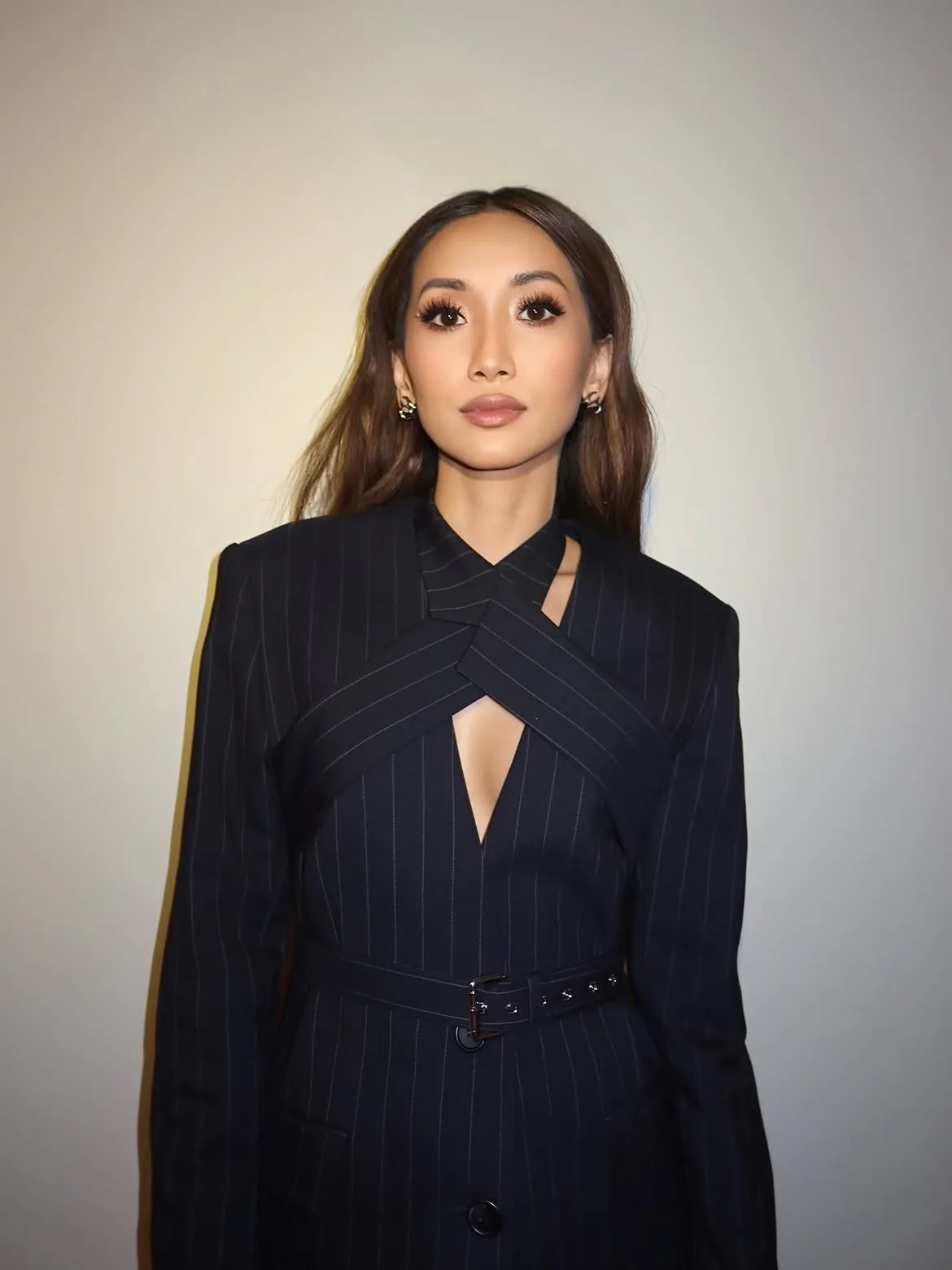
There is a particular kind of confidence that comes from knowing exactly what you are, and what you are not, in any given moment. Brenda Song's recent conversation with TZR about her enduring style offers a masterclass in that quiet self-assurance. She speaks to a reality many of us chase in our own closets: the goal is not to reinvent yourself with every trend, but to carry a core identity forward, letting it age and refine like a well-worn leather jacket. It is a perspective that feels increasingly rare, and increasingly necessary, in a culture that demands constant visual novelty. We see this same gravitational pull toward the considered and the enduring in Pamela Anderson’s September: A Month of Venetian Grace and Vogue Moments, where presence itself becomes the ultimate accessory.
Song's reflection is not a nostalgic trip back to the Disney lot, but a quiet study in how memory and maturity can coexist. The Y2K echoes in her style are not about resurrecting a costume from a past era, but about acknowledging the foundation that era built. It is the difference between being a relic and being a reference point. Her evolution suggests a woman who has stopped trying to outrun her history, instead choosing to fold it into the fabric of who she is today. This is the aspirational, grounded tension we admire. It is the same sculpted intention we see in Sculpted Silhouettes: Victoria Beckham’s Fall Collection Finds Quiet Strength, where structure is not about rigidity, but about a confident, self-contained poise.
For our readers, the practical takeaway is a permission slip to stop chasing a version of yourself that is perpetually out of reach. Style, at its most potent, is a form of self-connection. It is not about the panic of a rushed morning, but the calm of knowing your fail-safes. When we look at someone like Song, we are not seeing a trend report; we are seeing a woman who has made peace with her own aesthetic narrative. The question she poses is not "what should I wear?" but "what do I want my presence to communicate today?" It is a shift from external validation to internal alignment. We would tell any reader that the most enduring piece in your wardrobe is the one that holds a version of you that feels true, not the one that merely looks current.
The most compelling detail to watch is how this philosophy translates into the tangible. It is one thing to feel confident, and another to articulate it through a single, perfect blazer or a pair of well-worn denim. As Crafting a Custom Indian Wear Brand: Finding the Right Manufacturers suggests, there is a growing desire for pieces that are not just worn, but told. The real question Song leaves us with is not about the past, but about the next decade of our own closets: are we curating a collection of clothes, or are we documenting a collection of selves? The answer, for those who wish to dress with the same enduring elegance, lies in choosing the latter.