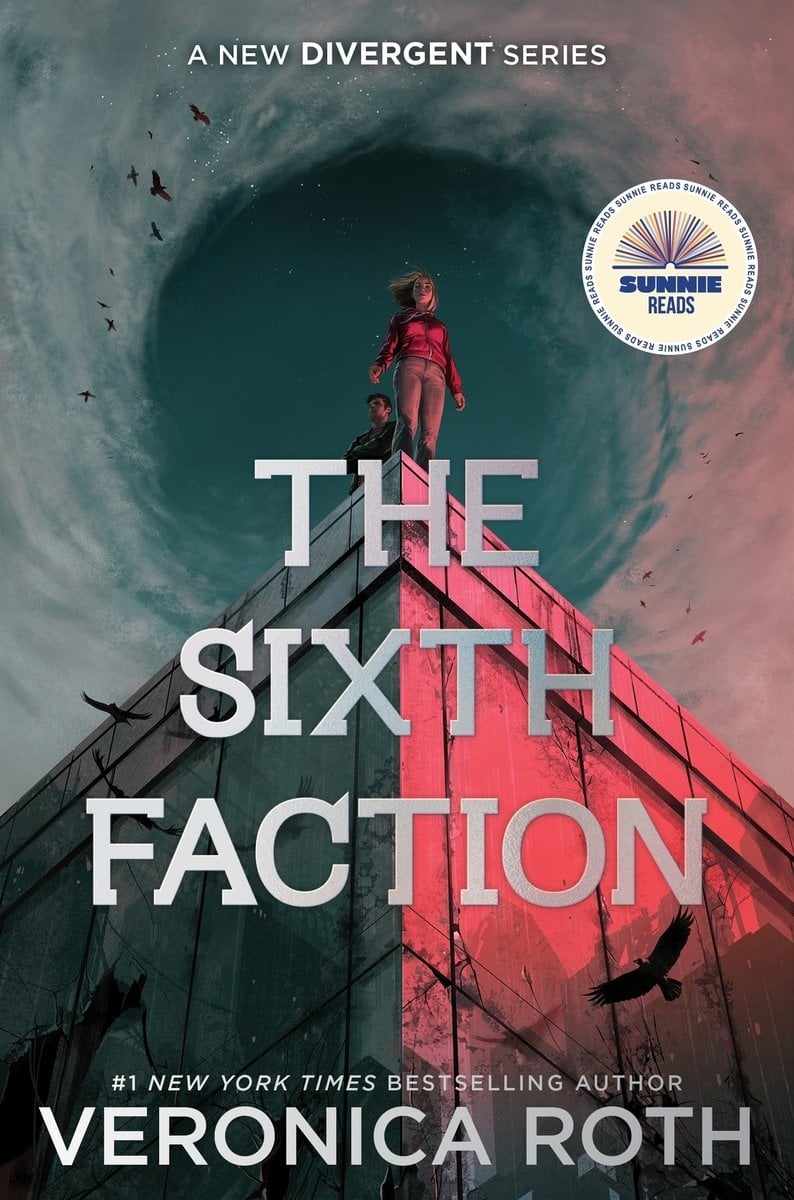
There is something quietly radical about a writer who returns to her own early work not to defend it, but to reimagine it with a deeper, more patient hand. When Veronica Roth revisited the world of *Divergent* to write *The Sixth Faction*, she did not simply polish the prose she had written as an undergraduate; she let her own maturity reshape the story's moral center. In a cultural moment that often demands that young people carry the weight of the world's repair, Roth now admits what so many of us feel but rarely say aloud: it is troubling to indulge the sentiment that the youth will save us when we should be working to repair things for them instead. This is not a rejection of the genre she helped define, but an evolution of it, one that mirrors the quiet, introspective shift we see in other stories of preservation and protection. A mother's love preserved in fashion, a memory worth protecting reminds us that memory and care are acts of resistance, much like the dystopian worlds Roth now champions, where characters carve out space for friendship and art even in the midst of ruin.
For readers who grew up on Tris Prior's fierce, solitary heroism, Roth's curated reading list offers something more nuanced: a dystopian landscape where collective action, not a single heroine, drives change. She selects titles like *Proxy* by Alex London, a tense cyberpunk fable about the rich paying the poor to take their punishments, and *An Ocean Apart* by Jill Tew, which pairs *The Bachelor* with sharp observations about inequality and climate collapse. These are not books that scream for attention; they are stories that ask us to see the world more clearly, then decide what to do about it. This is the quiet luxury of dystopian fiction, it does not need to shout to hold a mirror to our darkest moments. Like the family secrets unraveling in The Good Daughter Peacock Thriller, these stories understand that buried truths surface not in dramatic declarations, but in the slow, deliberate act of looking.
What makes Roth's perspective feel so resonant now is her insistence that dystopia is not merely a warning, but a space for hope. She writes that good things, friendship, romance, beauty, respite, remind us of what is worth preserving, restoring, protecting. This is not naive optimism; it is a refined, intentional choice to see possibility within constraint. Her upcoming 2026 novel *Seek the Traitor's Son* was inspired by this exact impulse, and her list includes *The Summer Prince* by Alaya Dawn Johnson, a dreamlike story set in futuristic Brazil that she calls a balm for anyone tired of the genre's familiar cadence. That word, "balm", is everything. It suggests that dystopian YA, at its best, is not a scream into the void but a hand extended in the dark.
The specific takeaway here is a quiet challenge: stop asking the young to save us, and start asking what we are building for them instead. Roth's return to *Divergent* is not nostalgia; it is a recalibration. She has written a version of the story where collective action, not a lone heroine, drives change. That shift matters, and it is the detail worth watching as her new novel approaches.