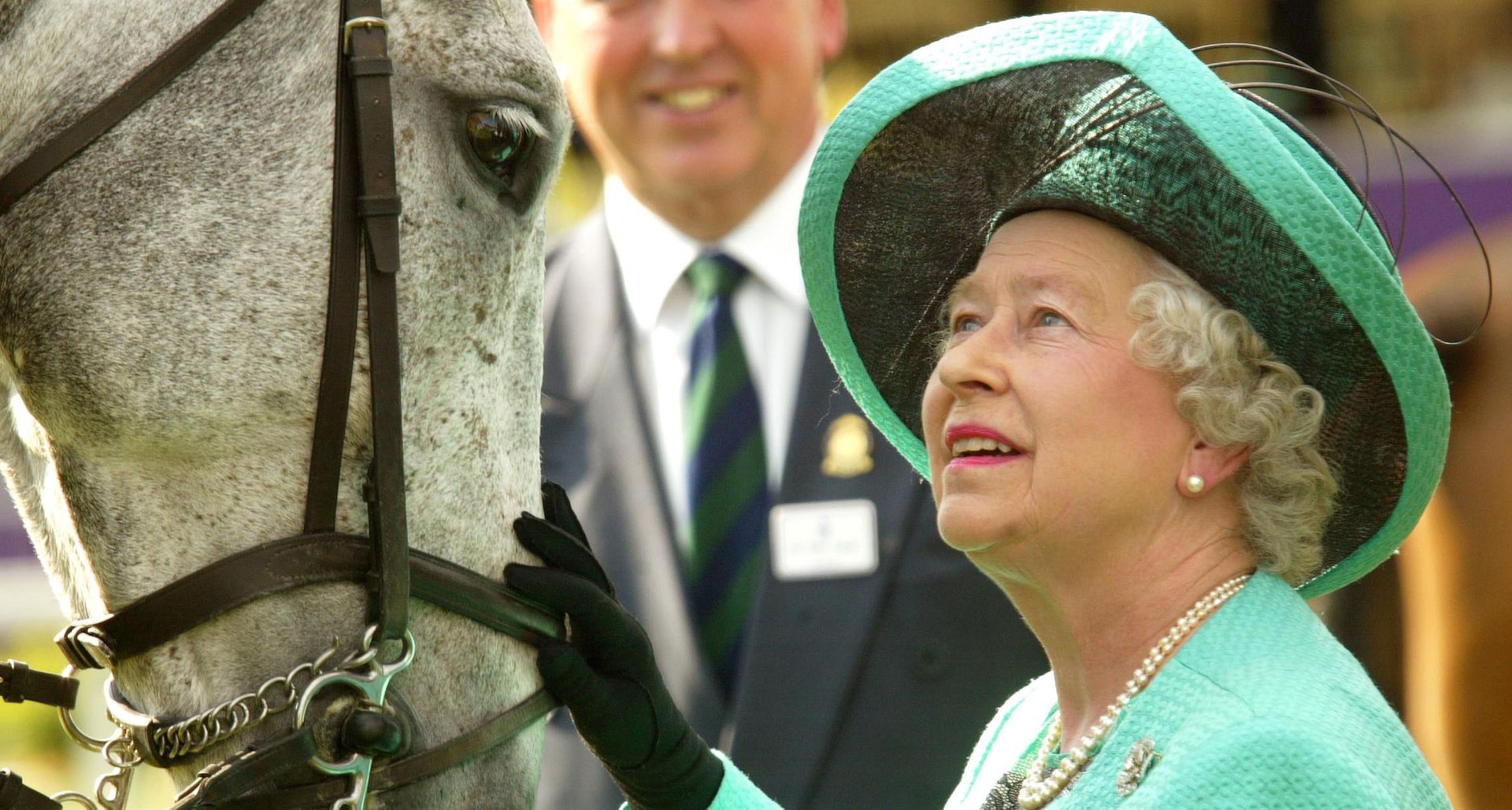
There is something quietly illuminating about learning what made the Queen's face truly light up. According to Daphne du Maurier, horses and world affairs held that particular power, not the glittering state banquets, not the ceremonial pomp, but two subjects rooted in genuine passion and duty. It is a detail that reframes the late monarch not as distant icon, but as a woman whose inner world was stirred by substance rather than spectacle. This kind of revelation, intimate and understated, feels especially resonant when we consider how rarely we see such unfiltered glimpses of public figures, a theme that also emerges in Harriet Sperling on the Quiet Ease of Her Royal Wedding Reception, where the new royal bride describes a reception that was refreshingly "relaxed and informal."
The contrast du Maurier observed between the Queen and Prince Philip is telling. He could converse on literature, art, murder, military manoeuvres, a wide, restless intellect. She, by her own measure, was more contained. But containment is not limitation. A former private secretary recalled the Queen's reaction to what he assumed would be a tedious event: a gathering of Commonwealth Auditors. She corrected him gently, noting that auditors could help stamp out corruption in their countries, and called it potentially "the most significant event of the next two weeks." That is not a narrow mind. That is a mind that knows where its attention belongs. Her face lit up for world affairs because she saw them not as abstract news, but as arenas where quiet, practical change could take root. This same quality of finding depth in the unglamorous echoes in Harriet Sperling Finds Her Royal Confidante in a Heartfelt First Interview, where the new daughter-in-law speaks of the "incredible" welcome she has received, a warmth that matters far more than protocol.
For our readers, this story offers a particular kind of permission. It suggests that a refined life, or a life lived in the public eye, does not demand a performance of breadth. The Queen did not pretend to be fascinated by everything. She was not performatively intellectual. She was exceptionally well-informed on the topics that mattered to her role, and genuinely animated by the ones that touched her heart, horses, with their unpretentious grace, and world affairs, with their weight and consequence. That is a form of quiet confidence. She did not need to be the most dazzling conversationalist in the room; she needed to be the most present one.
The practical takeaway here is subtle but concrete. When we curate our own lives, whether in how we speak, how we dress, or how we spend our time, the goal is not to impress every audience. It is to know what makes our own face light up, and to trust that this authenticity is itself a form of power. The Queen's face lit up for two things she understood deeply. That is not a small life. That is a life lived with intention.