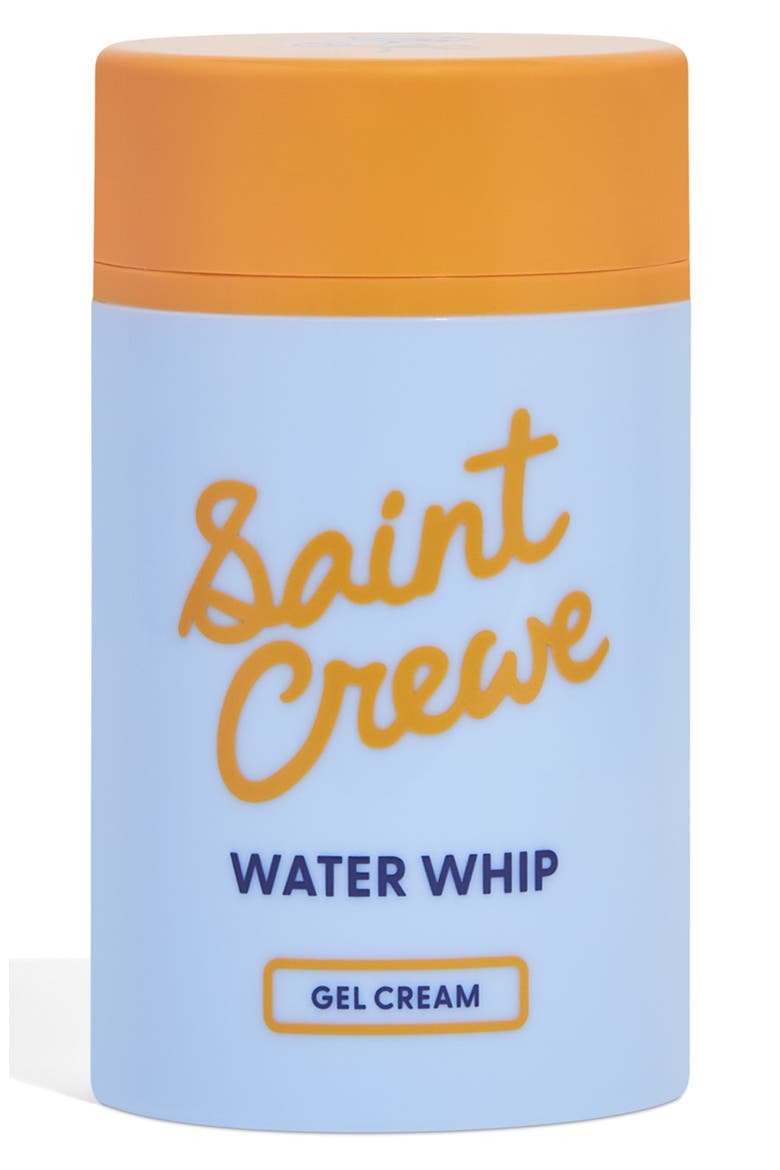
There is something quietly unsettling about watching a larger brand try to claim ownership over a color palette, and yet here we are: Bubble Beauty has sent cease-and-desist letters to Saint Crewe, a brand that launched just last March with gentle, clinically-tested formulas designed for young skin. The dispute centers on trade dress, pastel bottles, orange caps, rounded shapes, elements that have become the visual shorthand for modern skincare rather than the signature of any single company. It is the kind of story that asks us to consider what happens when an aesthetic becomes a battleground, and whether the industry still has room for new voices that speak the same visual language. Winter Blues Get a Quiet Upgrade in This Cool-Toned Pairing reminds us that color storytelling in beauty is often about mood and intention, not ownership, a nuance that feels especially relevant here.
Erin Piper, the founder of Saint Crewe, did not arrive in beauty through the usual channels. She is a licensed clinical social worker who spent years in Louisiana working with teens and families in the aftermath of Hurricane Katrina, and later in private practice focused on self-esteem and trauma. When her own daughter reached for the aggressive skincare flooding TikTok, Piper saw an opportunity to extend her clinical sense of care into a product line that would make young consumers feel considered rather than pressured. That is the kind of origin story that tends to resonate with those of us who believe beauty should be an extension of self-awareness, not a source of anxiety. Bubble's legal demands, stop selling, recall products nationwide, account for every dollar, read less like a defense of intellectual property and more like a strategy designed to crush a smaller competitor before it can find its footing. For a brand run by a small team, a nationwide recall is not a legal maneuver; it is an existential threat.
This is not Bubble's first time asserting ownership over design cues that the category has already adopted. The company sued Five Below and Dani Beauty in 2025 over similar claims, settling that case out of court. The pattern is familiar: use the cost and weight of litigation to pressure smaller players into folding or redesigning, even when the elements in question, script fonts, orange caps, blue bodies, function more as category signals than as unique identifiers. Saint Crewe's complaint points to this exact tension, arguing that Bubble's own packaging varies so widely across colors and shapes that it lacks the consistency required for trade dress protection. What Bubble is essentially trying to do is lock the door behind itself, claiming a visual language that multiple brands have helped build. Gustaf Westman's Holiday World Blends Flea Market Finds With Disney Whimsy shows how a designer can make a signature style feel personal without insisting that no one else can use a rounded silhouette or a particular hue, a creative generosity that stands in stark contrast to what is happening here.
The most telling line in this entire story belongs to Piper herself: "I will always open a chair for a new brand at a table, not pull one away." That philosophy is exactly what is at stake, and it is worth watching whether the courts agree that pastel packaging belongs to everyone or to whoever has the resources to litigate first. This K-Beauty moisturizer turns winter dullness to glass skin instantly is a reminder that innovation in skincare often comes from brands that are given the space to experiment, not from a climate where the threat of a recall hangs over every new launch. The question that lingers is not whether two bottles share a similar shape, but whether the beauty industry is willing to protect the kind of thoughtful, grounded entry that Saint Crewe represents, or whether it will continue to let legal letters do the work that genuine differentiation should.