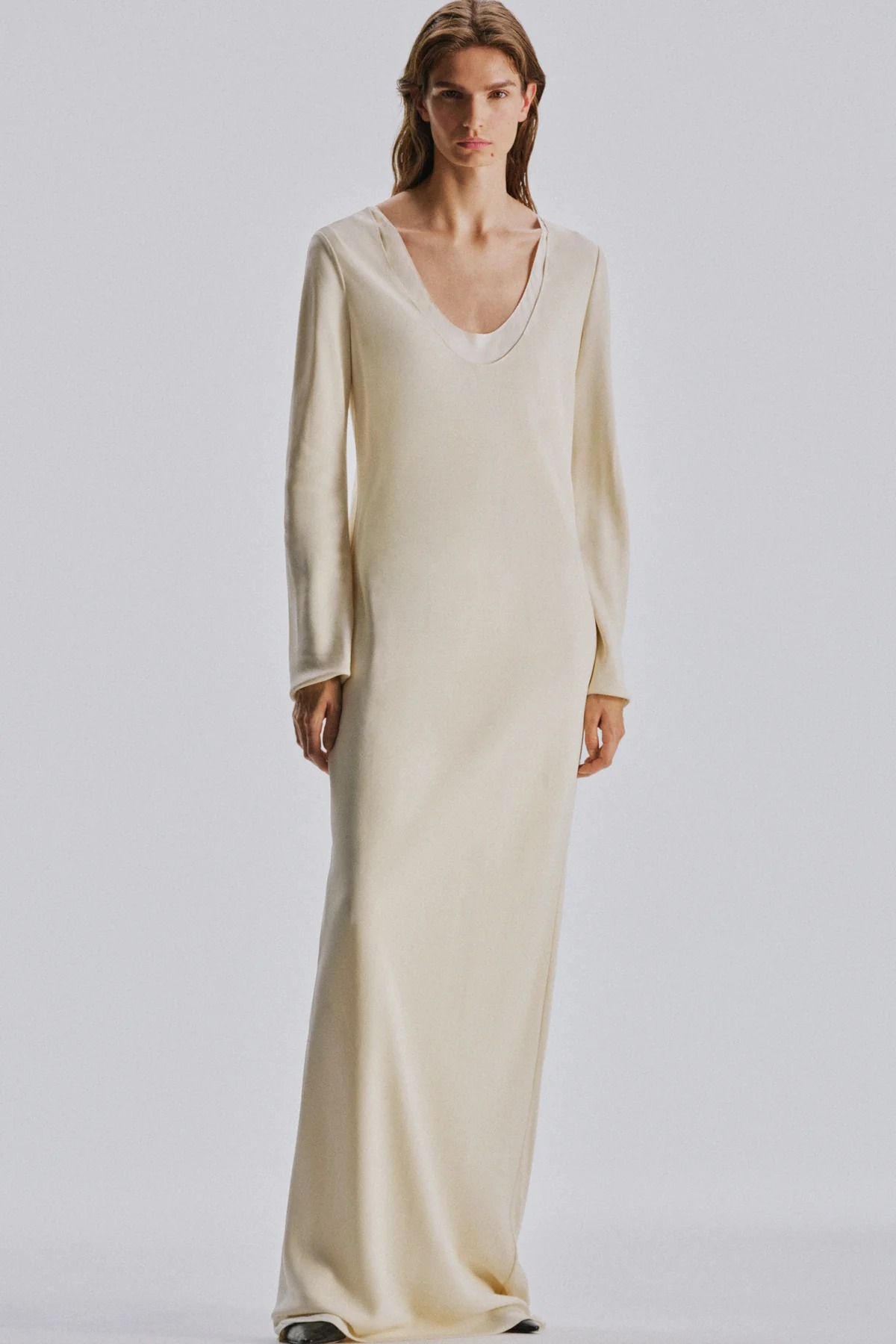
There is something deeply intentional about a woman who knows exactly what she wants to wear before the occasion has even been named. Zoë Kravitz's anticipated bridal wardrobe, as imagined through a curated edit of cream gowns, satin pantsuits, and sculptural separates, tells us more about her approach to ceremony than any wedding date ever could. She will not be a traditional bride, and thank goodness for that. In a culture that often confuses volume with significance, Kravitz reminds us that restraint is its own kind of statement, one that resonates deeply with the quiet authority we explored in What She Didn't Wear Speaks Louder Than What She Did. What you choose not to wear, in this context, becomes the most defining detail of all.
The edit itself reads like a study in understated self-possession: The Row's sculptural minimalism, Saint Laurent's sleek sensuality, FFORME's textured peplum, and Diotima's artisan craftsmanship. These are not dresses that scream for attention; they are pieces that demand to be lived in. The cream palette, notably devoid of stark white, signals a bride who is less concerned with virginal symbolism and more interested in the quiet luxury of atmosphere and mood. A belted silk-satin jacket styled with tailored trousers? That is a woman who knows the after-party is as important as the aisle. This kind of wardrobe logic mirrors the tonal shift we observed in Dakota Johnson's Corduroy Pants Quietly Shift Her Denim Rhythm, sometimes the most elegant move is to break your own rhythm, to choose the unexpected silhouette that feels more yourself than the expected one.
What makes this exercise more than a shopping list is the emotional clarity behind it. Kravitz has never been a muse who performs femininity; she inhabits it on her own terms. Her loyalty to a tight circle of designers, Saint Laurent, The Row, Bottega Veneta, is not about brand allegiance but about a refined sensibility that prioritizes cut, fabric, and how a garment moves with the body. The pieces selected for her potential wedding weekend read as an extension of that worldview: the lace-trimmed silk maxi dress, the fringed chiffon top, the velvet gown for a winter ceremony. Each item feels less like a trend and more like a personal archive in the making. There is no desperation to be remembered; only the quiet confidence of a woman who trusts her own taste.
The practical takeaway for our readers is this: the most memorable bridal look is rarely the loudest one. Let Kravitz's potential choices serve as a permission slip to consider what a pared-back wedding wardrobe might unlock for you. Think about what white actually means to you, or whether cream, ecru, or even a sharp satin pantsuit says more. The specific detail to watch is not the dress itself, but the through-line: every piece in this edit shares a certain weightlessness, a refusal to over-explain itself. That is the real bridal mood worth chasing.