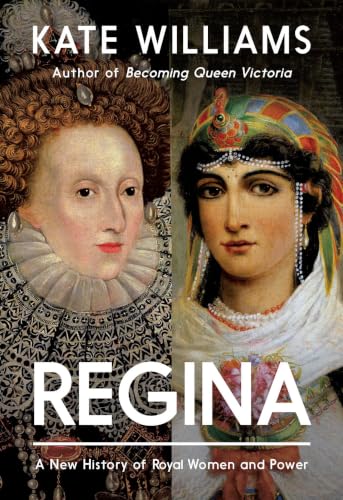
There is something quietly radical about a woman who knows exactly what she is doing with her own image and does not feel the need to explain it. Historian Kate Williams' observation that the Princess of Wales has wielded image more strategically than Marie Antoinette is not a provocation, it is a study in contrast between two women separated by centuries but united by the same impossible equation: how to be royal, maternal, and public without being destroyed by the narrative. Williams argues that Kate chose early on to occupy the role of royal mother, a position that royal women have historically wanted but were rarely permitted to hold. Marie Antoinette tried the same presentation and was refused it; the public wanted her as a spendthrift villain, not a devoted mother. Kate, by contrast, has made the role feel effortless, not because it is easy, but because she has built her entire public presence around a single, unshakeable identity. That kind of clarity is rare, and it is instructive. It echoes the same quiet authority we see in Prince William’s quiet stance on a royal tradition as King Charles tours the Caribbean, where restraint itself becomes a form of power.
What makes Kate's approach distinct is not that she controls her image, every public figure does, but that she has chosen a frame so consistent it barely registers as strategy. She does not pivot. She does not react. She lets the imagery of motherhood do the work, whether she is holding Prince Louis during the Platinum Jubilee or visiting a children's hospice. Even when her own children are absent, her work with early childhood development extends the same visual and emotional logic. This is not performance for performance's sake; it is a long-term investment in a single, legible truth about who she is. Williams draws a parallel to Queen Victoria, who used photography to present herself as the domestic goddess at home, masking the reality of a power struggle with Albert. The difference, and it matters, is that Kate's presentation does not feel like masking. It feels like alignment, a woman who actually puts her family first and has built a public role that allows her to say so without apology. That is the quiet luxury of a life lived on one's own terms, and it is the same sensibility we observed in Prince William on Grief: Presence Over Silence in Loss, where emotional honesty replaces the old reflex to perform stoicism.
For our readers, the takeaway is practical. Kate's example confirms that the most powerful personal brand is not the loudest or the most novel, it is the one that tells a single story so consistently that the audience stops questioning it. She does not need to shout that she is a devoted mother because the image has already answered the question before anyone thought to ask. That is the difference between strategy and noise. And it is the same principle that makes A Quiet Recollection, No Hard Edges feel so resonant: the refusal to over-explain is itself a statement of confidence. The question Kate leaves us with is not whether she will continue to succeed at this, she clearly will, but whether the role of royal mother is becoming so perfectly occupied that it leaves her no room to show us anything else. That is the edge of any tightly held image: the more complete it is, the harder it becomes to let it breathe.