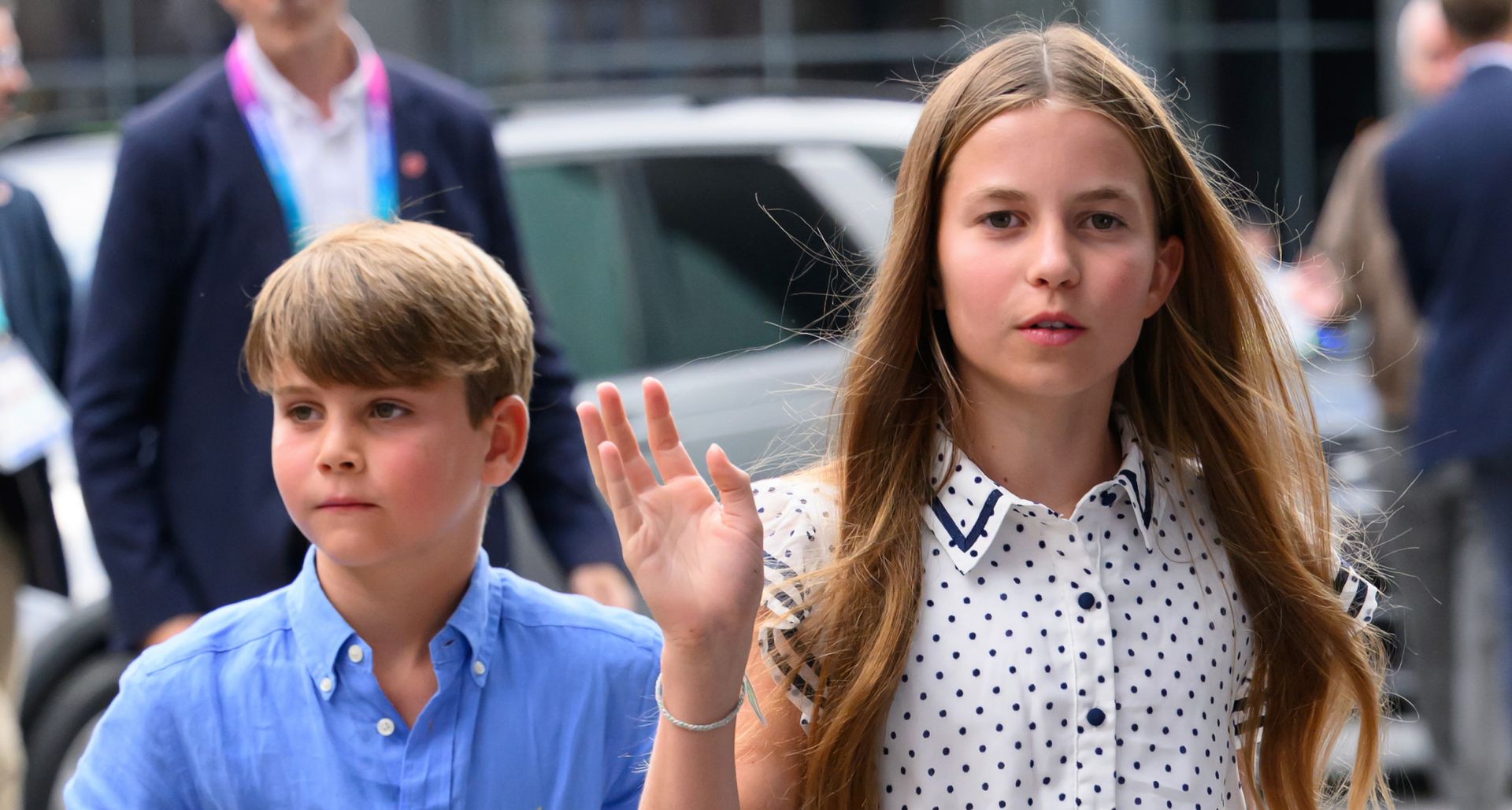
There is something quietly disarming about a future king admitting his children are "obsessed" with a reality show called *The Celebrity Traitors*, and even more so that he cannot resist testing the paranoia of one of its contestants. Prince William's appearance on *The Graham Norton Show* this past Friday revealed a version of royal life that feels less like a state portrait and more like a candid Polaroid, one in which Princess Charlotte and Prince Louis are glued to the television, and their father is playfully poking Ross Kemp to see if he really does flinch. It is a reminder that even within the gilded walls of Windsor, the rhythms of family life are remarkably ordinary. This is not the stiff, protocol-heavy monarchy of decades past; it is a modern institution learning to let its guard down, and we are all the more drawn to it for that honesty.
For our readers, this moment matters because it signals a broader shift in how the royal family chooses to be seen. William's willingness to share a lighthearted anecdote, complete with a failed attempt to extract spoilers from Kemp, reinforces the approachable, grounded image he and Catherine have carefully cultivated. It is the same instinct that led him to speak openly about his father's absence in a poised exchange that reflected quiet command of the moment, and it echoes the relief Catherine must feel as she welcomes the school break with George and his siblings at home. These are not calculated press releases; they are glimpses into a household that values presence over performance. The takeaway here is direct: the future king understands that relatability is not a weakness, but a form of quiet authority.
What makes this interview particularly compelling is the contrast William draws between his family's lighthearted television habits and his own taste for the psychologically dense films of Christopher Nolan. He loves *The Dark Knight* series for its "dark and deep" exploration of the human psyche, and that preference tells us something about the man beneath the heir. He is not seeking distraction; he is seeking immersion. He wants stories that challenge, that linger, that demand something of the viewer. It is the same intentionality he brings to the Earthshot Prize, a project he discussed alongside Cate Blanchett, Hannah Waddingham, and Robert Irwin, and it suggests a leader who thinks in layers. He can laugh about *Traitors* with Graham Norton one moment and pivot to climate innovation the next, and he does so without losing his centre.
The detail worth watching is whether this balance between accessibility and gravitas will define his reign. For now, Prince George is home from Eton for half-term, and the Wales family will likely gather around the television to watch *The Celebrity Traitors* together. That image, a future king, his siblings, and a reality show, is not trivial. It is the architecture of a monarchy that wants to be loved, not just respected. And if William can hold that tension between the profound and the playful, he may well achieve something his predecessors could not: a crown that feels both majestic and human.